jump back to top
de | en
Contact
  • more THI pages
  • semester dates
  • Moodle
  • PRIMUSS Application portal
  • PRIMUSS student's portal
  • Curriculum
  • Webmail
  • Student Council website
  • more THI pages
  • semester dates
  • Moodle
  • PRIMUSS Application portal
  • PRIMUSS student's portal
  • Curriculum
  • Webmail
  • Student Council website
Contact
de | en
Home
  • University
    • General contact and directions
      • Contact options for students
      • Contact forms
      • THI Main campus, CARISSMA, Research, Lifelong Learning
      • Location Stauffenbergstraße
      • Location CARISSMA Outdoor Test Facility
      • Location Campus Neuburg/Donau
      • Öffnungszeiten
    • News
      • Press Releases
    • University Profile
      • Profile and Strategy
      • Facts and Figures
      • Mission Statements
      • Campus grounds in Ingolstadt and Neuburg
      • Milestones
      • Partners and Sponsors
        • Association of friends of the THI
        • Association for international relations
      • University Management
        • Climate Action and Sustainability Management
        • Dept. for Communcation, Press, Media
        • Legal department
        • Strategy and Quality
        • Event Management
        • Service Center Study Affairs
        • Career Service & Student Counselling
        • International Office
        • Women’s Representatives
        • Special functions, counselling and support
      • University Boards and Organisation
        • University Board
        • University Council
        • Senate
        • Students' Council
    • Events
      • Akademische Feier - Graduation ceremony
      • CONTACT: The career fair
      • ON Campus Festival
    • Quality management
      • Understanding QM
  • Faculties
    • Faculties
    • Faculty of Mechanical Engineering
      • News and Events
      • About us
        • Dean's Office
        • Professors of the Faculty
      • Degree Programmes Mechanical Engineering
      • Areas of Expertise & Research
        • Link to Institute of new Energy-Systems
        • Projects in Aeronautical Engineering
        • Acoustics
        • Materials Science
      • Laboratories
      • International
    • Faculty of Engineering and Management
      • News and Events
      • Team
        • Professors and Teaching Staff
      • Degree Programmes Engineering and Management
      • Projects
      • Laboratories
        • Physics laboratory
        • Laboratory for production now and product development
        • Technical Design Laboratory
        • Production Engineering Laboratory
        • Laboratory for welding and cutting technology
      • Expertise & Research Fields
        • Analysis of and Advice on Technical Claims
        • Bavarian Foresight Institute
        • Entrepreneurship and Innovation Management
        • Production Engineering
        • Business Process Management
        • Industry 4.0 and Digitalization of Production
        • AI Applications in Innov. Production & Logistics Systems
        • KI-Based Optimization in the Automobile Production
        • Production and Assembly Systems
        • Statistical Modelling and Machine Learning in Engineering
        • Engineering Procurement
      • International Students
    • Faculty Electrical Engineering & Information Technology
      • News
      • Team
        • Professors and Teaching Staff
      • Fields of Competency and Research
      • Degree Programmes
      • Laboratories
    • Faculty of Computer Science
      • News and Events
      • About us
        • Professors at the Faculty of Computer Science THI
        • Open positions as adjunct lecturers
      • Our professors
      • Degree programmes Computer Science
      • Laboratories
        • Laboratory Autonomous Vehicles
        • Lab for Embedded Systems
        • Laboratory Digital Medicine
        • Laboratory Aircraft Electronics and Computer Science
        • Laboratory Hexapod test bench
        • Laboratory Computer Networks
        • Laboratory User Experience Design
        • Laboratory Virtual Reality and Simulation
      • Joining as a student from abroad?
    • Faculty of Sustainable Infrastructure
      • News
      • About us
        • Open positions as adjunct lecturers
      • Laboratory
      • Degree programmes-NI
      • Excursions
      • Dual Studies
      • Campus Neuburg
        • Campus Facilities
        • Neuburg - city and region
    • THI Business School
      • Vision and Mission
      • Studying at THI Business School in Ingolstadt
      • Degree Programs Business School
      • Business School International
      • Areas of Expertise
      • Dual studies
      • Facts and Figures
      • Sustainability at THI Business School
      • About us
        • Dean's Office
        • Professors of the THI Business School
        • Research Assistants
        • Lecturer
        • Visiting professors
        • Advisory Council
        • We are hiring: Lecturers
      • News and Events
  • Studies
    • Semester dates
    • Studying at THI
      • Engineering & Innovation
      • Business and Management
      • Digital Worlds
      • Life Sciences | THI
      • People & Environment
    • Degree programmes
      • Bachelor study courses
      • Master Study Courses
      • Dual Studies
      • Virtual University of Bavaria (vhb)
    • THI Counselling Services
      • Counselling for prospective students
        • Events Student Counselling
      • Counselling for students
        • Student Counselling
        • Leave of absence from studies
        • Psychological counselling
        • Social counselling
      • Studying with children and maternity protection
      • Studying with a Disability or Chronic Illness
    • Application
      • Bachelor Application
      • Master Application
      • Bachelor application from abroad
      • Masterapplication from abroad
      • Masters and Qualified Professionals
      • Admission and Enrollment
      • PRIMUSS student´s portal
    • Financial Assistance
      • Tuition fees for international students
    • Internships
    • Examination
    • Language Center
      • Course Offerings at the Language Center
      • Further language acquisition options
    • Startup Center
    • Going abroad during your studies
      • Erasmus+ Programme
        • Funding Rates Erasmus+
        • Staff mobility
        • Outgoing Student Mobility
      • Study abroad
        • Timetable Semester Abroad
        • Step 1: Choosing a partner university
        • Step 2: Applying at THI
        • Step 3: Applying at the partner university
        • Funding & scholarships
        • Step 5: Learning Agreement
        • Step 6: After your return
        • Double Degrees
      • Internship
        • Step 1: General Conditions
        • Step 2: Motivation, Goals
        • Step 3: Finding an Internship
        • Step 4: Application
        • Step 5: I Have Found an Internship - Next Steps
        • Step 6: Funding
        • Step 6: After the Internship
      • Short term and Summer/Winter Schools
      • Freemover
    • Exchange Students
    • International degree students
      • Practical Information for Internationals
      • Arrival Form
      • Tuition fees
      • SHIFT - The Strategic Hub for International Future Talent
      • DAAD Study Visit for Groups @THI
    • Career Service for students
    • Campus and student life
      • Student clubs and initiatives at THI
        • consult.IN e. V.
        • Enactus Ingolstadt e.V.
        • Hochschulgaming Ingolstadt e.V.
        • International Culture Club
        • Catholic University Community
        • Neuland Ingolstadt e. V.
        • NEWEXIST - The start-up initiative
        • Our Future e.V.
        • Schanzer Racing Electric e.V.
        • Studenten bilden Schüler e. V.
        • Studentischer Börsenclub Ingolstadt
        • Students' Life
        • UNICEF University Group
      • Accommodation
      • Student discounts
      • Public transport, parking and more
      • Mentoring and Buddy Programme
  • Research
    • Research at THI
      • AININ Artificial Intelligence Network
      • Project 5GoIng
      • Research competencies
        • Materials and Surface Technology
        • Start-ups
      • Your Career in Research
    • Doctoral School
      • Pursuing a Doctorate at THI
      • Doctoral Centre Engineering Sciences
      • Doctoral Centre AI/Computer Science
      • Cooperative Doctorate
      • THI Doctoral Centre
      • News & Events
    • Transfer at THI
      • Projects and Initiatives
        • ACE²-EU
        • Mensch in Bewegung
        • Servus MINT
      • Fields of activity
      • Research and Transfer Events
      • CALAI - Center for Latin America
      • SAFIR
        • Intensification Phase
        • Set-up Phase
        • About us
        • SAFIR News alt
    • CARISSMA
      • Philosophy
        • Über uns
        • Career
        • Team
      • News & Press
      • C-IAD
        • C-IAD
        • Safeguarding automated driving functions using mixed-real
        • Ergonomics and Human Factors
        • Interventions in the vehicle dynamics for autonomous driv
        • Safeguarding functions and HW using HIL for automated dri
        • Machine Learning for Vehicle Safety Systems
        • Localization and Exteroceptive Sensors
        • Sensor simulation with a focus on weather conditions
        • Simulation-based stochastic efficacy analysis
        • Simulation based validation of vehicle safety functions
      • C-ISAFE
        • C-ISAFE
        • Environmental perception
        • Unavoidableness and crash severity
        • Safety in bad weather
        • Pedestrian safety
        • Safeguarding automated driving
        • Methods of passive safety
        • Safety of new mobility concepts
        • Vehicle Interior Occupant Monitoring
      • C-ECOS
        • C-ECOS
        • Team
        • Karriere
        • Car2X and Cyber-Physical Systems
        • Robustness and Durability in Electric Mobility
        • Strukturelle Integrität
        • Medical and AI Security
        • Software and System Security
        • Innovative drive systems and commercial vehicle technolog
        • Cooperative Intelligent Transport Systems
        • Security in Mobility
        • Safe electromobility and accident analysis
        • Lecture Series on Electromobility
      • Laboratories
        • Innovation Centre for Digital Vehicle Forensics
        • HyTACC – Hydrogen Testing, Application & Certif. Center
        • Abuse Attempts
        • Car2X Laboratory
        • [Translate to English:] Labor für Nachhaltige Energiesyst
        • Driving Simulator (Hexapod)
        • Drop Tower
        • Free driving systems for automated driving tests
        • Hil Laboratory
        • Driving Experience Lab
        • Indoor test facility
        • Outdoor Test Facility
        • Mobile robots
        • Real Lab High Definition Testbed
        • Research vehicles
        • Security in Mobility
        • Battery Lab
        • Simulation Laboratory
        • Targets
        • Twizy (ANTON)
    • AImotion - AI Mobility Node
      • Research@AImotion
        • Research@AImotion
        • Topics
      • People@AImotion
      • Career@AImotion
      • About@AImotion
        • About@AImotion
      • Events@AImotion
      • Transfer@AImotion
        • AI Transfer Center IN
    • Technology Transfer Center Unmanned Aerial Systems
      • Collaboration with the TTZ
      • Research at TTZ
        • Science on Wings – Integrated Flying Testbed
        • Projects TTZ
        • Research Areas
        • Research institution
        • Publications
      • Events at TTZ
      • Your career at TTZ
      • News TTZ
      • Team TTZ
    • Bavarian Foresight Institute
      • Research focus of the Bavarian Foresight-Institute
      • Publications of the Bavarian Foresight Institute
      • Videos and podcasts with the Bavarian Foresight Institute
      • Team of the Bavarian Foresight-Institute
    • ForTraNN – Sustainability Research and Transfer Center
      • Scientific transfer conference "Die Große Transformation"
      • Research at ForTraNN
        • Project SustainED
        • Projekt SmartArea
        • Project BigTrans
    • Fraunhofer Application Center
    • Institute of Innovative Mobility (IIMo)
      • Research areas
        • Electromobility and Learning Systems
        • Microelectronics Packaging
        • Engines and Powertrains
        • Sensor technology and sensor data fusion
      • Teaching and research laboratories
      • Jobs and offers for students
    • Institute of new Energy Systems (InES)
      • Field of Research
        • Industrial Energy Systems
        • Energy System Technology
        • Domestic Energy Systems
        • Technology Transfer & International Project Management
        • International Energy Research
      • Laboratories
      • Know-How Transfer
        • Opti-WP
        • STRAWBERRIES
        • ÖkoFlussPlan
      • International Activities
        • Newsletter-Archiv
      • Team InES
      • Career opportunities InES
    • Beyond Validation AI
    • Distinguished Professorship
    • Research and transfer
      • For Researcher
        • National funding programmes
        • European Union
        • Foundations
        • Internationalisation
        • Start-up support
      • For Companies
      • Research Projects
      • About us
  • Lifelong Learning
    • Institute for Lifelong Learning
      • Study programmes
        • Extra-occupational programmes
        • Bachelor programmes for professionals
        • Master programmes for professionals
      • This is Campus for Lifelong Learning
        • About us
  • Service
    • Our services for you
    • University Library
      • Apply for a Library Card
      • Order Suggestion
      • Funding Application for Open Access Publications at THI
      • Public holidays
      • Library Catalogue für THI Members
      • Library Catalogue for External Users
      • Databases
        • Terms of Use and Access Requirements
      • Service
        • Guideline
      • Teaching Library
        • Students
        • Lecturers
        • Researchers
        • THI staff
        • Services for schools
        • AI & Research
      • Research and Publication Service
      • Contact
    • IT Service
      • Software
        • Citavi - literature management
        • MATLAB
        • MSDNAA / dreamspark
        • Office 365 ProPlus free of charge for students
      • User account
        • Guidelines for Use
        • Password hints
        • Student ID card
      • E-mail / exchange
      • Printing
      • VPN
      • WIFI
    • Gender and Diversity
      • Diversity Day
      • Services offered
      • Working with Children
      • Childcare
      • Emergency numbers outside of THI
      • Guideline against discrimination
    • Talent Promotion/Scholarships
    • Mentoring for female students
    • Alumni
    • Sports
    • Marketplace
    • Merchandising
  • Career
    • Career paths
      • Upgrade yourself to Prof!
      • Apprentices
    • About us
    • Job offers
    • Career information and advice
  • Campus Neuburg
    • semester dates
    • Moodle
    • PRIMUSS Application portal
    • PRIMUSS student's portal
    • Curriculum
    • Webmail
    • Student Council website
Contact
de | en

User Experience Design (B. Sc.)

Microcomputer and mock-up of usability testApplication period for the 2027/28 winter semester: 2 May to 15 July 2027

How do you combine design, technology and emotion to create compelling user experiences?

Do you want to develop products that people intuitively understand and enjoy using? Then the Bachelor’s degree in User Experience Design is exactly the right course for you. Here, you’ll learn to analyse user needs, design interactions and develop digital applications that are technically sound, aesthetically appealing and emotionally engaging. Your degree programme combines computer science, design, psychology, usability, social responsibility and entrepreneurship – ideal for designing modern digital products in a holistic and forward-looking way.

You’ll explore visual design, information architecture, interaction design and experience strategies, and learn how cultural differences, values and hedonic quality shape the user experience. As a UX designer, you’ll act as the link between product development, technology, design and marketing. Most modules are taught in German, whilst some are offered in English – perfect for a career path that equips you to meet the challenges of the digital future.


Bachelor of Science (B. Sc.)

7 Semesters

Winter

Yes

Yes

German


Contents

The “User Experience Design” course at THI, with a standard duration of 7 semesters, was developed to meet the constantly changing requirements of product development, usability and marketing - especially with regard to aspects such as values, emotions or cultural differences.
In accordance with ISO standard 9241-210, the term “user experience” covers all aspects of a user's experience when using a product or interacting with a product, computer program or service.

The job description of a “user experience designer” involves making the use of a product (often software, IT systems, apps or websites) as pleasant and easy as possible through a user-centered approach in order to create a positive experience for the user. While usability reflects the “pragmatic quality” (effective and efficient task completion), UX is concerned with the “hedonic quality”. This goes beyond pure usefulness, for example by making products particularly stimulating or communicating a certain image through their design.

The UX designer is responsible for the visual design, but also for the information architecture and information design. The aim is to design “products” that users/consumers find aesthetic and attractive and that are a pleasure to use. 
A UX designer is the link between product development, IT, implementation, visual design and sound design, ergonomics, marketing/branding, trends, etc.

The course imparts interdisciplinary knowledge from the fields of computer science, design, usability, psychology, business fundamentals and entrepreneurship.
The course is nationally oriented. Courses are predominantly held in German. Individual courses may be offered in English.

Curriculum

1. Semester

Einführungsprojekt
2 ECTS

This introductory project familiarizes students with the fundamentals of user-centered design through a practical UX challenge. Working in teams, they explore analysis, concept development, design, and presentation phases. Students apply methods such as stakeholder analysis, personas, ideation, sketching, and wireframing. The project strengthens teamwork, social interaction, and documentation skills while introducing the complete UX process.

Softwarentwicklung 1
7 ECTS

This module introduces the fundamentals of programming and software development using Java. Topics include algorithmic thinking, control structures, data types, methods, and key concepts of imperative and object-oriented programming. Students learn to use development tools, structure software applications, and create their own classes and objects, providing a foundation for advanced software development courses.

Mathematik
6 ECTS

This module provides the mathematical foundations required for computer science and user experience design. Topics include logic, set theory, linear algebra, analytic geometry, systems of linear equations, and matrix operations. Students also study vector spaces, linear transformations, eigenvalues, eigenvectors, and modular arithmetic, developing a solid understanding of mathematical concepts relevant to technical disciplines.

Gestaltung 1
5 ECTS

This module introduces fundamental design principles for digital and print media. Topics include composition, layout, color theory, typography, and Gestalt principles. Students analyze design examples, develop their own creative concepts, and apply them in practical exercises. The course also introduces Adobe Creative Suite tools and supports creative development through excursions and collaborative discussions.

Typografie und Skizzieren
5 ECTS

This module introduces the fundamentals of typography and visual ideation. Students explore typography, layout design, text composition, and microtypography, while also developing sketching and visualization skills for communicating ideas effectively. Through exercises in lettering, storyboarding, and visual composition, they strengthen their creative, design, and communication abilities.

Englisch
5 ECTS

This module develops English language skills for the fields of user experience design, usability, and information technology. Topics include technical vocabulary, intercultural communication, business correspondence, grammar, listening comprehension, and presentation techniques. The course strengthens students’ ability to communicate effectively in international professional and project environments.

2. Semester

Grundlagen der Informaik
5 ECTS

This module introduces fundamental concepts of computer science with a focus on communication networks and database systems. Students learn about network architectures, Internet protocols, data transmission, and routing concepts. The course also covers database architectures, data modeling, relational databases, SQL, and the integration of database systems into business and software applications.

Softwareentwicklung 2
7 ECTS

This module expands students’ knowledge of object-oriented programming using Java. Topics include inheritance, polymorphism, interfaces, exception handling, dynamic data structures, generics, and collections. Students also explore advanced programming concepts, software libraries, and the development of graphical user interfaces using Java technologies, focusing on the structured design of modern software applications.

Statistik
6 ECTS

This module provides the statistical foundations required for planning, conducting, and evaluating user studies. Topics include descriptive statistics, probability distributions, hypothesis testing, analysis of variance, correlation, and regression methods. Students learn how to interpret statistical results and apply statistical techniques using Python through practical exercises and real-world examples.

Gestaltung 2
7 ECTS

This module expands students’ knowledge of design methods and processes for digital media and user experience design. Students develop visual concepts, analyze design solutions, and apply advanced principles of layout, typography, interaction, and visual communication. Practical projects promote creative problem-solving and the user-centered design of digital products and experiences.

Informationspsychologie
5 ECTS

This module introduces the psychological foundations of human information processing and their relevance for human-computer interaction. Topics include perception, attention, learning, memory, motivation, emotions, and individual differences. Students explore how people process and communicate information and derive design principles for creating effective, user-friendly interactive systems.

3. Semester

Webtechnologien
7 ECTS

This module introduces the foundations of modern web technologies and interactive web application development. Topics include client-side technologies such as HTML, CSS, JavaScript, and frontend frameworks, as well as server-side concepts including PHP, sessions, cookies, AJAX, and REST. Through practical projects, students design user interfaces and develop dynamic web applications using current web development technologies.

Software Engineering
6 ECTS

This module introduces the methods and processes of professional software engineering. Students learn how to capture requirements systematically, design software architectures, apply coding standards, and ensure software quality through appropriate testing techniques. Topics include requirements engineering, UML modeling, software design, testing methods, and development processes for building reliable and maintainable software systems.

Design von Mensch-Maschine-Schnittstellen
5 ECTS

This module introduces the user-centered design process for digital user interfaces. Students work through all phases, from ideation and sketching to wireframing, prototyping, and visual interface design. The course covers usability methods, interaction design, animation, and presentation techniques, with a strong focus on creating intuitive, engaging, and aesthetically pleasing user experiences.

Technik der Mensch-Maschine-Interaktion
7 ECTS

This module introduces the technical foundations of modern human-computer interaction. Topics include two- and three-dimensional input and output technologies such as touchscreens, speech interfaces, eye tracking, virtual and augmented reality systems, and haptic devices. Students explore current interaction technologies and evaluate their usability, human perception aspects, and application scenarios.

Grundlagen der Betriebswirtschaft und des Gründertums
5 ECTS

This module introduces the fundamentals of business administration and entrepreneurship. Topics include organization, marketing, finance, accounting, investment analysis, innovation management, and business model development. Students explore entrepreneurship and intrapreneurship concepts and apply them in a startup project by developing product ideas, business models, and marketing strategies.

4. Semester

Webdesign und Webusability
5 ECTS

This module introduces the fundamentals of user-centered web design and web usability. Topics include information architecture, navigation design, page layout, web content, multimedia integration, and usability testing methods. Students also learn accessibility principles and apply techniques for evaluating and improving the usability and accessibility of digital products and web applications.

Produktdesign
5 ECTS

This module introduces methods and processes of product design, from analysis and concept development to prototyping. Topics include design history, design theory, form and material considerations, and manufacturing processes. Through practical projects, students create and visualize design concepts while applying project and time management techniques to develop innovative and user-centered products.

Computergrafik / 3-D-Design
7 ECTS

This module introduces the foundations of computer graphics and 3D design. Topics include mathematical principles, 3D modeling, rendering, texturing, lighting, shadow generation, and animation. Students learn modern techniques for creating and visualizing three-dimensional scenes, including the use of scene graphs and game engines, while developing both technical and design-oriented competencies.

Prinzipien der Mensch-Maschine-Interaktion
8 ECTS

This module introduces methods and principles of human-computer interaction within a user-centered development process. Students learn approaches for analyzing, designing, implementing, and evaluating interactive systems. Topics include requirements analysis, prototyping, usability methods, perception psychology, design guidelines, and qualitative and quantitative evaluation techniques for user-friendly digital products.

Projektmanagement
5 ECTS

This module introduces traditional and agile project management methods with a special focus on user experience design projects. Students learn how to define, plan, manage, and control projects, including risk and stakeholder management. The course also covers agile approaches such as Scrum, enabling students to efficiently organize and execute interdisciplinary design and development projects.

5. Semester

Vorbereitendes Praxisseminar PLV 1
2 ECTS

This preparatory internship seminar supports students in preparing for internships and working student positions. The course focuses on creating professional application documents and digital portfolios, reflecting on personal strengths, and addressing workplace challenges. Through feedback sessions, guest lectures, and practical exercises, students develop communication, social, and career-related skills.

Praktikum
24 ECTS

The internship enables students to deepen the knowledge and skills acquired in the User Experience Design program. Students select a suitable company in Germany or abroad, work independently on defined tasks, and apply scientific methods to real-world challenges. Their experiences, results, and insights are systematically documented and reflected upon in an internship report.

Nachbereitendes Praxisseminar PLV 2
2 ECTS

This post-internship seminar focuses on the professional preparation and presentation of practical work results. Students reflect on their internship experiences, analyze presentation techniques, and connect practical insights with academic knowledge. Through discussions, feedback, and knowledge sharing, they strengthen their presentation, communication, and reflective skills.

Informations- und Medienkompetenz PLV 3
2 ECTS

This module introduces the fundamental methods of academic work and information literacy. Students learn how to identify suitable research topics, systematically search for and critically evaluate scientific sources, and understand the structure of academic publications. The course also covers proper citation practices, reference management, and the effective organization of scientific literature.

6. Semester

Virtual and Augmented Reality
7 ECTS

This module introduces the fundamentals of virtual, augmented, and mixed reality. Topics include perception, immersion, interaction concepts, and input/output technologies for immersive systems. Students learn how to design, develop, and evaluate VR/AR applications. In the lab, they create their own applications using Unity 3D and gain hands-on experience with current VR and AR devices.

Projekt
5 ECTS

In this project module, students work in teams on a semester-long project in the fields of information technology, user experience, or design. They follow the complete development process from analysis and research through concept development and implementation to evaluation and presentation. The course strengthens project management, teamwork, and documentation skills while addressing real-world challenges.

Studiendesign und Durchführung von UX Tests
5 ECTS

This module prepares students for conducting scientific studies and thesis projects in user experience research. Topics include research question development, study design, data collection, qualitative and quantitative analysis methods, and the communication of results. Students learn how to plan, conduct, evaluate, and present user studies for the evidence-based assessment of interactive systems.

Sicherheit von mobilen und webbasierten Anwendungen
5 ECTS

This module introduces the security foundations of mobile and web-based applications. Topics include common vulnerabilities, attack vectors, protection mechanisms, and secure programming practices for apps and web applications. Students learn cryptographic concepts, secure communication techniques, and security-related usability aspects, enabling them to design and implement more secure digital systems.

Fachwissenschaftliches Seminar
3 ECTS

This academic seminar explores current topics in human-computer interaction, usability, and user experience. Students conduct literature reviews, develop concepts or prototypes, and present their findings in both an oral presentation and a scientific seminar paper. Through discussion and critical reflection, they strengthen their skills in research, analysis, academic writing, and professional communication.

Fachwissenschaftliche Wahlpflichtfächer
10 ECTS

The advanced elective modules allow students in the sixth and seventh semesters to specialize according to their individual interests and career goals. The portfolio is updated each semester and reflects current developments in research and industry. Courses are taught by university lecturers and external industry experts, providing students with the opportunity to deepen their knowledge and develop specialized competencies in selected subject areas.

7. Semester

Fachwissenschaftliche Wahlpflichtfächer
10 ECTS

The advanced elective modules allow students in the sixth and seventh semesters to specialize according to their individual interests and career goals. The portfolio is updated each semester and reflects current developments in research and industry. Courses are taught by university lecturers and external industry experts, providing students with the opportunity to deepen their knowledge and develop specialized competencies in selected subject areas.

Seminar Bachelorarbeit
3 ECTS

This seminar supports students throughout the preparation and completion of their bachelor’s thesis. Students present and discuss their research results and gain insights into scientific methods, academic writing, and good research practice. Topics include literature review, study design, result presentation, and scientific communication, helping students successfully complete and defend their bachelor’s thesis.

Bachelorarbeit
12 ECTS

The bachelor’s thesis represents the final academic achievement of the User Experience Design degree program. Students independently investigate a practice-oriented research problem using scientific methods. This includes literature research, prototype design and evaluation, user studies, and qualitative and quantitative data analysis. Results are systematically documented, critically reflected upon, and developed through regular consultation with the supervisor.


Quick Info

Admission and application
  • Applying for a degree course
    Students may only begin their degree in the winter semester.
  • Registration dates
    Applications for this degree may be submitted through the online application system from 2 May.
  • Admission requirements
    Please find all information on admission and application on our Bachelor application pages
  • Admission requirements for international students
    If you wish to study at a German University, you need a so-called Hochschulzugangsberechtigung (HZB), or higher education entrance qualification. This is a secondary school-leaving certificate that corresponds to the German Abitur and entitles you to study.
    Students from abroad must apply for admission from the university of their choice. For your application, you will require for a Bachelor's degree:

    • a school-leaving certificate (also known as "university entrance qualification", e.g. High School Diploma, Matura, A-Levels, Bachillerato, Atestat, baccalauréat)
      or
    • proof that you have passed the university entrance examination (if required in your home country)

    (Source: German Academic Exchange Service, DAAD, July 2016)

"How can I become a user experience designer?!

The area of user experience design is very exciting and highly dynamic. In order to be successful, a UX designer has to be active in the community and make a name for themselves. We recommend that students should write about their degree assignments and other projects during their degree course, for example in the relevant online media, in a blog or on Twitter: this will enable them to build up a “portfolio” (rather like an application dossier) for later job applications. This of course also includes networking with like-minded individuals at UX events such as BarCamps, local UX meet-ups and LinkedIn groups, as well as commenting on blog posts. The best way to break into this area is by means of interaction, discussion and dialogue.

FAQs

Why should I study User Experience Design?

The course offers the opportunity to design products and services creatively and technically to improve people's daily lives. It combines artistic design with technical know-how and psychological understanding to create useful and aesthetically pleasing solutions. The demand for UX experts is high. This opens up career prospects.

Do I need previous knowledge of programming or design?

No. No prior knowledge of programming or design is required. The course is designed to provide basic knowledge in both areas so that you can develop the necessary skills and knowledge over the course of your studies.

Is the course mainly about design or also about technology or even more?

The course is a Bachelor of Science (B.Sc.) with a corresponding focus on technical aspects. You need technical skills in order to be able to implement the design solutions. You will learn these in the course of your studies along with design, psychology, conception, usability and economic principles.

Is there a numerus clausus (NC)?

The number of study places is limited. This means that the admission requirements can change from year to year. You can find up-to-date information on the application process on our website.

When is the UXD degree program right for me?

If you have a passion for creative design, enjoy solving problems, want to improve people's lives and are interested in how people interact with technology, the User Experience Design course is right for you. The course is ideal for designing innovative and user-friendly solutions that provide real added value for people.

Which programming languages do I learn in the UXD program?

The basic concepts of programming and software development are learned using the Java programming language. HTML, CSS and JavaScript are added for web development. In the further course of the degree course, there may be other programming languages depending on the project and focus.

Is it possible to study abroad during the course?

Absolutely. You can spend the practical semester in a foreign company or even study semesters abroad. Our network of more than 160 partner universities worldwide already offers a wide selection. You will be supported by our International Office. The intercultural experience and new professional perspectives are valuable additions to your academic and personal development.

Can I also complete a Master's degree after my Bachelor's degree in User Experience Design?

Yes, you can also complete a Master's degree in User Experience Design with us. It follows on seamlessly from the Bachelor's degree and offers ideal conditions for further specialization in the field. The Master's course is taught in English and therefore also offers a good opportunity to come into contact with many international students.

Contact options for prospective students

Apply online

Program director

Prof. Dr. Ingrid Stahl
Programme director UXD (B.Sc.)
Prof. Ingrid Stahl
Phone: +49 841 9348-2341
Room: L224
E-Mail: Ingrid.Stahl@thi.de

More contact options

Prof. Dr. Christian Sturm
Academic Advisor UXD (B.Sc)
Prof. Dr. Christian Sturm
Phone: +49 841 9348-3794
Room: L224
E-Mail: Christian.Sturm@thi.de
Study Ambassador User Experience Design
Melina Deeg
Study Ambassador
Joaquin Sack
Study Ambassador
Niklas Röthlingshöfer

Module Handbook

The module handbook contains information on prerequisites, contents, learning outcomes, ECTS points, duration, work load, literature, references of the offered modules and lectures.

Module handbook Bachelor User Experience Design

Study and Examination Regulations

Study and examination regulations (SPO) deal with judicial matters concerning your study course. Please turn to the pages of the legal department for Statutes of this course.

For any questions on requirements, exams regulations and more, please turn to the Service Center Study Affairs.

Links

Semester dates

Accreditation

Our labs

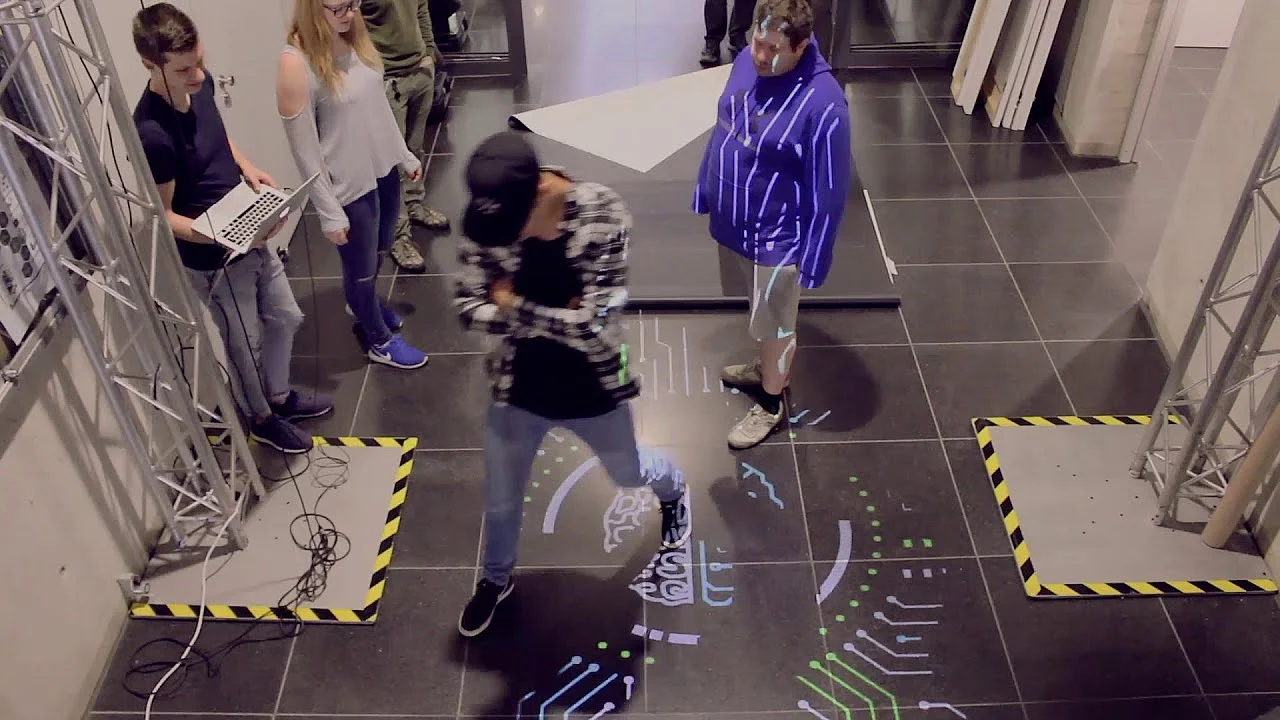
We attach great importance to practical education; the practical training given in our technically well-equipped laboratories is an excellent complement to theoretical teaching. Please see the German website for an inside look.

Lab Virtual Reality and Simulation (G006)

Get an impression

Visiting professor with students

Loader
Technische Hochschule Ingolstadt
  • Esplanade 10
    85049 Ingolstadt
  • Phone: +49 841 9348-0
  • Mail: info@thi.de

Legal notes

  • Imprint
  • Data protection

Any Questions?

  • Service Center Study Affairs
  • Counselling for prospective students
  • International Office

General information

  • General contact and directions
  • Öffnungszeiten
  • Marketplace
  • Website Feedback
[Translate to English:] Logo Akkreditierungsrat: Systemakkreditiert