Research Institution
For our research we use modern technology for real flight, simulation and information processing.
Human Machine Interaction Equipment
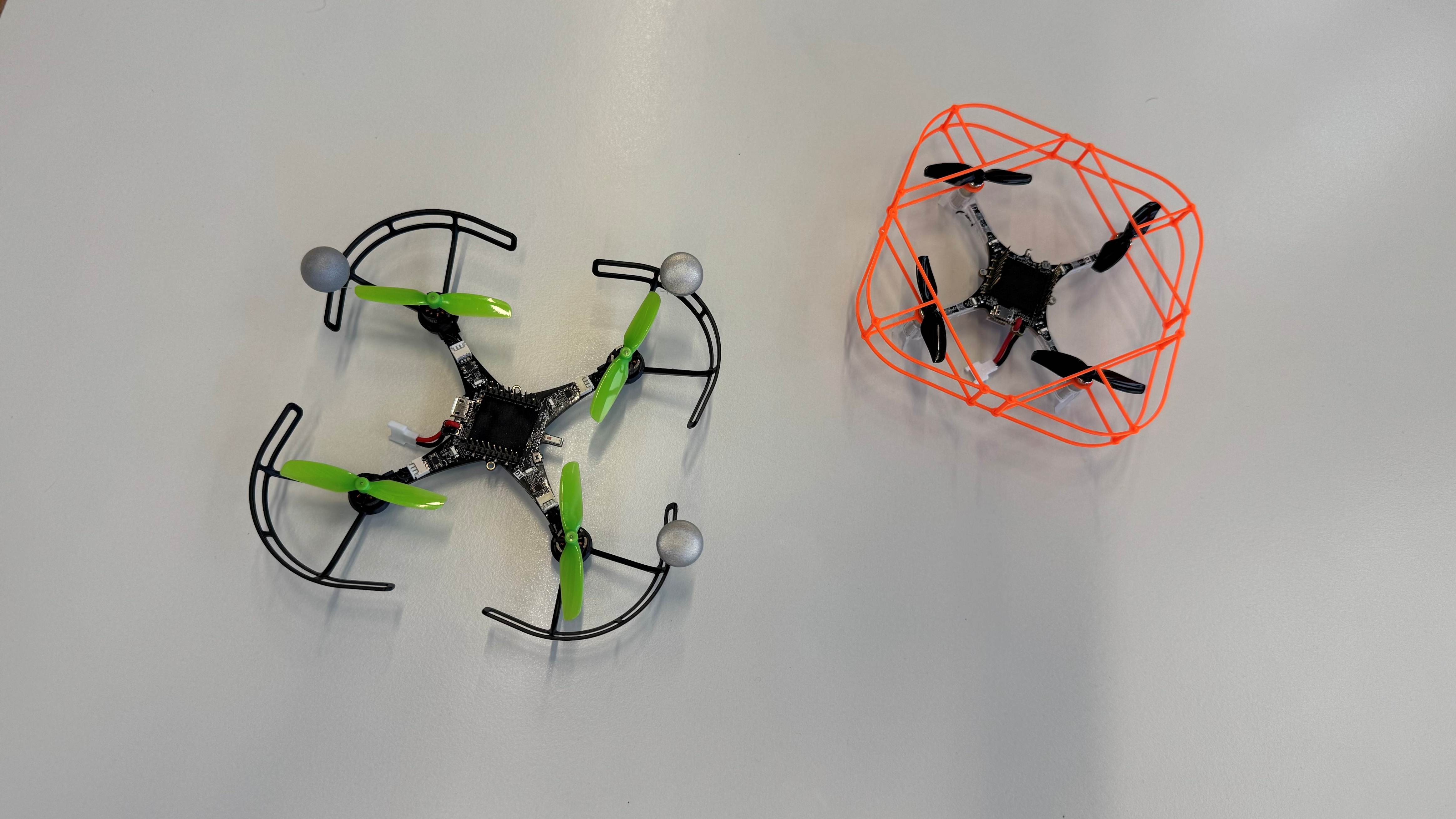
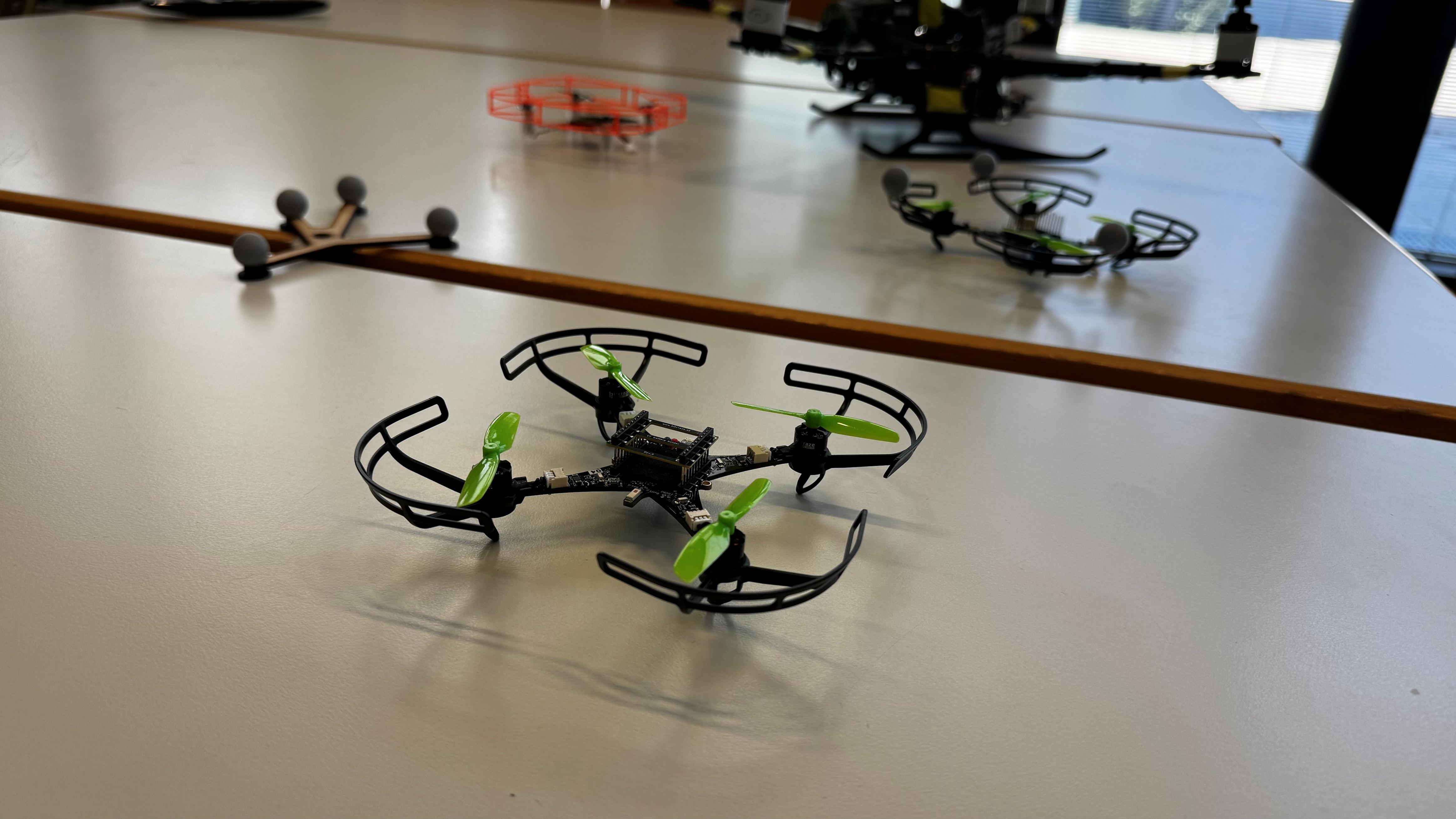
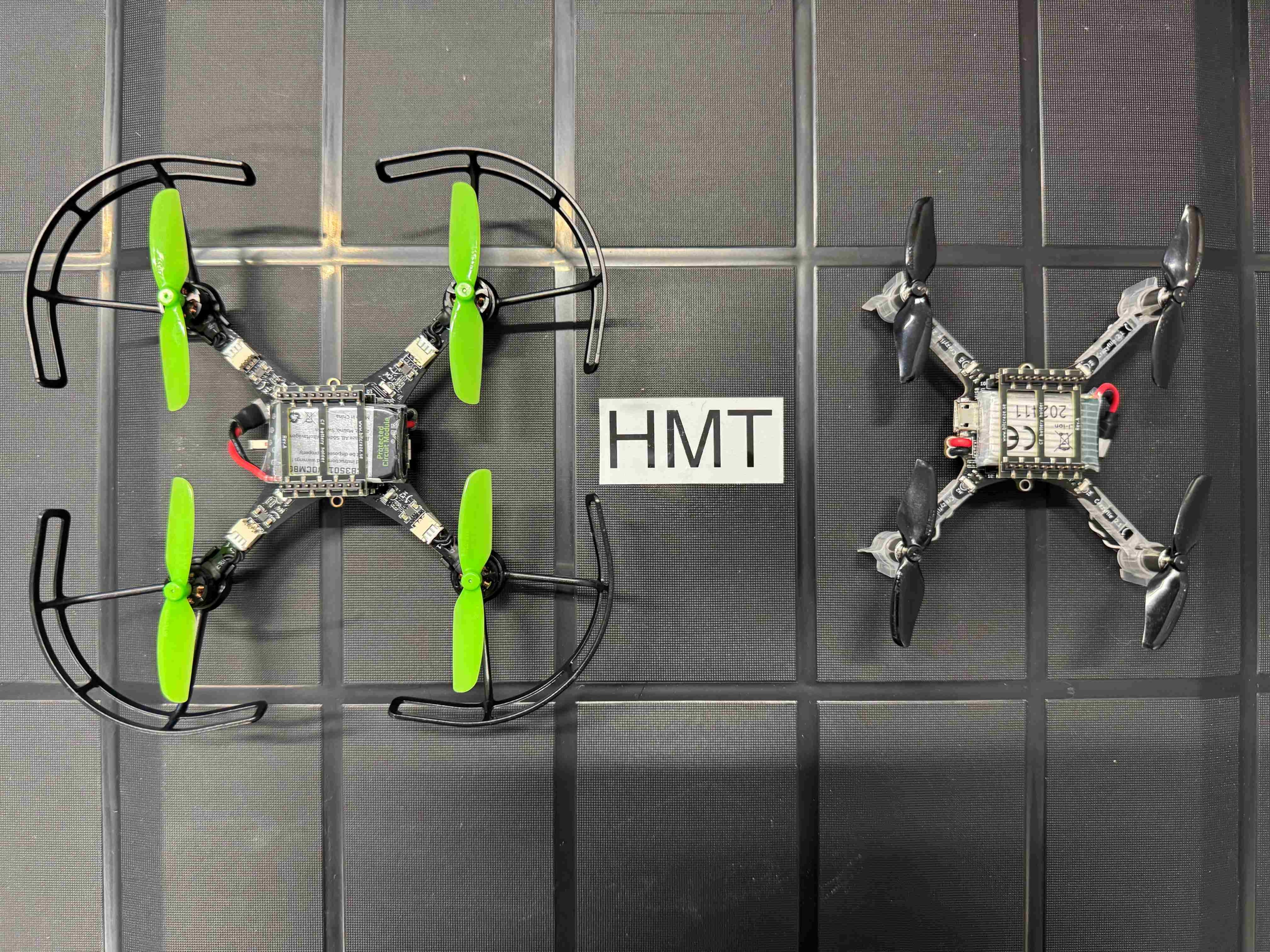
Bitcraze Crazyflies Fleet
- Brushed Fleet: Lightweight micro-UAVs for safe indoor swarm formations, dense trajectory planning, and proximity interactions.
- Brushless Fleet: High-thrust dynamics, greater payload capacity, and higher speeds for robust closed-loop control algorithms.
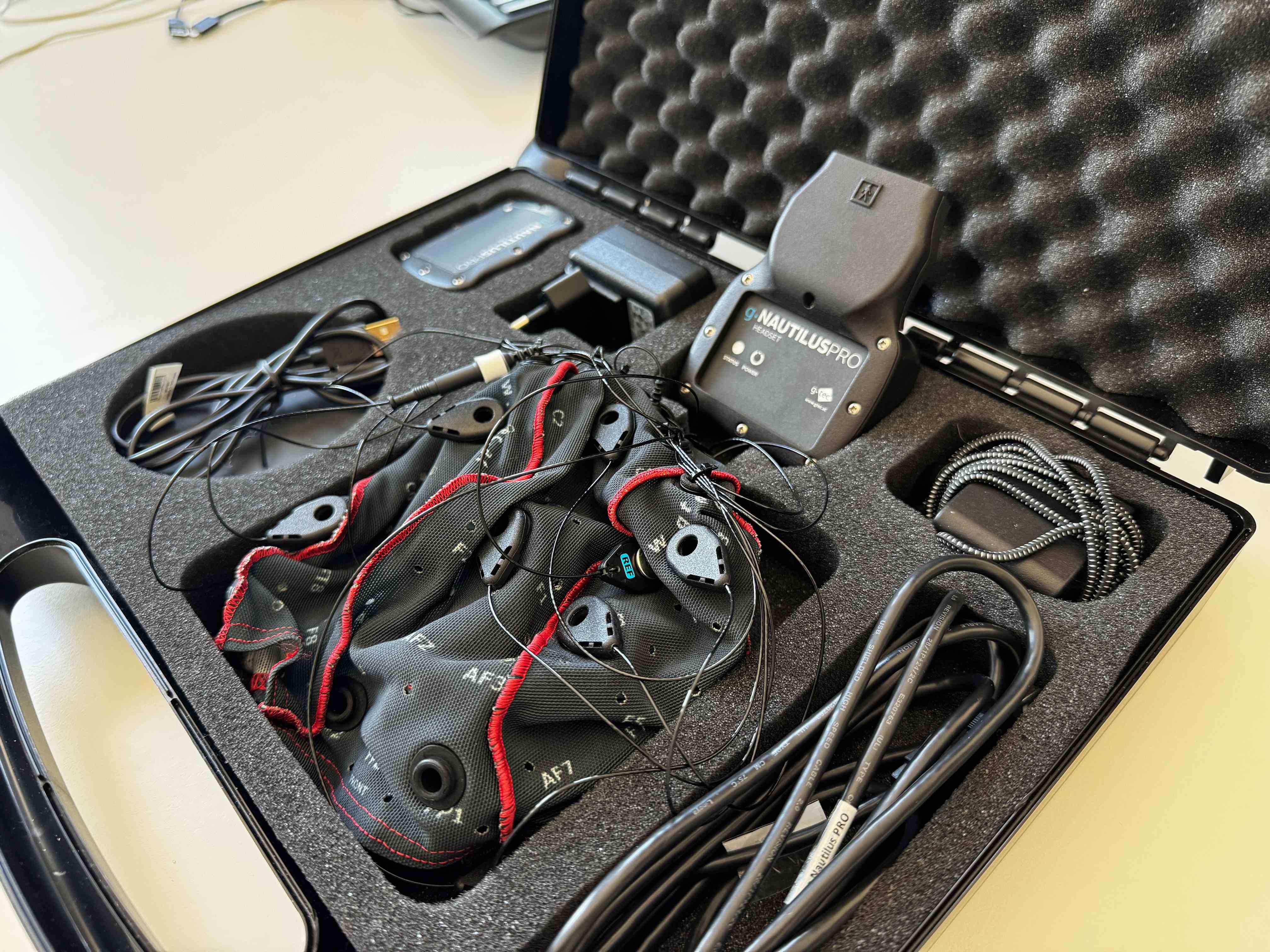
g.tec g.Nautilus PRO EEG
Medical Grade BCI
- Wireless high-fidelity EEG sensing for capturing motor imagery, visual evoked potentials (SSVEP), and cognitive workload metrics.
- Enables direct Brain-Computer Interface (BCI) commands to modulate swarm behaviors and safety boundaries.


Smart Eye Tracking System
Gaze Analytics
- High-frequency gaze vectoring and visual fixation tracking in both physical and virtual environments.
- Enables gaze-driven sub-swarm selection, dynamic attention measurement, and situational awareness evaluations.
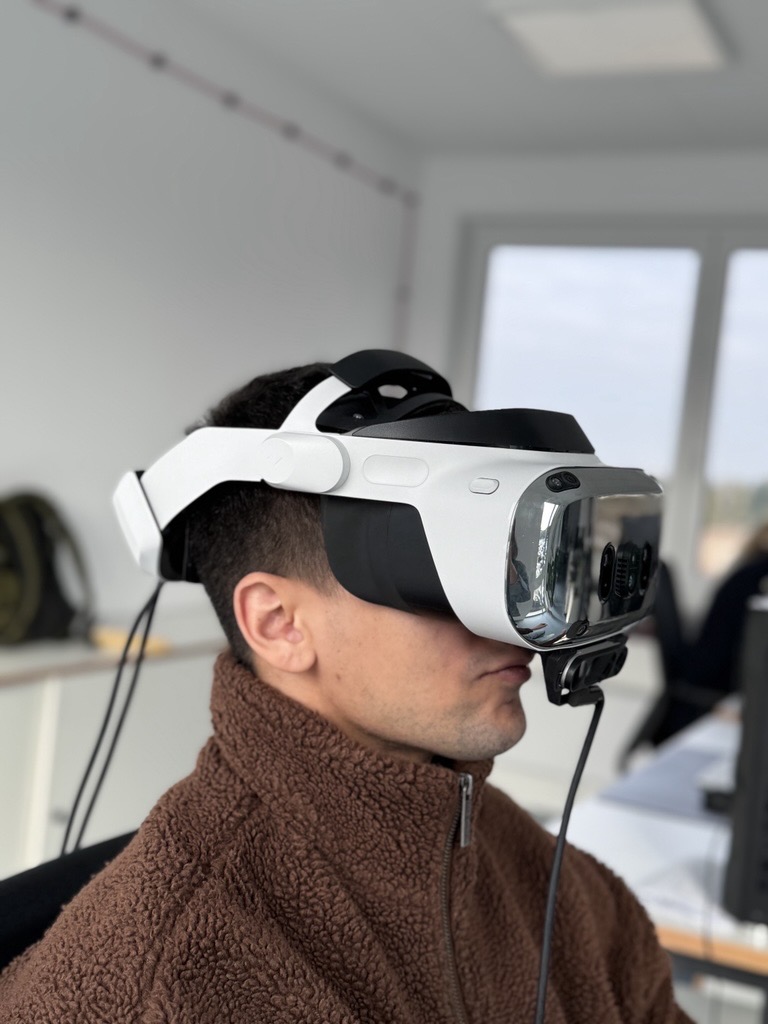
Mixed & Augmented Reality Fleet
Extended Reality (XR)
- Meta Quest 3 & Quest Pro:Wireless spatial computing, standalone passthrough MR, dynamic hand gesture tracking, and face/eye sensing.
- Varjo XR-3 & Varjo XR-4:Industrial-grade human-eye resolution (>50 PPD), photorealistic pass-through, sub-millimeter tracking, and integrated LiDAR depth mapping.
- XREAL One AR Glasses:Lightweight optical see-through smart glasses for real-time heads-up telemetry HUDs (Heads-Up Displays) and mobile field ops.
Motion Simulator
The Motion Simulator by Brunner is used for the realistic simulation of motion and attitude changes of unmanned aerial systems. It enables reproducible investigations in flight control, autonomy, sensor systems, and human–machine interaction under controlled laboratory conditions, and supports the development and validation of advanced UAV technologies.

Quantum Systems Drone Port
The Drone Port automates the launch, recovery, and mission operations of Quantum Systems drones through an integrated robotic arm, enabling continuous autonomous deployments.

Universal Robots (UR15)
The project aims to develop a robotic system capable of reliably catching a thrown ball using a multi-DOF arm.
An OptiTrack motion-capture setup continuously provides 3D ball positions, while a drag-aware predictor estimates the intercept point and time with quantified uncertainty. Building on this, control is formulated as a reinforcement-learning problem: a policy (e.g., SAC/TD3), trained in simulation using domain randomization over throw speed, angle, spin, latency, and noise, maps the robot’s joint and end-effector state together with the predicted intercept into safe velocity or waypoint commands.

UAVs & Plattforms
We rely on the use of modern UAVs to evaluate our methods and algorithms.
The RB5 5G Modal AI drone is powerful and versatile. It can carry up to 1kg, flies for over 20 minutes. Equipped with six cameras for high-resolution image capture and tracking, it features advanced processing and sensor technology.
The drone offers numerous connectivity options, including Wi-Fi and 5G. It supports common software platforms and offers the ability to quickly integrate research software.
Cockpit simulators
Virtual cockpit simulation is a key tool in the development of innovative interaction concepts.
In our laboratories, we have the possibility to simulate a wide variety of applications. Our simulators range from desktop environments to an A320 simulator with a dome vision system.
Discover our research in action – go straight to the Flight Mechanics Laboratory:


Hardware-in-the-Loop at TTZ
Hardware-in-the-Loop (HIL) simulation is an advanced technique for simulating UAV flight characteristics, sensor modelling and actuator modelling that interacts with the UAV autopilot hardware in real time.
This method enables comprehensive testing of the reliability of the UAV autopilot hardware and the control loop performance of the entire system. In addition, HIL simulation facilitates the fine-tuning of control parameters to ensure optimal performance and reliability of the UAV system.