Prof. Dr.-Ing. Uli Burger


The aeronautical engineers at Ingolstadt University of Technology are delighted to have the state-of-the-art Pearl 700 pre-production flight test engine, which has been made available to them on permanent loan by Rolls-Royce Deutschland Ltd. & Co. KG.
Weighing several tonnes, the engine is now mounted on a specially designed base in the university’s G Building and is available for teaching and research purposes, as well as for visitors.
The Rolls-Royce Pearl 700 is the most advanced engine in the Pearl family and powers the Gulfstream G700 and G800 business jets. It is a brand-new engine model that was only certified a few years ago.
Key performance features:
The engine on display at THI is a pre-production flight test engine that was used in flight testing of the Gulfstream G700 prior to series production. It has actually been flown, and all flights are fully recorded in the logbook.
Its special features include:
The Pearl engine will in future be used in lectures on the Bachelor’s and Master’s degree programmes in Aeronautical Engineering and offers valuable insights into the real-world high-tech powerplants of modern business aircraft.
The project was supported by numerous THI departments and has attracted considerable attention from both students and visitors.
Thanks to this support, it is possible to integrate state-of-the-art aviation technology directly and practically into teaching.
An introduction to the engine is held once a term. If you are interested or have any questions, please contact Prof. Ludwig König directly by email: ludwig.koenig@thi.de

Prof. König explaining the engine

Engine, viewed from the front

A group of spectators at the engine
An essential component of the aeronautical engineering course is the independent construction of a flying drone with parameterisation of the flight control. For this purpose, the necessary basic components are provided and a flight mission to be fulfilled as well as general conditions are handed out at the beginning of the course.
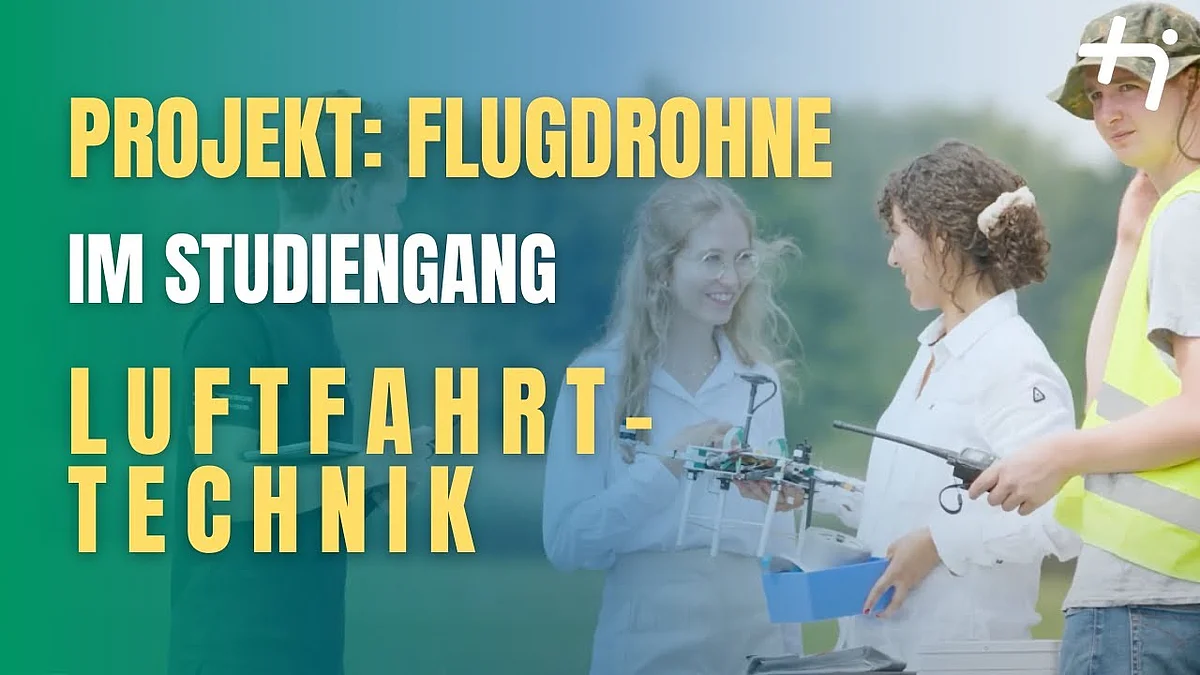
Live insights into the drone challenge during the summer term of 2023 at the AIRBUS airfield

Team A


Team C

Flight preparations

The whole team

#1 Accuracy in reaching the target coordinates
#2 Maximum payload
#3 Maximum transport range on a single battery charge
1x flight controller: Holybro Pixhawk 4 Mini Set, without parameterisation
4x electric motors: Holybro S500 V2 motor, CCW and CW, 2216-880 KV
4x propellers
1x Electronic speed controller: Holybro 20A ESC
1x rechargeable battery: LIPO 3S1P 11.1V 45+/90C
1x remote control: Futaba T14SG
Year of manufacture: June 2023
Dimensions with propellers: 593 mm x 593 mm x 161 mm (733 mm diagonal)
Drone configuration: Quadcopter in an X-configuration
Construction: Arms and base plates made of aluminium and PVC
Propeller length: 254mm
Weight without battery: 1223g with battery: 1391g
„Die Komponenten und die Flugmissionen waren vorgegeben – wie wir unsere Teamdrohne aufbauen war uns überlassen. Das Projektmanagement war anfangs noch etwas ungewohnt, doch recht schnell waren wir ein eingespieltes Team, haben uns gemeinsam Sachen einfallen lassen und die dann einfach ausprobiert. Einen Ausleger zu konstruieren, dann dessen Festigkeit zu simulieren und zu testen, diesen Ausleger aus Forged Carbon selber herzustellen und schließlich die Drohne damit fliegen zu sehen – was für ein tolles Projekt.“
„Am ersten Flugtag habe ich zum ersten Mal eine Drohne geflogen und hatte Angst, dass ich die gleich zerstöre. Ist aber alles gut gegangen und hat richtig Spaß gemacht. Im Vergleich zu anderen Semesterprojekten war zwar der Zeit- und Arbeitsaufwand höher, aber ich konnte vieles praktisch anwenden und war überrascht, welch gute Drohne wir im Team aufgebaut haben.“
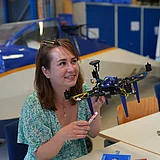

In addition to automotive engineering, aviation plays a key role in and around the Ingolstadt region. Professors Uli Burger, Erol Özger, Ludwig König, Andreas Frey and Harald Göllinger conduct research in this field in the "Aeronautical Engineering" competence area. Their laboratories are very well equipped. Highlights of the laboratory equipment include a flight simulator, two gas cannons, an Instron CEAST drop unit, various engine models and equipment for non-destructive material testing (ultrasound, eddy current). This equipment allows research to be conducted at the highest level. Among other things, collisions of aircraft with drones, new propulsion technologies and flight mechanical behaviour are researched. The close links with regional companies enable the competence field to transfer its research results into practice.
Duration: 10/2018 – 09/2022
Volume: 588.383,89 €

Duration: 04/2016-07/2017
Volume: 1,2 Mio €
Aeronautics Research Programme V-3 Funded by BMWi
Duration: April 1, 2019 - June 30, 2022
Volume: 267.200 € (plus VAT)
AES Aerospace Embedded Solutions, Airbus Defence and Space, Diehl Aerospace GmbH, Liebherr-Aerospace Lindenberg GmbH, Philotech Systementwicklung und Software GmbH,Karlsruher Institut für Technologie KIT, Konzept Informationssysteme GmbH, SYSGO GmbH, Nord-Micro GmbH & Co. OHG , Fortiss
Integration of software requirements into model-based software development, integration of software building block elements and knowledge transfer.
Vice Dean of the Faculty of Computer Science

Dean of Studies Faculty of Mechanical Engineering


We’ll do everything we can to help you share your experiences! After all, it’s an important part of your degree.
Aerospace engineering involves not only mastering the theoretical fundamentals but also understanding how these are applied in technical products within the aviation industry. The Ingolstadt region is home to several companies in the aviation sector, and there are renowned aviation museums in southern Bavaria – an ideal environment for learning about current developments and trends in aeronautical engineering, as well as its history.
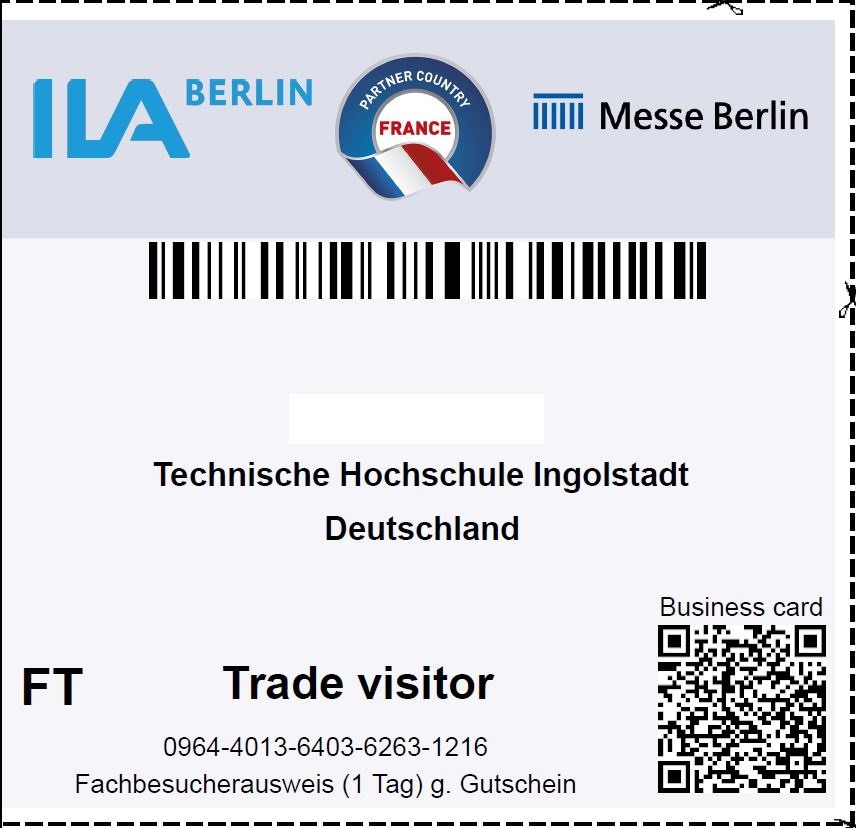
As well as field trips, visiting trade fairs offers a good opportunity to identify your own areas of interest and make targeted contact with companies, with a view to undertaking a work placement or writing your Bachelor’s thesis there, or to plan your career entry.

“During my degree, I learnt a great deal from interacting with other students – exams, work placements and everything else that goes with it.” The aim of Meet the Fleet is to encourage precisely this kind of interaction amongst students. Some events are organised by lecturers, others by students.

Visit to the Aviation Laboratory

Meet the Fleet 2019

Group photo of the aeronautical engineers
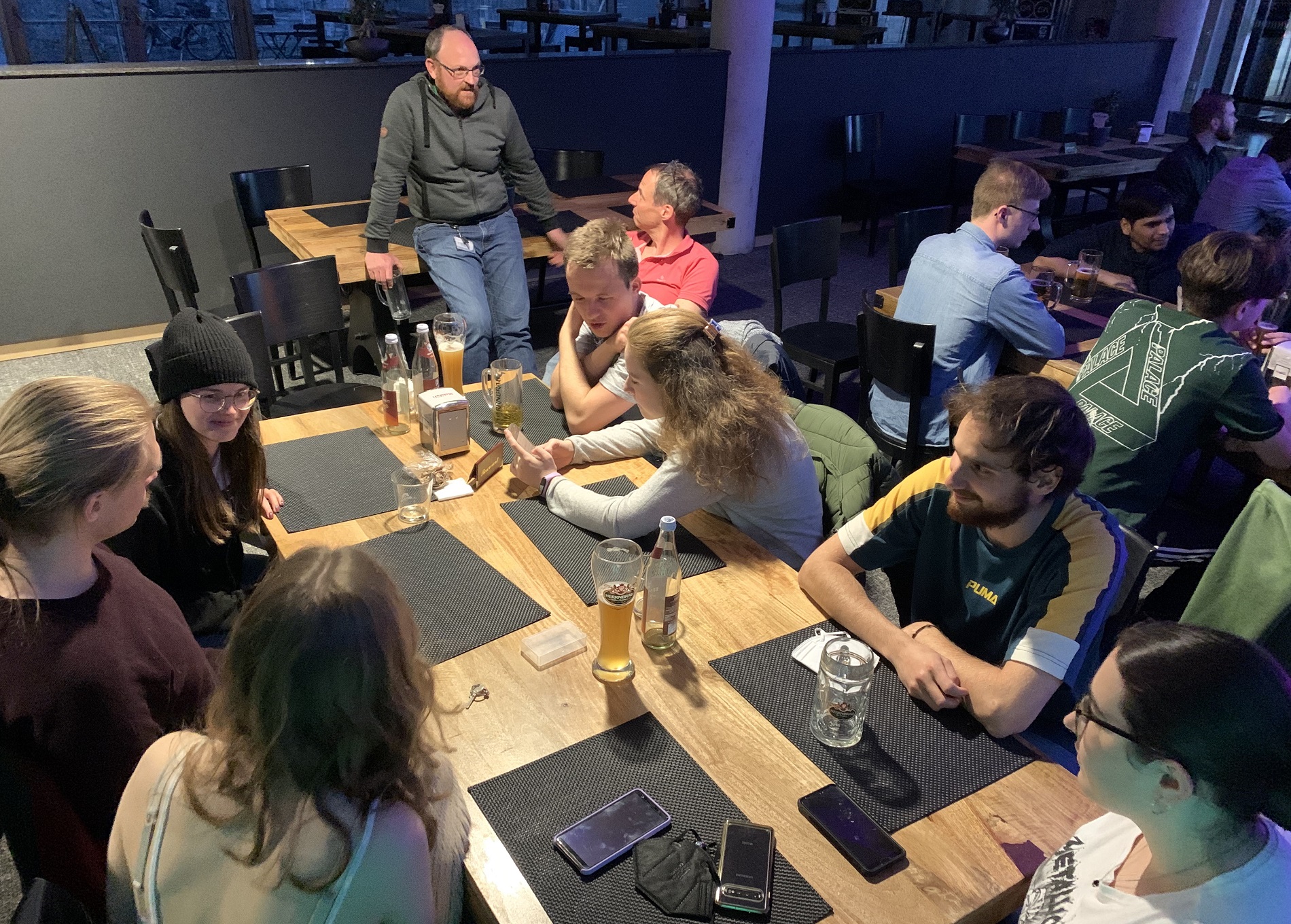
Every four weeks, always on Wednesdays from 6 pm, the aeronautical engineers meet for a regular get-together at Reimanns at the THI. It’s an opportunity to catch up with one another throughout the semester, get to know the lecturers better and discuss a wide range of topics, approaches and possible solutions.

Maiden flight of the Pelikan


Various drones

Outdoor Aviation Days Team

We want you to make the most of your degree in Aeronautical Engineering, and we’re here to support you in doing so. “I studied Process Engineering because an academic adviser gave me a very clear picture of both the course and the future career prospects. Materials science was also on my shortlist – but in the end, it was a gut decision,” says Prof. Armin Soika, who is now an academic adviser for the Bachelor’s degree programme in Aeronautical Engineering.
If you’re passionate about aviation and interested in studying aeronautical engineering; if you’re a female student and need further good reasons to pursue a technical degree; or if you’re an aeronautical engineering student with questions about your future academic path – please get in touch with us.
What does a student ambassador do:
▹Advising prospective students (online and in person)
▹Representing THI at fairs and school visits
▹Acting as a testimonial for photo and video shoots
▹Contributing and implementing your own ideas for the website design
▹Leading campus tours
▹Research into the degree programme (including interviews with alumni, etc.)
https://www.thi.de/service/angebote-fuer-schulen-und-schuelerinnen/studienbotschafter
What does a mentor for schoolgirls and female students do:
▹Supporting sixth-form pupils in choosing the right technical degree programme
▹Supporting first-year female students as they begin their studies
▹Sharing experiences regarding the course structure and starting a career
▹A programme of workshops and company visits
https://www.thi.de/service/mentoring-fuer-schuelerinnen-und-studentinnen-in-technik