
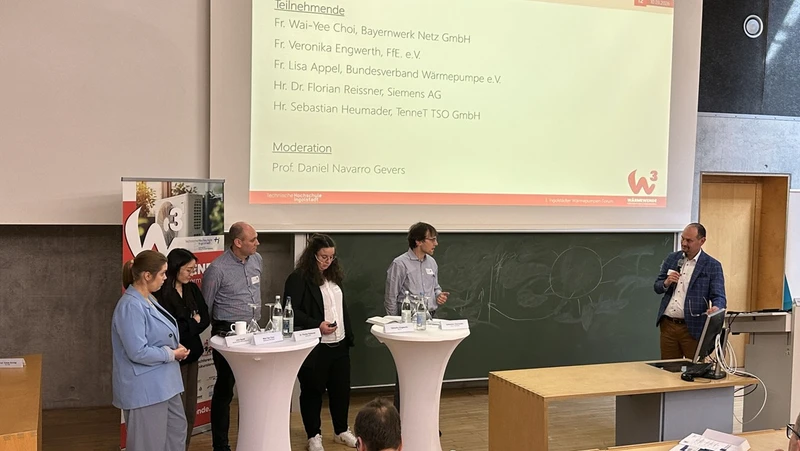
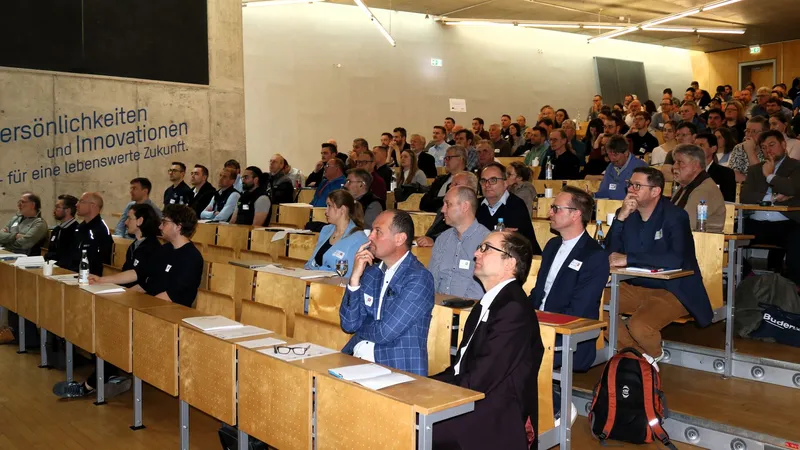
Heat pumps are considered an important component of a climate-friendly energy supply. However, with their growing popularity, new challenges are coming into focus: How can the systems be sensibly integrated into electricity and heating grids? What potential do they offer for load shifting and system stability? And what technical and legal requirements are necessary for this? These questions characterised the presentations and discussions at the event. One focus was on current regulatory developments concerning Section 14a of the German Energy Industry Act (EnWG), which governs grid-oriented control of systems such as heat pumps, wallboxes, and storage systems. Experts shed light on the practical implementation of the regulations and their impact on grid operation and system operators. Current research results and practical examples were also presented. Topics included the provision of flexibility through decentralised heat pumps, the results of a study on heat pumps in the distribution grid, and innovative approaches to the use of heat sources and storage systems. The perspectives of grid operators were also considered, such as the current status of the rollout of control units at distribution grid operators or the simultaneous utilisation of flexibility options in redispatch by transmission grid operators. The forum was organised by the Institute of New Energy Systems (InES) at THI together with the transfer cluster "Heat Pumps & Heat Networks - Shaping the Heat Transition Intelligently" (W-hoch-3). The European Union funds the W-hoch-3 project as part of the ERDF. The aim is to bring together current developments from research, practice and regulation and to stimulate dialogue on the heating transition. The presentation materials are available to download from the InES Knowledge Transfer page. |
Heat pumps as the key to the energy transition - specialist forum at Technische Hochschule Ingolstadt (THI)

![[Translate to English:] Logo Akkreditierungsrat: Systemakkreditiert](/fileadmin/_processed_/2/8/csm_AR-Siegel_Systemakkreditierung_bc4ea3377d.webp)