Welcome to the Faculty of Electrical Engineering and Information Technology
Bachelor
Master

Who we are
The Faculty of Electrical and Information Engineering at Ingolstadt University of Technology is committed to innovative teaching and applied research in the future-oriented fields of electrical engineering, information technology, robotics, healthcare and communications technologies. The focus is on the technological challenges posed by digitalisation, the energy transition, electromobility and autonomous systems.
The range of courses on offer includes Bachelor’s and Master’s programmes with a wide variety of specialisation options. These include, amongst others, programmes in the fields of electrical engineering and robotics, as well as forward-looking Master’s programmes such as AI Engineering of Autonomous Systems, International Automotive Engineering, Patent Engineering and the new international Master’s programme in Intelligent Aerial Systems.
The faculty is supported by a dedicated team of professors, research staff, lecturers and technical specialists. Together, they combine excellent education with research and knowledge transfer, and develop solutions for the interconnected and sustainable world of tomorrow.
Studying at the Faculty of Electrical Engineering and Information Technology
Practical projects, state-of-the-art laboratories and close collaboration with businesses create the ideal conditions for a successful start to a career.


Faculty laboratories
Laboratory for Assembly and Joining Technology (C301)
Assembly and interconnection technology (AVT) is a key technology for microelectronics. The Internet of Things (IoT) has been, and continues to be, made possible solely by innovations in assembly and interconnection technology.
Laboratory for Electrical Power Generation and Conversion (G009)
The Laboratory for Electrical Power Generation and Conversion focuses on fundamental and current issues relating to the generation, distribution and conversion of electrical energy.
Laboratory for Electrical Energy Storage – Electrochemistry (C301)
In the electrochemistry laboratory, chemical reactions that take place in energy storage systems can be studied and brought to life for students.
Laboratory for Electrical Energy Storage – Battery System Technology (C301)
The laboratory focuses on training students in the field of battery cells and battery management electronics, as well as on the development of battery measurement technology.
Laboratory for Electrical Machines and Drives (G 008)
Here, we address fundamental and current issues relating to the design and operation of electrical machines and their control. The laboratory is situated close to the Laboratory for Electrical Power Generation and Conversion, where research focuses on the conversion of electrical energy and, consequently, on power electronics.
Laboratory for Electromobility and Adaptive Systems (G212)
In our lectures and practical sessions, we explore fundamental and topical issues relating to electromobility and adaptive systems. The broad term ‘electromobility’ generally refers to mobility powered by electric drives, although the degree of electrification may vary.
Electromagnetic Compatibility (EMC) Laboratory (C008/C009 and C306)
The Electromagnetic Wave Propagation Laboratory, which features an anechoic chamber and basic EMC equipment, aims to teach electrical engineering students the fundamentals of high-frequency EMC measurement as part of a practical training programme.
Vehicle Mechatronics Laboratory (G007)
High-Frequency Technology Laboratory (C306)
In our laboratory, we focus on fundamental issues and measurement methods relating to the technology of high-speed electrical signals, such as those found in current and future high-bit-rate digital technology. The laboratory is integrated into the teaching programme for the Electrical and Information Engineering degree course.
Laboratory for Fundamental Electrical Engineering and Electrical Measurement Technology (C202)
The ‘Fundamentals of Electrical Engineering and Electrical Measurement Technology’ laboratory (C202) is – like the associated ‘Circuit Technology’ laboratory (C201) – the foundation of all hardware laboratories within the Faculty of Electrical Engineering and Computer Science.
Laboratory
Life Sciences Laboratory
This involves the integration of life sciences and (electrical) engineering. We examine the processes, structures, behaviour and functioning of living organisms from a technical perspective. The laboratory serves primarily as a centre for training and research, with a focus on biosignals and physiological measurement methods, ranging from the heart to hearing.
Laboratory
Microcomputer and Digital Technology Laboratory (C206)
Microcomputers and FPGA controllers are an indispensable integral part of smartphones, engine control units, PCs, the Internet of Things (IoT), …
Laboratory for Modelling and Model-Based Development Methods (C006)
Here, we deal with the creation, implementation and validation of simulation models for electromechanical systems. By taking into account the physical relationships and their mathematical descriptions, real-world systems can be translated into models.
Robotics Laboratory (G003)
The Robotics Laboratory is a key facility for exercises, practical sessions, projects and final-year dissertations on the industry-oriented degree programmes at Ingolstadt University of Technology. It can also be used for experimental investigations as part of research projects.
Control Engineering Laboratory (C302)
The room is used for the practical sessions that accompany the lectures on control and automation engineering. Here, at six workstations, students work in small teams to consolidate the knowledge they have acquired in the lectures.
Circuit Technology Laboratory (C201)
The C201 Circuit Technology Laboratory – like the associated Measurement Technology Laboratory (C202) – is the foundation of all the hardware laboratories within the Faculty of Electrical Engineering and Computer Science.
Digital Signal Processing and Optoelectronics Laboratory (C307)
The laboratory’s primary role is to provide students with practical training in the field of digital signal processing.
-
Simply use technology – or master technologies and shape the future?
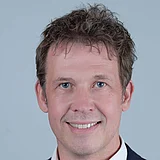
Prof. Dr.-Ing. Michael MeckingDekan der Fakultät Elektro- und Informationstechnik