Jessica Forster, M.A.
Group Leader Intern. Cooperation Africa & Central Asia at the Institute of new Energy Systems (InES)

The lack of access to energy is one of the main obstacles to reducing poverty and bolstering industrialisation, as can be witnessed around the globe. That is why the focus on international research activities at InES is one of the cornerstones of the institute's strategy. Consequently, researchers at InES are active in a variety of international cooperations in the realm of Renewable Energies.
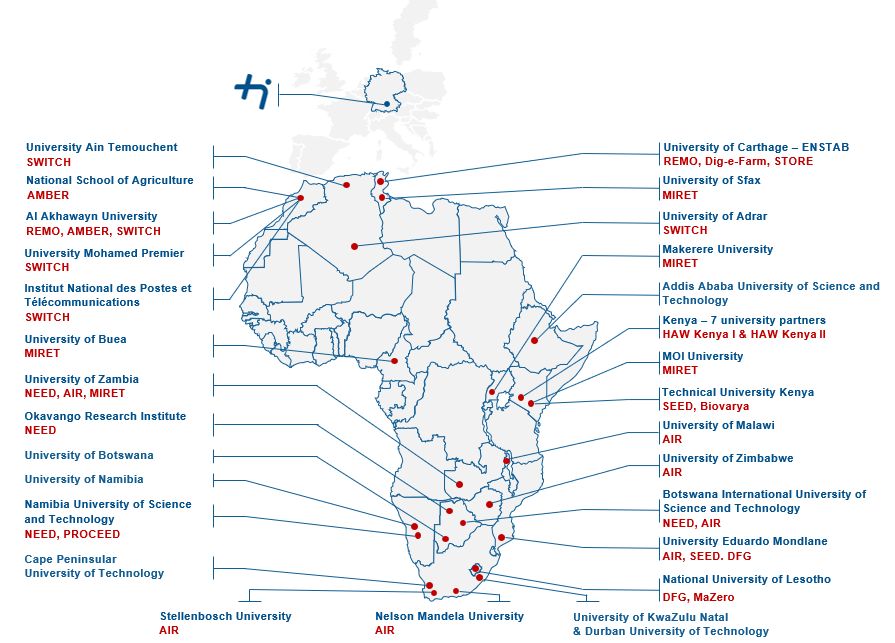
In the spirit of a university-wide internationalisation, InES has been leading international research projects since 2004 and offers students from all over the world the opportunity to complete a research stay in Ingolstadt. So far, nearly 40 international guests have been working at the Institute, in the context of completing internships, writing their theses or due to other science-related stays. The research activities of the InES outside Europe focus primarily on Africa and Central Asia. Please visit our International Energy Research Department webpage for detailed project information.
Focus on Africa
The Team at InES has specialised on cooperations with scientific institutions and companies in Africa. Despite the abundance of solar, wind and biomass ressources, large parts of the population in rural areas of African countries lack access to electricity. To change this situation, core elements of the Institute's international cooperation encompass the promotion of the use of energy systems based on Renewable Energies as well as the transfer of technology with local stakeholders.
Focus Central Asia
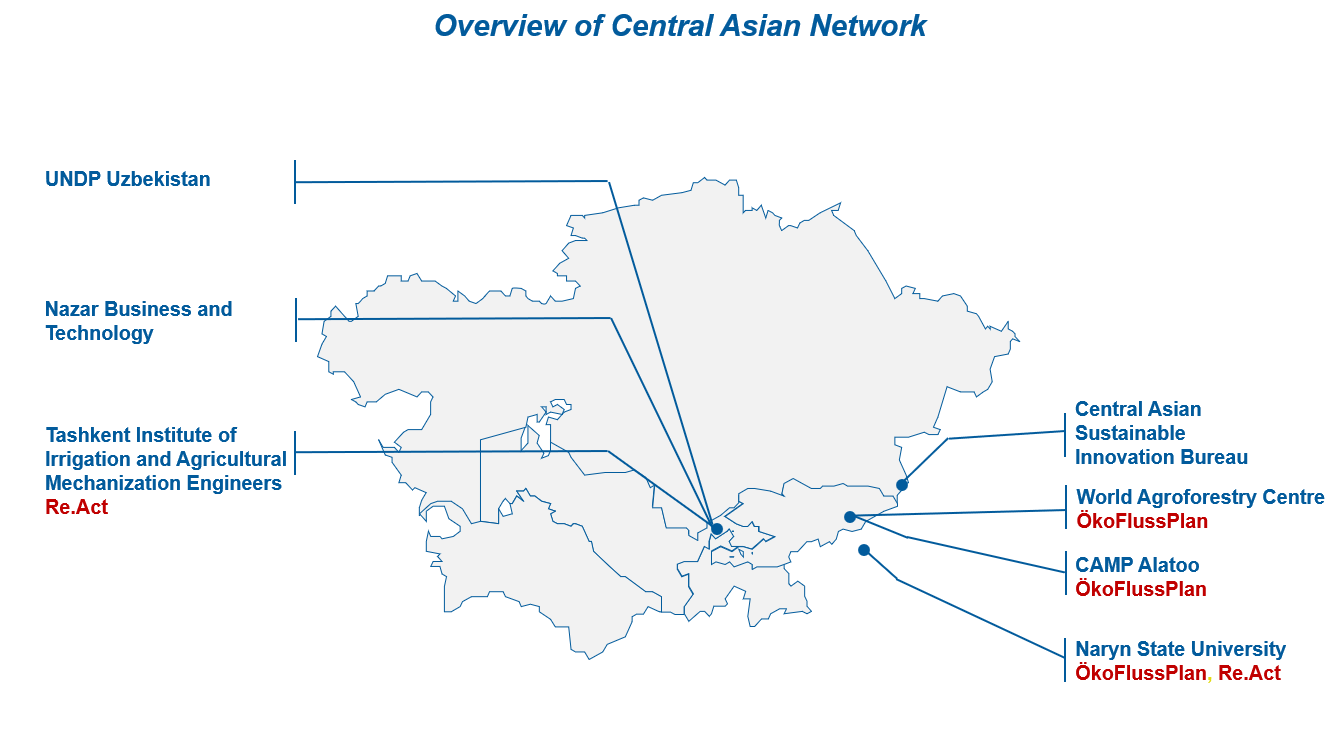
The InES team specializes in collaborating with academic institutions, NGOs, and industries in Central Asia (Kazakhstan, Kyrgyzstan, Tajikistan, Turkmenistan, and Uzbekistan). Their primary research areas in Central Asia include building energy research, enhancing energy efficiency, promoting sustainable heat energy transition, decarbonizing high-altitude and cold climatic communities, Agri-PV, energy demand modelling, energy supply modelling, integrating renewables by various energy systems, and capacity building.
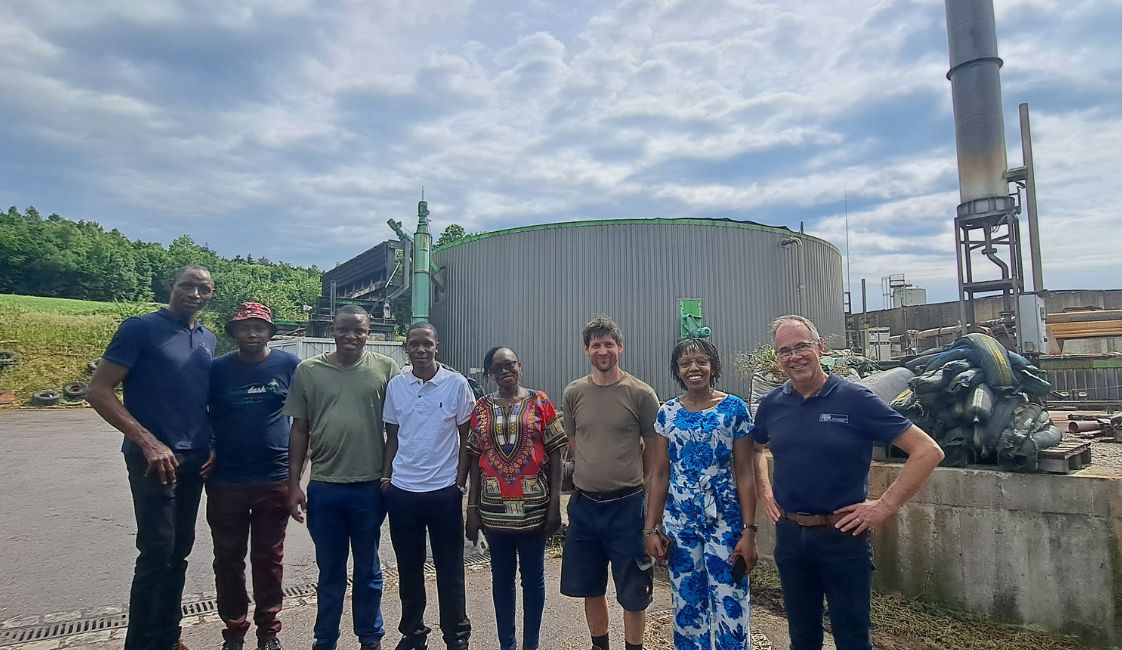
The BIOVARYA project, led by InES in collaboration with the Technical University of Kenya (TU-K), aims to establish a network between Kenyan and Bavarian biogas companies. At the beginning of June, a Kenyan delegation - including three biogas sector entrepreneurs - traveled to Ingolstadt to engage in intensive discussions with Bavarian experts. The visit generated new ideas and exciting perspectives on the international biogas market, as well as concrete ideas for future cooperation.
>>Newstext
>>Project Profile

News coverage of the conference in the Moroccan media > To play the video please click on the image
From the 17th to 19th of April, the International Conference on Digital Technologies and Applications (ICDTA25) was hosted by Al Akhawayn University. The event featured key advancements in the SWITCH project, with Dr Kedar Mehta and Ms Bertha Lwakatare presenting two critical topics online: 'AI and ML-based Energy Management in Smart Grids with Renewable Integration' and 'Agrivoltaic system design: A Guide to the Nexus of Agriculture and Photovoltaics for Sustainable Energy and Agricultural Co-Development'.
>>Project Profile
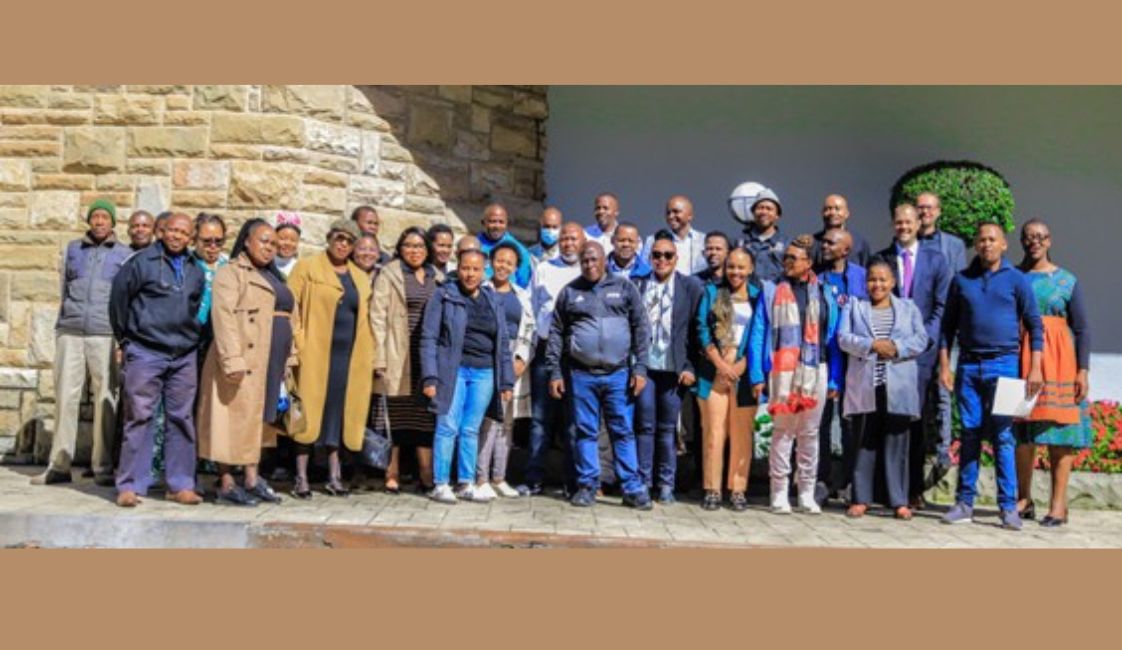
MaZero Project Team with local Stakeholders in Lesotho
The MaZero project team met in Lesotho to discuss the start of the three-year collaborative project and align on initial steps. In productive discussions, progress was reviewed, and key decisions were made for the upcoming activities.
>>Newstext
>>Project Profile
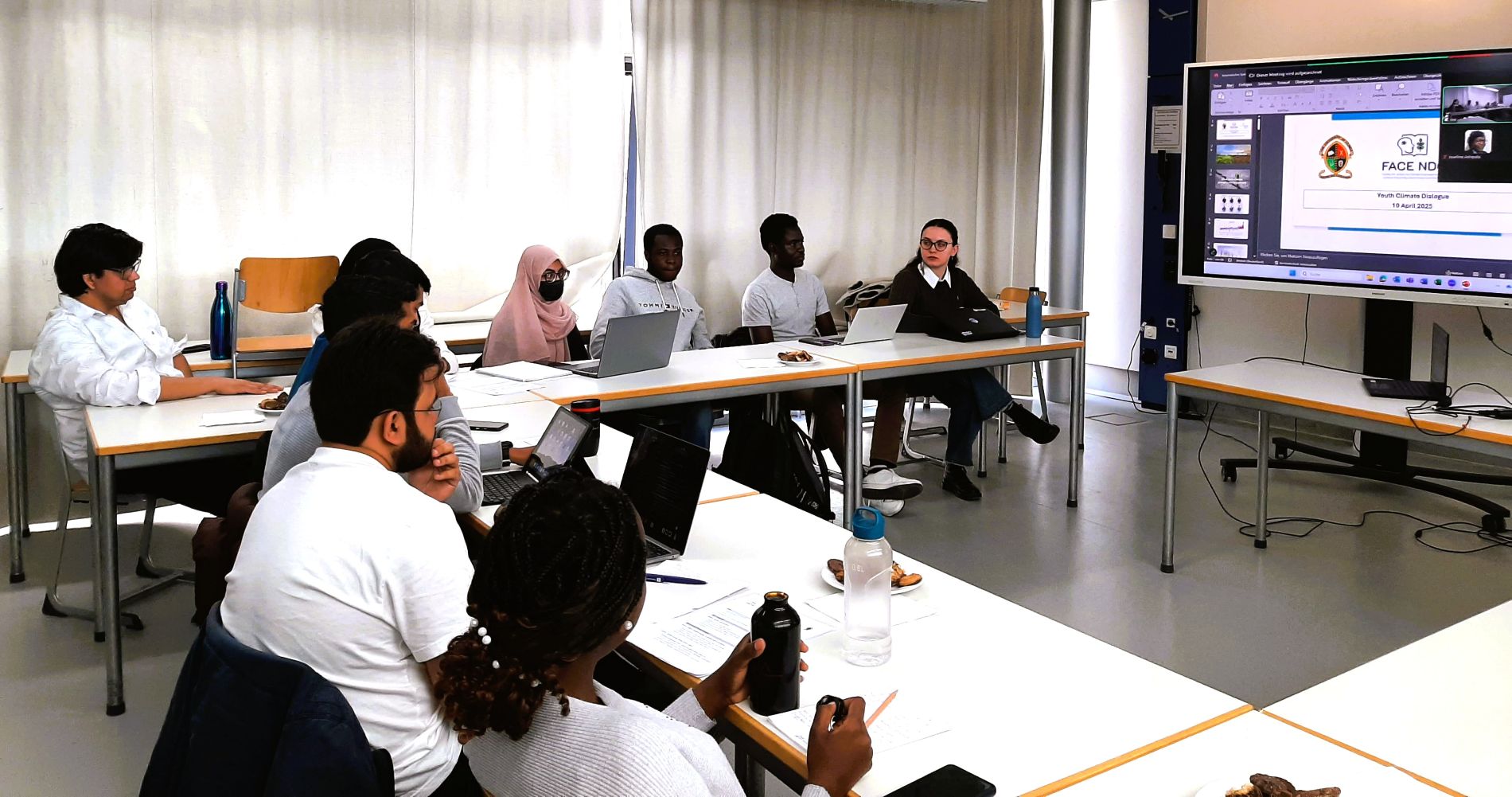
THI participants at the Youth Climate DIalogue
The first Youth Climate Dialogue between students from THI and the University of Zambia took place on April 10. This exchange, organized by UNITAR as part of the FACE-NDC project, allowed participants from both universities to discuss the impacts of climate change within their respective contexts. After introductory presentations about the country-specific consequences in Germany and Zambia, the discussion focused on the key topics of energy justice and climate financing. The aim of the Youth Climate Dialogue initiative is to promote dialogue and reflection among young people on global climate issues.
>>Project Profile
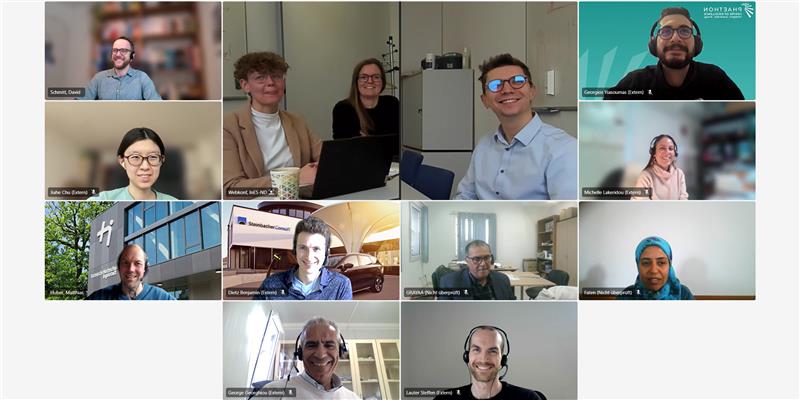
Project "STORE": Kick-Off-Onlinemeeting
In February, our STORE project was officially launched with a virtual kick-off. Representatives of THI-InES and their project partners from the Ecole Nacionale des Sciences et Technologies Avancées à Borj Cédria (ENSTAB), the University of Cyprus (UCY) and from Steinbacher Consult Ingenieurgesellschaft mbH & Co. KG.
The project enables the development of an AI-supported Smart Flexibility Energy Manager (SFEM), which should enable the integration of large-scale charging infrastructure for electric vehicles into supermarket infrastructure, as well as the utilisation of the electricity produced by the markets themselves. The first meeting was used to get to know each other better, define goals together and discuss the next milestones in detail.
>>Project Profile

Eden biofarm: Site of the planed pilot plant
The Dig-e-Farm project will install an Agri-PV pilot plant on a farm in Tunisia. The electricity generated will be used, among other things, to power an artificial intelligence system that intelligently controls irrigation and is expected to save up to 40% of water.
A team from InES therefore travelled to Tunisia to visit the biofarm where the pilot plant will be built. A further event on the agenda was a workshop on Agri-PV in Tunisia, which was attended by representatives from industry, research and politics.
>>Project Profile
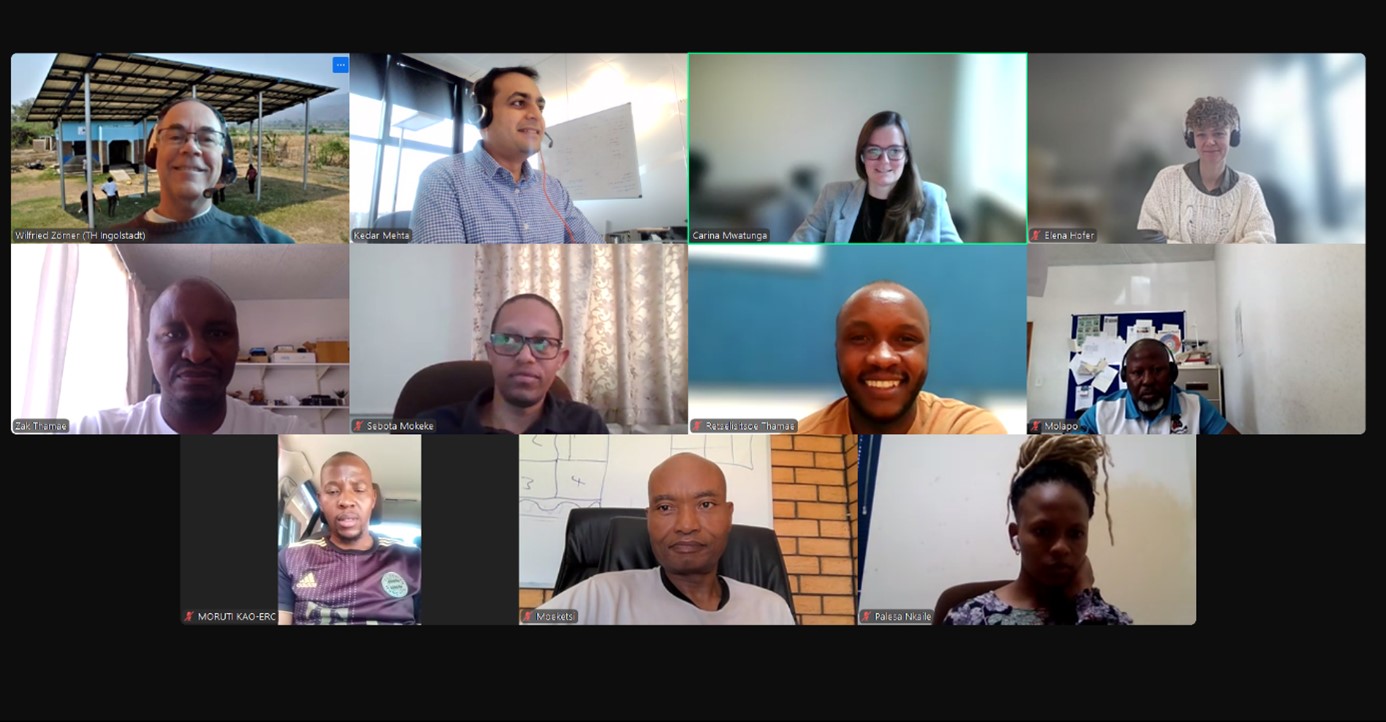
Group Picture of all participants of the virtual Kick-Off event.
In December, a virtual kick-off meeting for the MaZero project took place. Representatives from THI-InES and their project partners from the National University of Lesotho (NUL) and the NGO Technology for Development (TED) gathered for this event. The MaZero project aims to pilot renewable energy-based e-mobility in Maseru, thereby decarbonising the transport sector in Lesotho. The initial meeting can be considered a significant milestone. It allows partners to get familiar with each other, define their objectives, clarify responsibilities and roles, and plan the project's next steps.
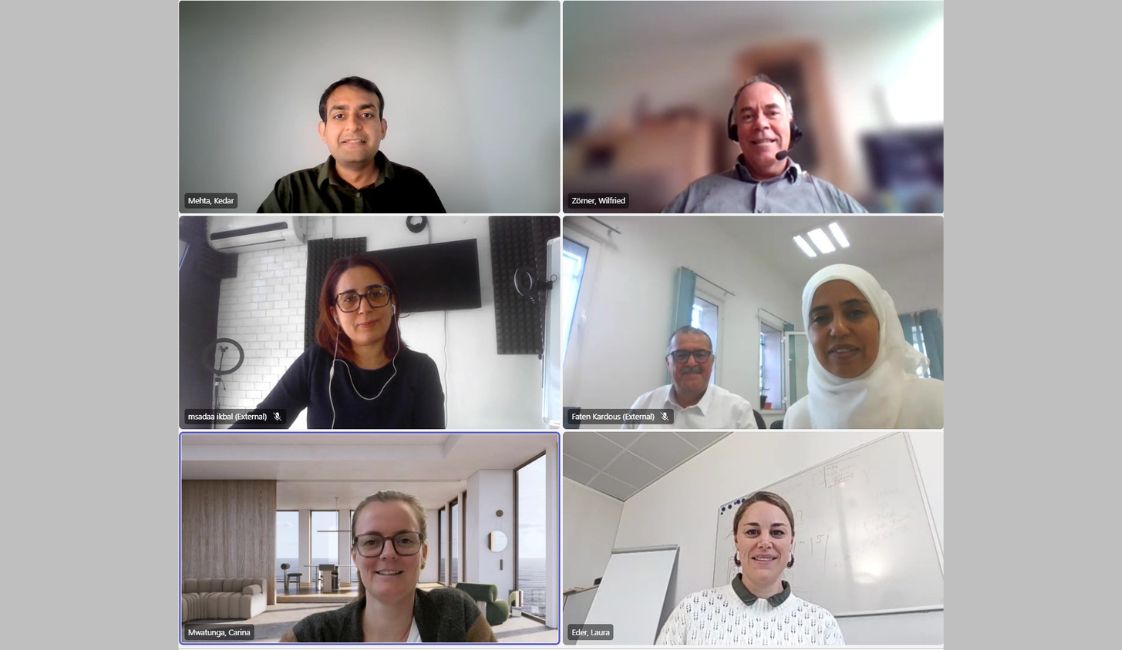
Kick-Off-Online-Meeting
Together with the Ecole Nacionale des Sciences et Technologies Avancées à Borj Cédria (ENSTAB) from Tunisia, THI will be tackling challenges of the water-energy nexus in Tunisian agriculture over the next three years. The project enables the construction of a pilot plant in which the novel concept of combining artificial intelligence, Agri-PV and irrigation can be tested. The project partners already know each other from previous joint projects, so the virtual kick-off event for the Dig-e-Farm project on 4th November 2024 focused primarily on content-related topics.
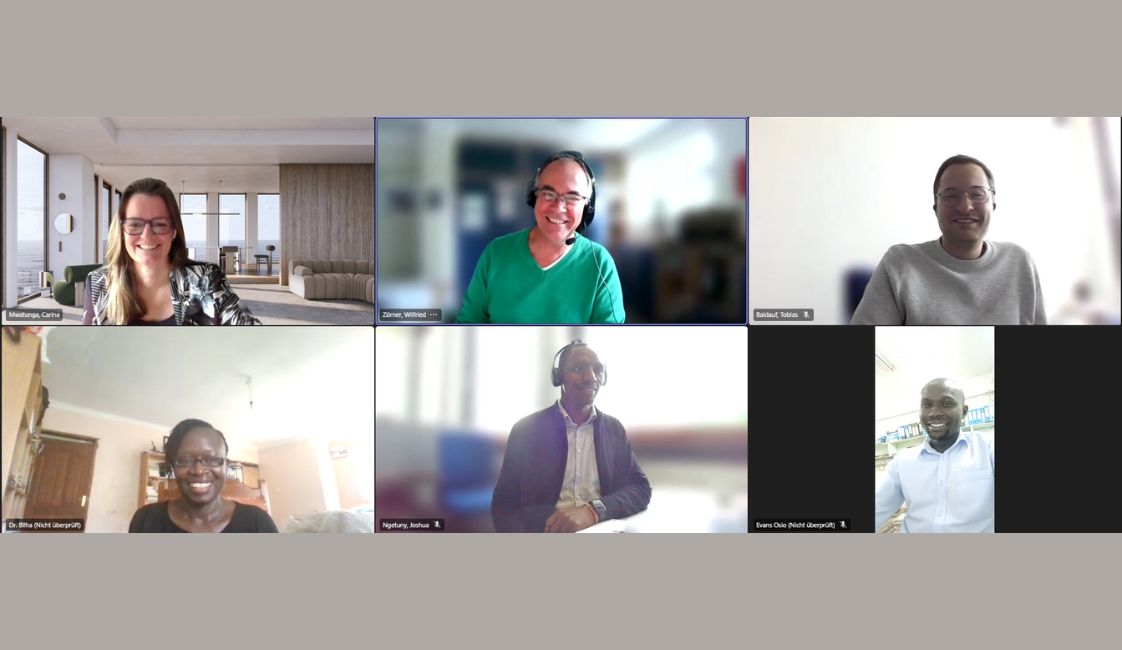
Kick-Off-Online-Meeting
In September, representatives of THI and project partners from the Technical University Kenya (TU-K) met for a virtual kick-off meeting for the BIOVARYA project - Establishing a BIOgas network for BaVARia and KenYA. The first meeting served to get to know each other and to coordinate the further procedure and future cooperation.
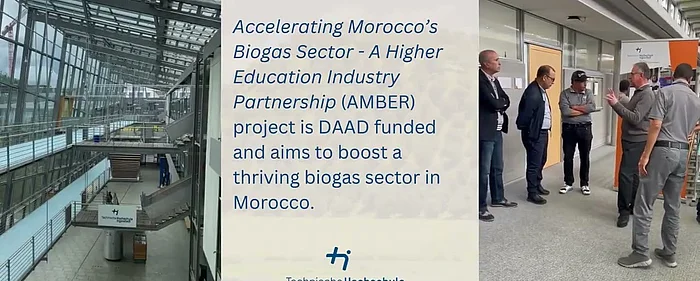
In July the AMBER project team gathered at InES for a productive project review. Joined by partners from ENA, AUI, and several external experts, we engaged in vital discussions and listened to insightful presentations on biogas utilization in Morocco and Germany.
>>Newstext
>>Project Profile
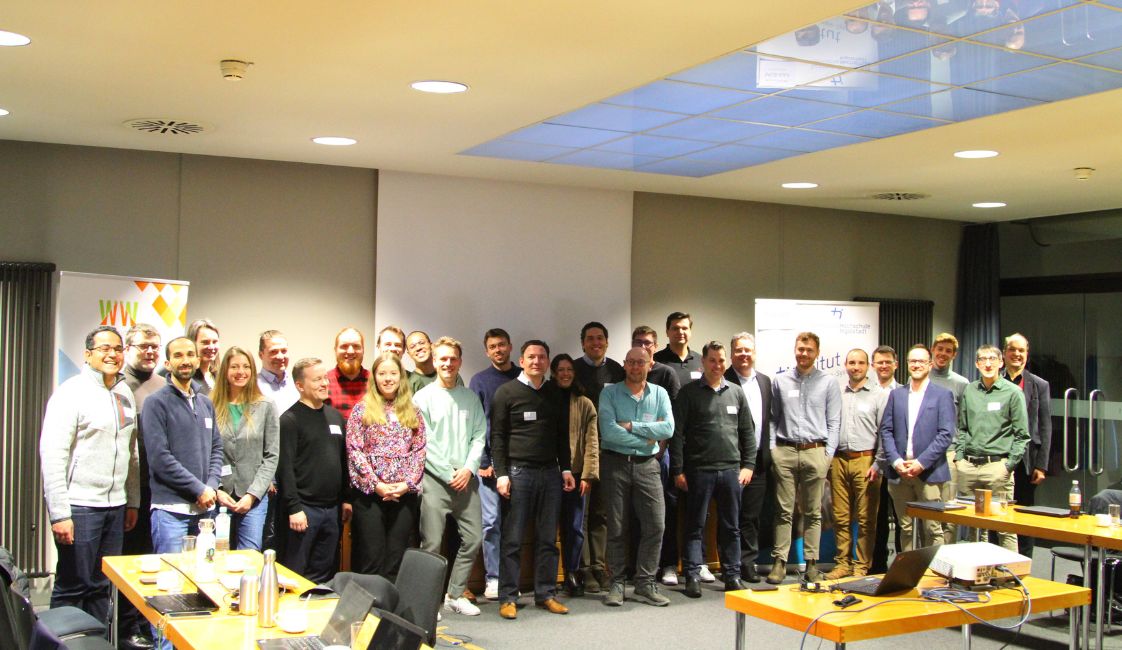
INTERSTORES project team at the kick-off in Ingolstadt
As part of the "INTERSTORES" project funded by the Horizon Europe programme, InES will work on an innovative approach to large-scale thermal energy storage over the next four years as part of a consortium of 14 partners led by Martin Luther University Halle-Wittenberg. INTERSTORES aims to achieve market acceptance, technological attractiveness and competitiveness of seasonal thermal energy storage (sTES) by improving performance, cost efficiency and reliability.
>>Newstext
>>Project Profile
The successful execution of an industry workshop in Tunis marked one of the final events before the closure of the Renewable Energy-based E-Mobility in Higher Education (REMO) project in December 2023, concluding its 3.5-year duration. The project adopted a holistic approach to practical-oriented higher education, with a specific focus on renewable energies and e-mobility.
>>Newstext
>>Project Profile

The PROCEED Team during the final conference in Windhoek, Namibia
The closing conference in Windhoek, Namibia, on September 14th and 15th marked the end of the German-Namibian research project PROCEED. During the concluding project trip, project leader Prof. Zörner and the team bid farewell to the local partners and pilot communities.
>>Newstext
>>Project Profile
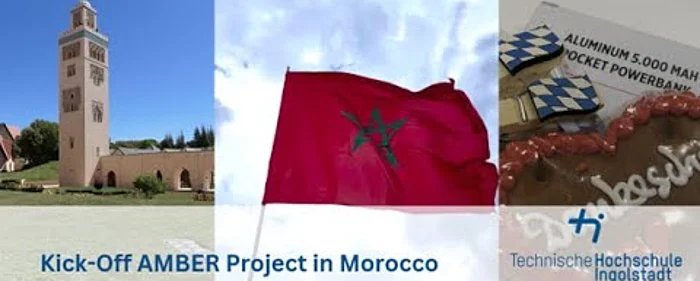
The first project meeting of all project partners of AMBER - Accelerate Morocco's Biogas Sector took place from 15 to 19 May 2023 at the partner university Al Akhawayn University (AUI) in Ifrane, Morocco. At the meeting, the representatives of THI together with AUI and École Nationale d'Agriculture were able to deepen the planning for the project period and exchange ideas and knowledge.
>>Newstext
>>Project Profile
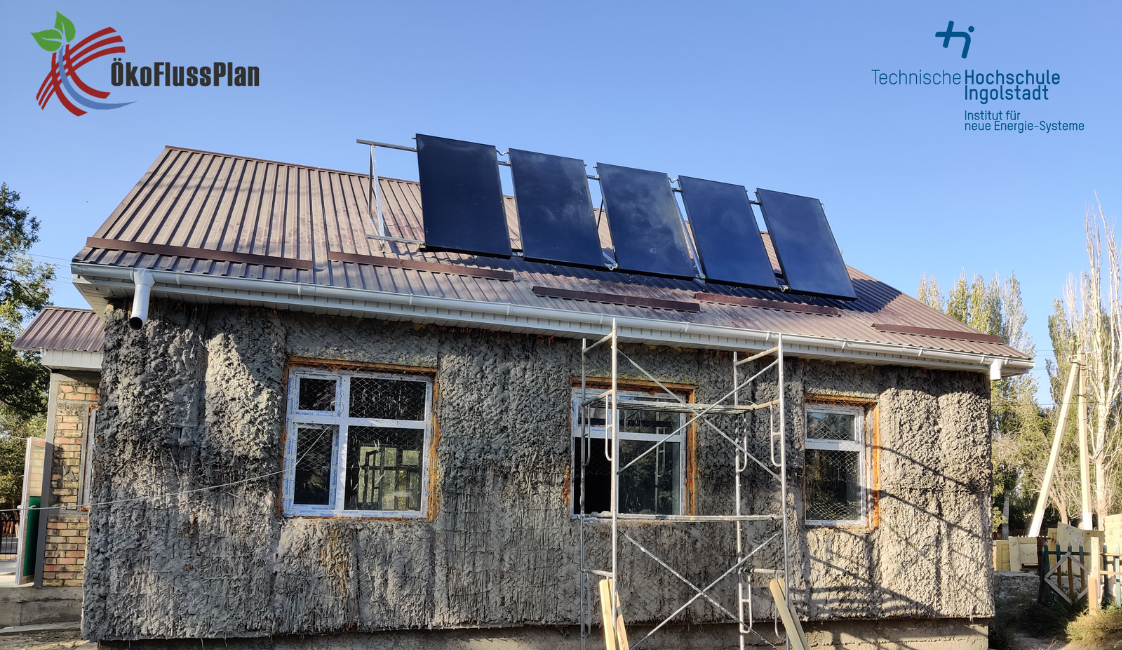
"Real Lab" in Ak-Tal, Kyrgyzstan
The Real Lab takes a multi-dimensional approach to spread knowledge and awareness about renewable energies in rural areas of Kyrgyzstan. It is a 100 m² building that is being constructed in Ak-Tal, a village in the Naryn region. The focus of the work is on sustainable insulation and sustainable heat supply.
>>Newstext
>>Project Profile
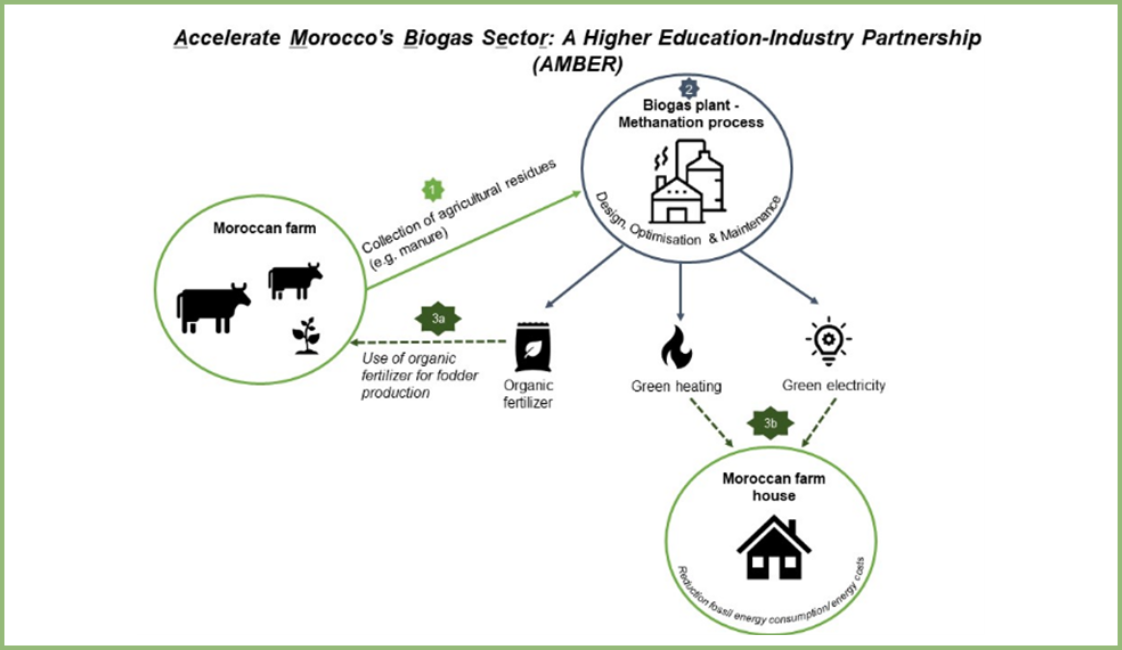
Depiction of research focus in AMBER
With the DAAD-funded cooperation project " AMBER - Accelerate Morocco’s Biogas Sector: A Higher Education–Industry Partnership " we try to boost the biogas sector of the Maghreb country together with our project partners from Morocco. The project will be implemented between 01.10.22 and 31.12.25.

Group picture in Maputo/Mozambique
After more than two years of purely digital exchanges and extensive Zoom calls, the PROCEED team was finally able to meet in person in Namibia! From April 2nd to 15th, representatives from Technische Hochschule Ingolstadt (THI), University of Bayreuth (UBT), Hochschule Neu-Ulm (HNU) and IBC SOLAR AG were able to visit partners in Windhoek
>>Newstext
>>Project Profile
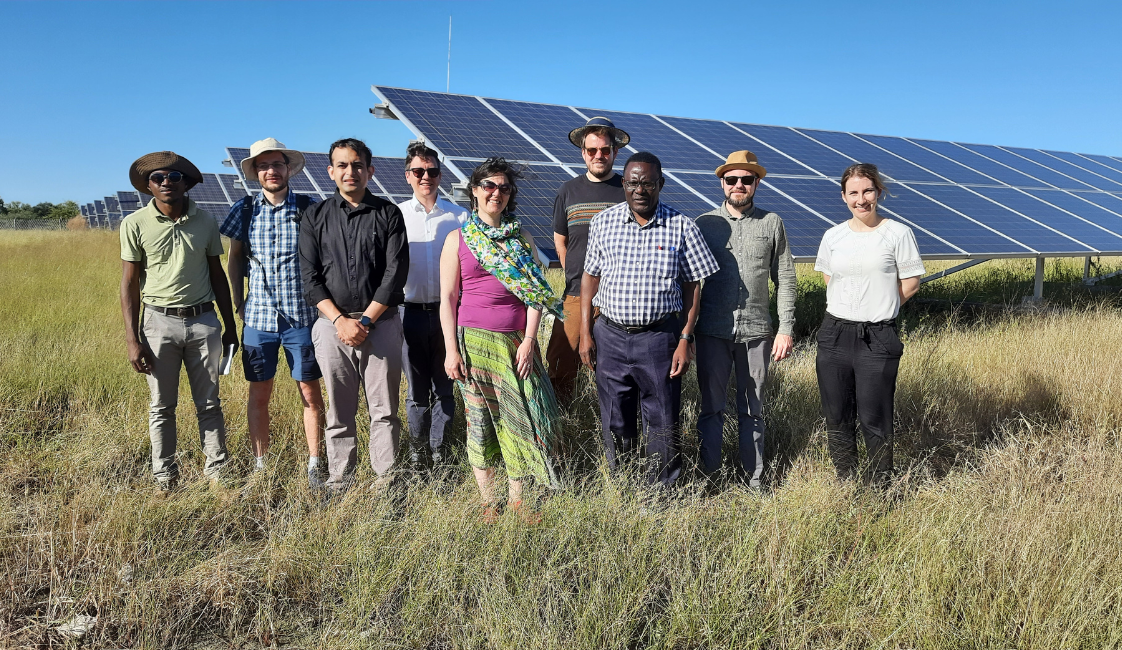
The PROCEED travel group at the mini-grid in Tsumkwe
After more than two years of purely digital exchanges and extensive Zoom calls, the PROCEED team was finally able to meet in person in Namibia! From April 2nd to 15th, representatives from Technische Hochschule Ingolstadt (THI), University of Bayreuth (UBT), Hochschule Neu-Ulm (HNU) and IBC SOLAR AG were able to visit partners in Windhoek
>>Newstext
>>Project Profile
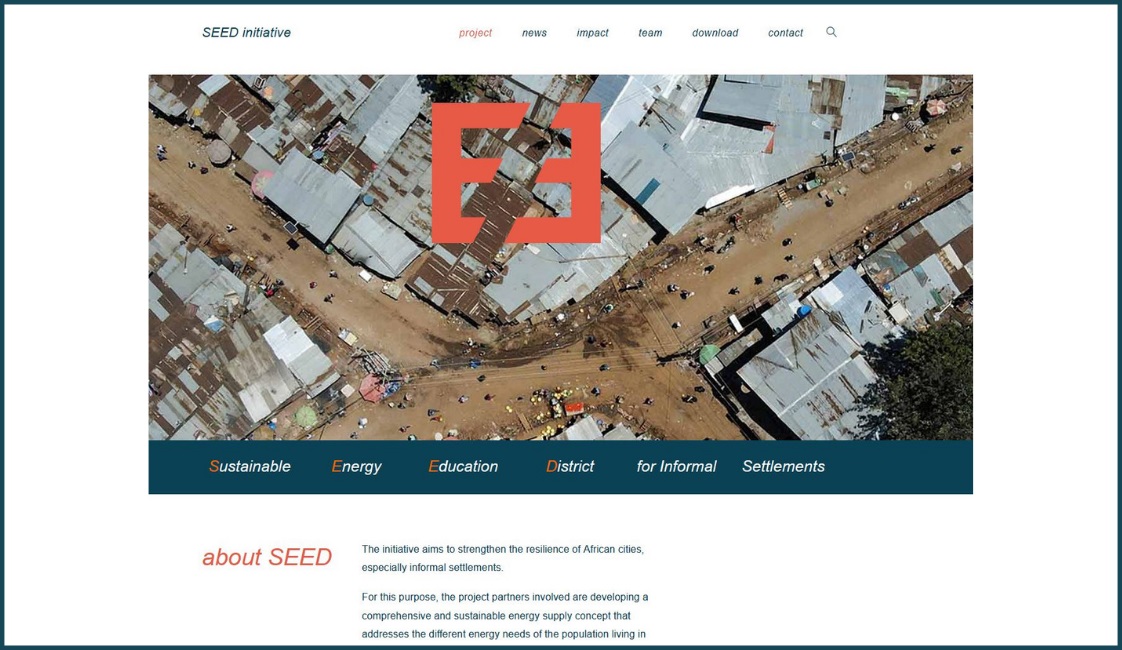
Excerpt of the SEED-website
We are pleased to announce that our project Sustainable Energy Education Districts for Informal Settlements, SEED, has its own project website now. On this website, the Institute of new Energy Systems and the project partners Technical University of Kenya, Universidade Eduardo Mondlane, Universität Bayreuth and Phaesun GmbH will regularly inform about the latest developments and results in the conceptual development of the holistic energy concept. Please visit us at www.seed-initiative.org.
SEED (funding code: 01DG21015A) is sponsored by the German Federal Ministry of Education and Research funding research for the strengthening of resilience and development of structures in African cities and conurbations (AfResi), sponsored by the German Federal Ministry of Education and Research.

The booth of Technische Hochschule Ingolstadt and the InES Team at the OFF-GRID Expo & Conference Augsburg 2021
On December 2nd and 3rd, the Institute of new Energy Systems (InES) presented both the Technische Hochschule Ingolstadt and its international project activities at its booth at the OFF-GRID Expo & Conference in Augsburg. More than 50 exhibitors from the off-grid community had the opportunity to demonstrate their off-grid solutions and products. Exhibitors included other universities as well as (international) companies specialised in the off-grid sector. The event was implemented on-site in compliance with hygiene guidelines and a test concept.
>>Newstext
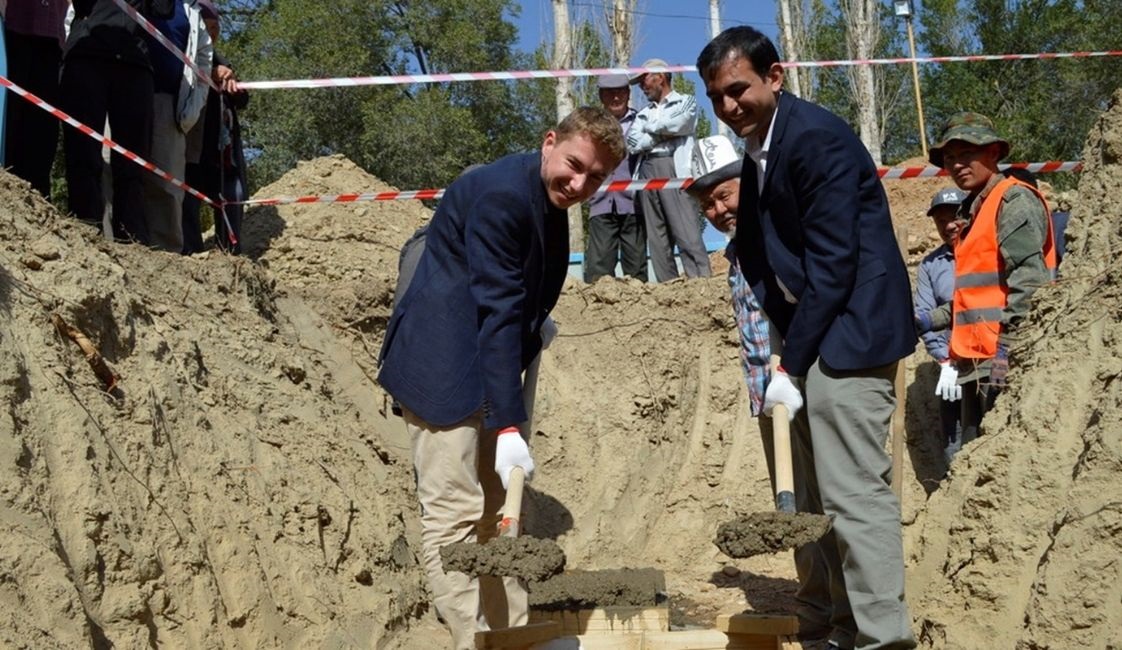
Figure 1 Initialising the construction work of "Real Lab" by InES members Mr. Kedar Mehta and Mr. Jakob Beringer in September 2021 in Ak-Tal, Naryn region, Kyrgyzstan.
Construction has been begun of “Real Lab” – a community house, to demonstrate the use of sustainable energy solutions in high-altitude and cold climatic region of rural Kyrgyzstan.
>>Project Profile
>>Newstext
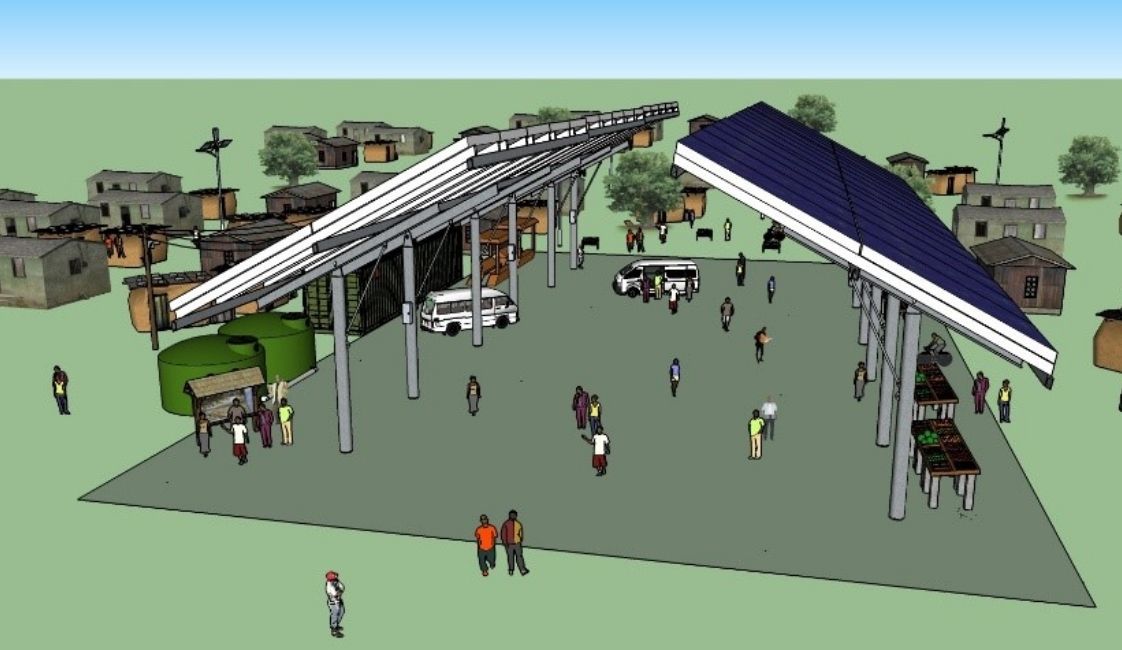
Schematic illustration of the possible design of an Energy-Hub within the SEED project.
The BMBF-funded joint project "Sustainable Energy Education Districts for Informal Settlements" (SEED) will develop sustainable energy supply concepts - so-called "energy hubs" - for informal settlements in emerging and developing countries together with project partners from Kenya and Mozambique. InES has the overall lead of the project, which will be implemented in the period from 01.04.21 to 31.03.24. Other partners on the German side are Phaesun GmbH and the University of Bayreuth. On the local side, the Technical University Kenya and the Eduardo Mondlane University in Mozambique, among others, are involved in the project.
>>Project Profile
REMO-Project logo
The Renewable Energy-based E-Mobility in Higher Education (REMO) project is focusing on higher education in the countries of Tunisia and Morocco. The aim is to increasingly address the topics of renewable energy technologies (RET) and e-mobility in teaching and research. At the first virtual meeting with the North African university partners Al Akhawayn University (AUI) and University of Carthage - National School of Sciences and Advanced Technologies in Borj Cedria (ENSTAB) as well as industrial partners from Morocco, Tunisia and Germany, the project partners introduced themselves to each other and discussed the next steps. In the coming months, among other things, the project teams will be completed and the research topics defined. REMO is funded by the DAAD and continues until December 2023.
>>Project Profile
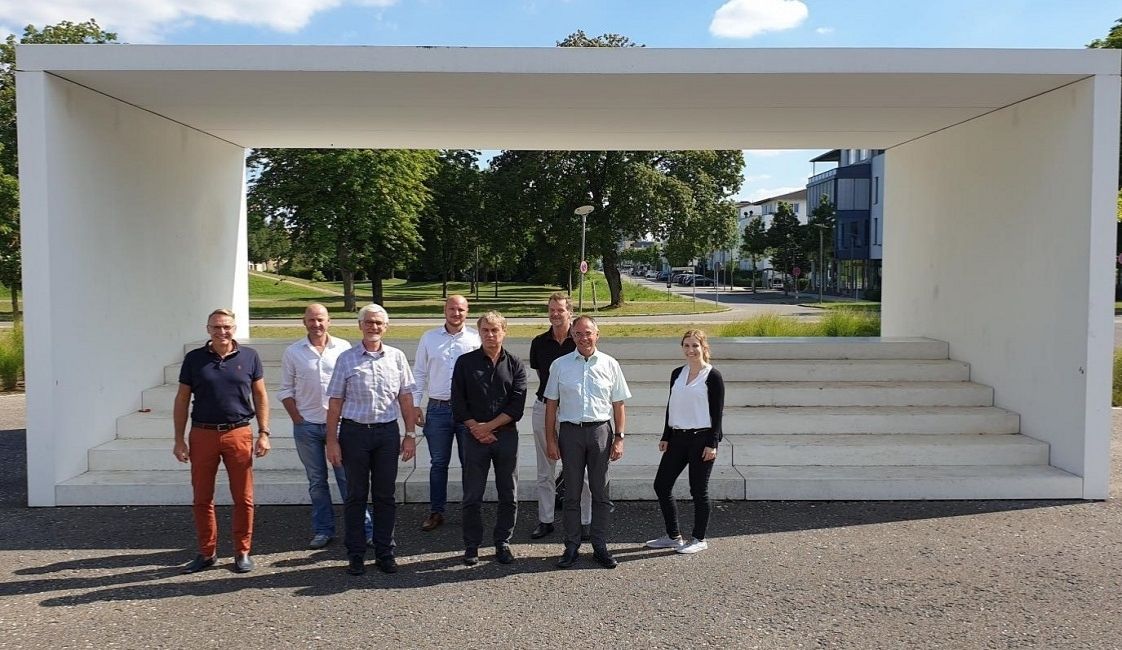
Group picture of representatives of the participating universities
The Bavarian Research Institute of African Studies (BRIAS) was founded in 2014 by four universities: Hochschule Neu-Ulm, University Würzburg, University Bayreuth as well as Technische Hochschule Ingolstadt. The aim of BRIAS is to sensitize key stakeholders in politics and society for the universities’ comprehensive expertise in interdisciplinary research with African partners. At this year's coordination meeting in early August, the universities reported on current projects in Africa and sharpened BRIAS’ strategic focus.
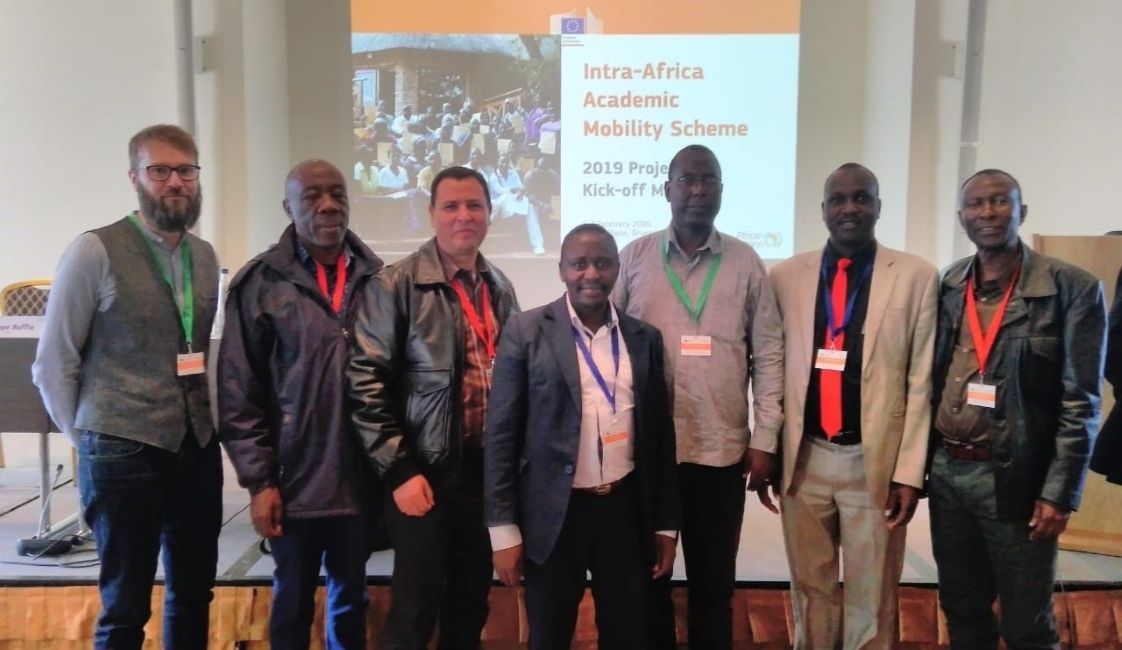
Project kick-off with representative of the project consortium in Februar 2020 in Brussels
Through the EU-funded MIRET project (Mobility for Innovative Renewable Energy Technologies) InES supports student mobility within Africa in the field of renewable energies.
>>Project Profile
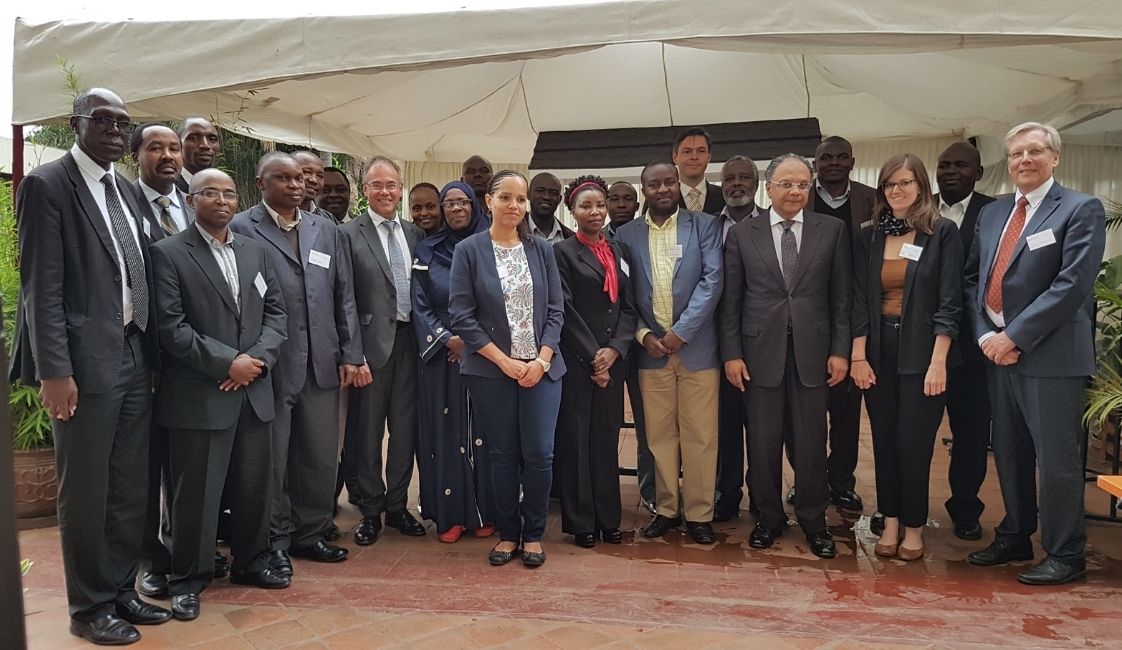
Meeting of the local and german project partners of the project "East African Network of Excellence for Universities of Applied Sciences (HAW Kenia)"
The initiative "East Africa Network of Excellence for Universities of Applied Sciences" can be continued, thanks to renewed funding by the DAAD, under the leadership of InES until the end of 2021. The project's content focuses on engineering sciences, particularly renewable energy technology.
>>Project Profile

Kick-Off-Meeting with representatives from the involved project partners
The conservation of alluvial forests along the Naryn River in Kyrgyzstan is the focus of the international and interdisciplinary project titled "ÖkoFlussPlan". The three-year project involves partner institutions from Germany and Kyrgyzstan and has the objective of maintaining the alluvial forests of the Naryn and providing and implementing sustainable energy resources for the local population. InES is responsible for the sub-project "sustainable energy resources". "ÖkoFlussPlan" is being financed by the German Federal Ministry of Education and Research (BMBF).
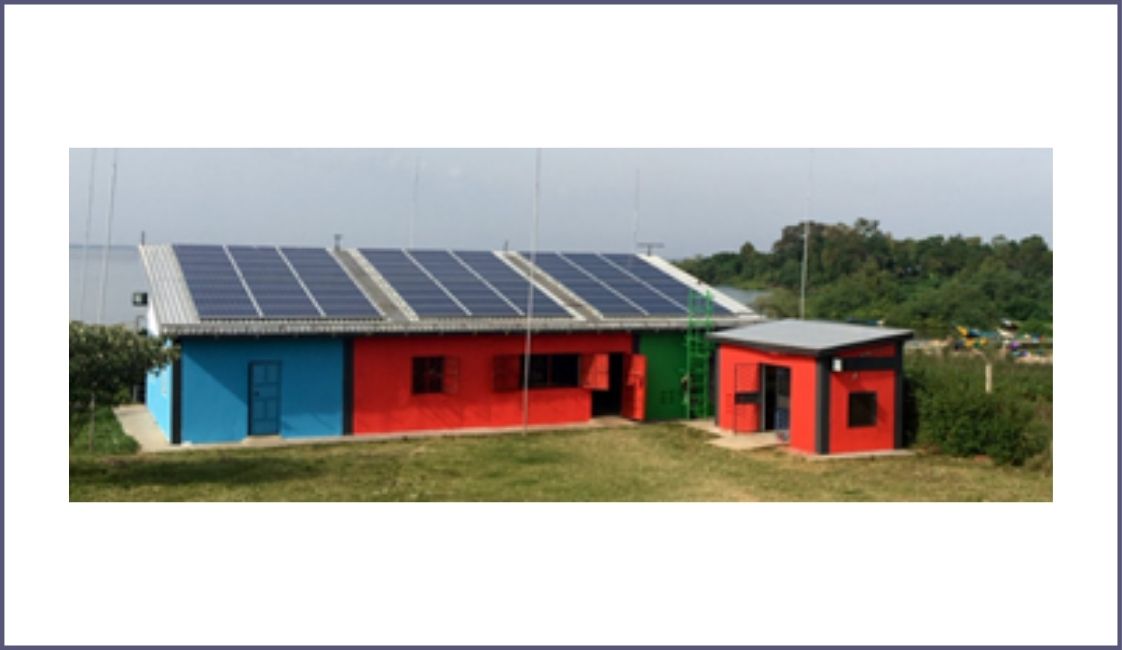
WE! Hubs © Siemens Stiftung
The Siemens Foundation operates so-called Water Energy Hubs (WE! Hubs) on Lake Victoria in Kenya via a local susidiary. These Hubs provide the population around the lake with access to sustainably generated electricity and clean drinking water. On behalf of the Siemens Foundation, InES develops concepts for the integration of e-mobility into the existing WE! Hub infrastructure in order to expand the operating range of the WE! Hubs into the interior of the country. Moreover, future plans encompass for instance running fishing boats with PV electricity, thus helping to protect the fragile ecosystem of Lake Victoria.
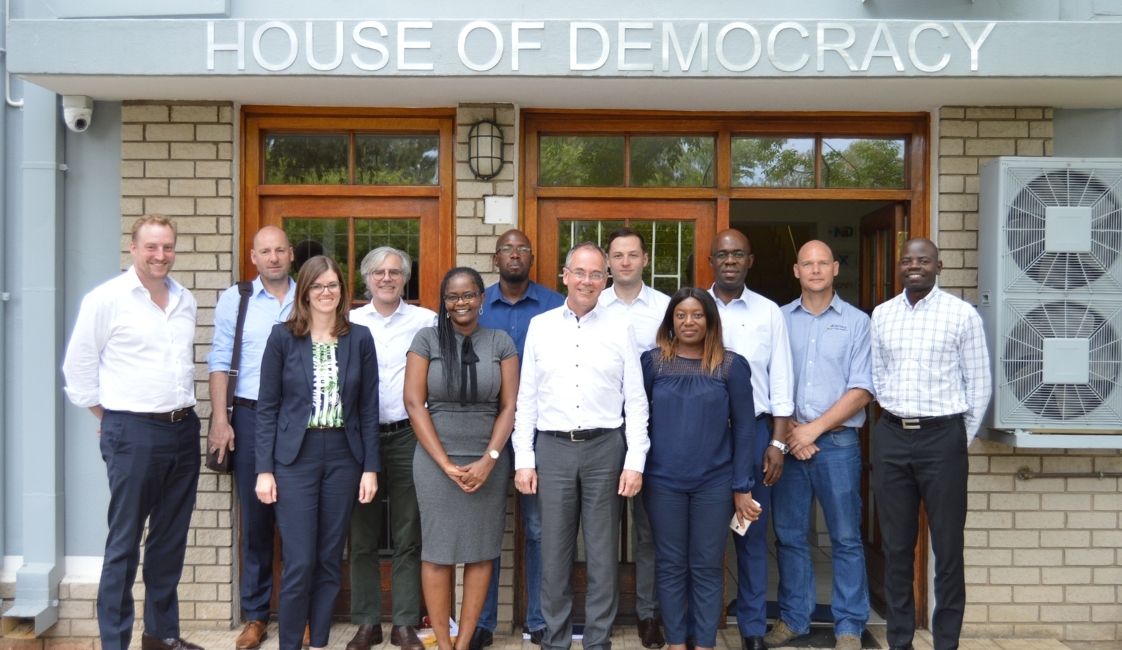
The German-Namibian PROCEED-Project team preparing the joint project in the House of Democracy of the HSS in Windhoek, Namibia, in March 2019. Source: HSS Namibia
The application-oriented joint project „Pathway to Renewable Off-Grid Community Energy for Development (PROCEED)“ examines options for a sustainable energy supply based on Renewable Energies via decentralised mini-grids in rural Africa. Under the leadership of InES, the German and Namibian project partners aim to effectively link technology and service developments, by focusing on an interdisciplinary approach (society, economy, technology). PROCEED is being financed by the German Federal Ministry of Education and Research (BMBF).
News article "Project start PROCEED" - read more >>
Important milestone in the PROCEED project - read more >>
ENSTAB Logo / University and College
Based on the initiative of InES, the THI concluded a University Partnership Agreement with the École Nationale des Sciences et Technologies Avancées à Borj Cedria (ENSTAB) in Tunisia, at the beginning of 2018. Such a cooperation between the two institutions has been inspired by the stay of two ENSTAB students at InES as well as a delegation visit of the ENSTAB University Directors to Ingolstadt in October 2017. In addition to student exchanges, joint research projects in the field of Renewable Energies are planned as part of the partnership.
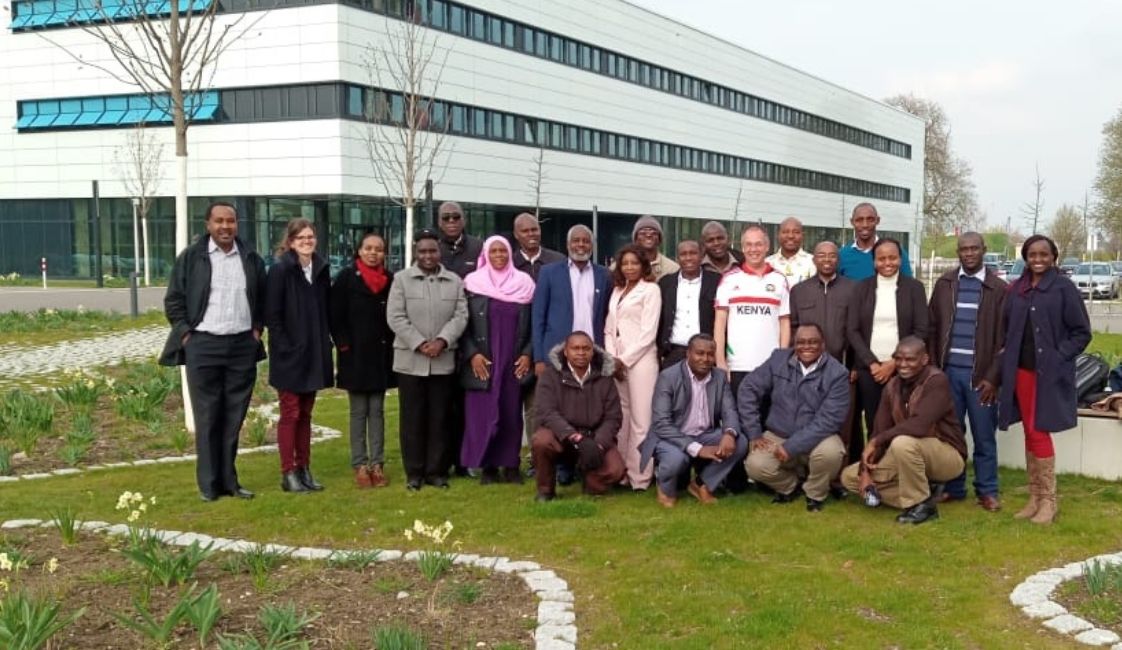
The Kenyan delegation with Prof. Dr.-Ing. Wilfried Zörner and Petra Beer (both from THI-InES) at the transfer-workshop at the HNU, April 2019. Source: THI/HNU
With the new initiative "East Africa Network of Excellence for Universities of Applied Sciences", InES is launching its cooperation with partners in Kenya. The project's overarching objective is to inform Kenyan academics about the German concept of "Hochschulen für Angewandte Wissenschaften (HAW)" and to facilitate a transfer into the local context. The two-year project will be implemented under the leadership of the Hochschule Neu-Ulm and is being supported by the German Federal Foreign Office as well as the German Academic Exchange Service (DAAD).
MoST Logo / Ministry of Science and Technology
In addition to the existing Partnership Agreeent with the Addis Ababa University of Science and Technology which was concluded in 2016, the THI and the Ethiopia Ministry of Science and Technology have now agreed to intensify their cooperation in the frame of application oriented research projects in the realm of Renewable Energies. The details of this new agreement have been elaborated during a delegation visit by the THI in Ethiopia in August 2017, supported by the German Academic Exchange Service (DAAD).

NEED Logo / Network of Energy Excellence for Development
After a duration of 3.5 years, the NEED project was successfully completed in August 2017. Being the first EU-funded project coordinated by THI, important findings on sustainable and secure energy supply for Sub-Saharan Africa were developed under the leadership of InES. NEED was funded under the ACP Science and Technology II Programme of the European Union.
Newsartikel "NEED-Abschlusskonferenz" lesen >>
Newsartikel "NEED-Veranstaltungen in Afrika" lesen >>
Newsartikel "Besuch aus Afrika an der THI" lesen >>
AIR Logo / Academic Initiative for Renewables
The Academic Initiative for Renewables (AIR) project is funded by the German Academic Exchange Service (DAAD) from 2016-2019 as part of the programme "University-Business-Partnerships between Higher Education Institutions and Business Partners in Germany and in Developing Countries". The aim of the project is to establish a more practice-oriented academic education in the field of Renewable Energies. A total of seven partner universities and 15 industrial partners from Botswana, Malawi, Mozambique, South Africa, Zambia and Zimbabwe will participate in the project.
Newsartikel "THI entwickelt Studiengänge zusammen mit Afrikanischen Hochschulen" lesen >>
Newsartikel "THI baut Hochschulnetzwerk mit afrikanischen Partner-Universitäten aus" lesen >>

Addis Ababa Logo / Addis Ababa Science and Technology University
In June 2015, a five-member delegation from Ethiopia visited THI to learn more about international activities and to exchange information on potential areas of cooperation. The representatives of the Ethiopian Ministry of Science, the Technical University of the capital Addis Ababa and other members of the government initiated the long-term institutional partnership.
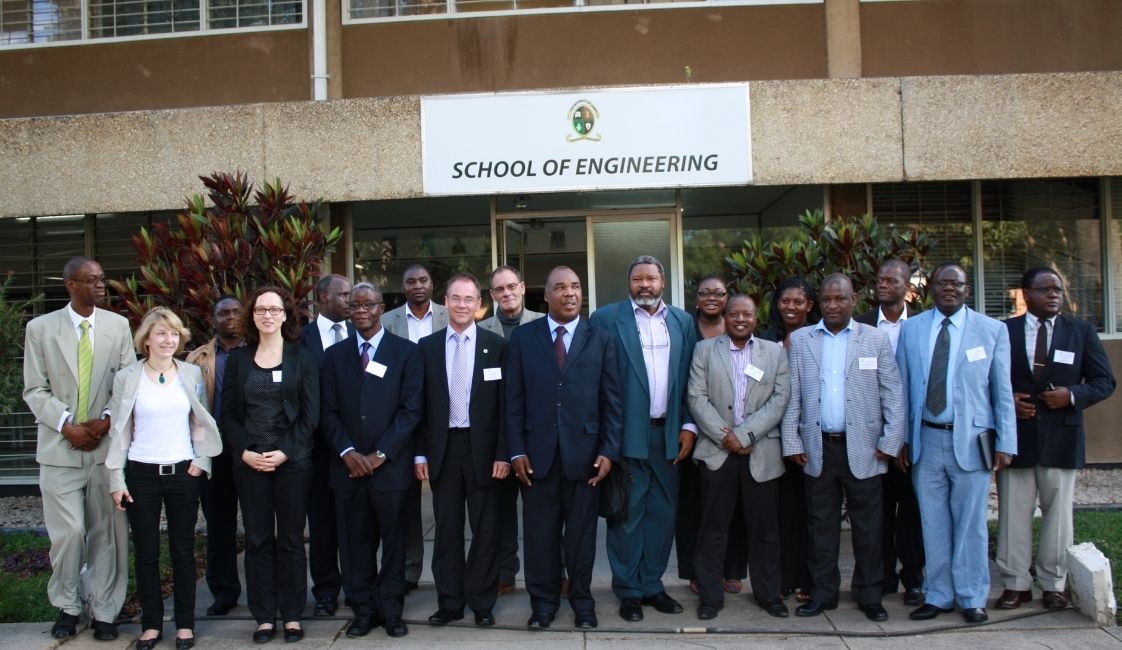
Kick-Off-Meeting in Lusaka, Zambia, with representatives from the project partners
Together with five partners from Namibia, Zambia and Botswana, THI has defined several goals: to create structures for the development of technical know-how in the field of Renewable Energies in the participating countries; to connect important local stakeholders; and to increase the awareness for the benefits of Renewable Energies and a subsequent willigness for political action. The Network of Energy Excellence for Development (NEED) is scheduled for three years and receives funding from the European Union within the ACP Science and Technology II Programme.
Newsartikel "THI startet zusammen mit afrikanischen Partnern das Forschungsprojekt NEED" lesen >>
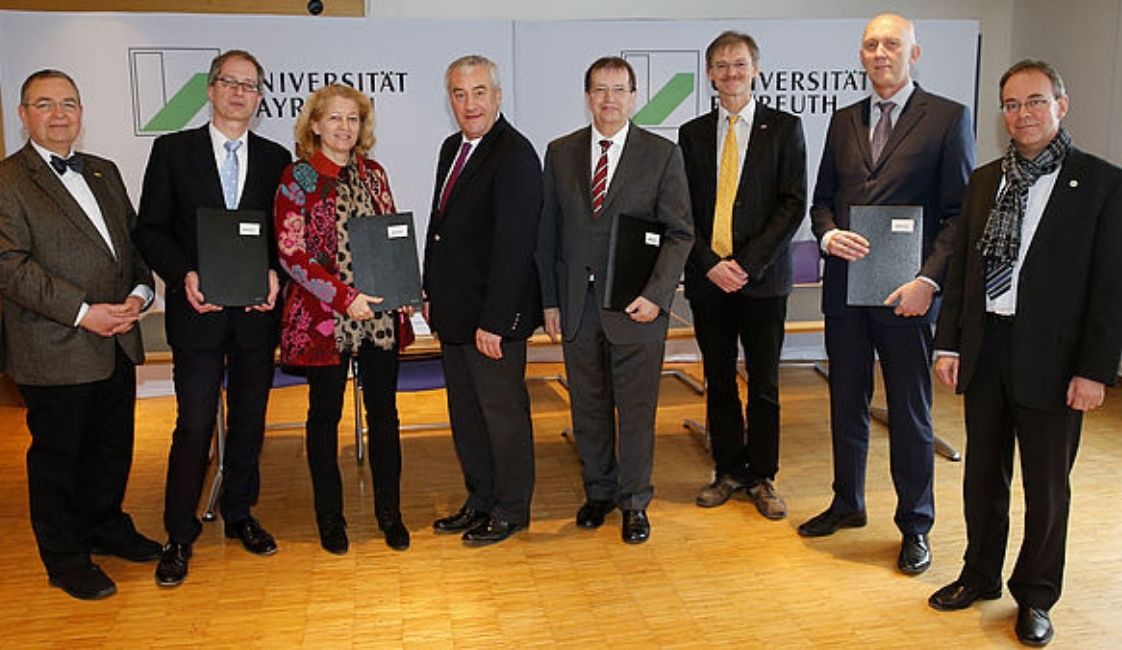
(from the left): Prof. Dr. Dymitr Ibriszimov (Universität Bayreuth), Prof. Dr. Stefan Leible (Präsident der Universität Bayreuth), Prof. Dr. Uta Feser (Präsidentin der Hochschule für angewandte Wissenschaften Neu-Ulm), Staatsminister Dr. Ludwig Spaenle, Prof. Dr. Dr. h. c. Alfred Forchel (Präsident der Julius-Maximilians-Universität Würzburg), Prof. Dr. Dr. h. c. Gerhard Bringmann (Julius-Maximilians-Universität Würzburg), Prof. Dr. Walter Schober (Präsident der Technischen Hochschule Ingolstadt), Prof. Dr. Wilfried Zörner (Technische Hochschule Ingolstadt). Foto: Universität Bayreuth
BRIAS is based on a cooperation between the THI, the University of Bayreuth, the University of Würzburg and the Hochschule Neu-Ulm in the field of African studies. The multidisciplinary research institute strives to create awareness in society and politics for topics relevant in the African context. Moreover, it aims to foster cooperations with African research partners. Thus, new research ideas are developed and implemented together with partners in Africa.
Newsartikel "THI gründet bayerisches Afrikanisches Forschungsinstitut BRIAS mit" lesen >>
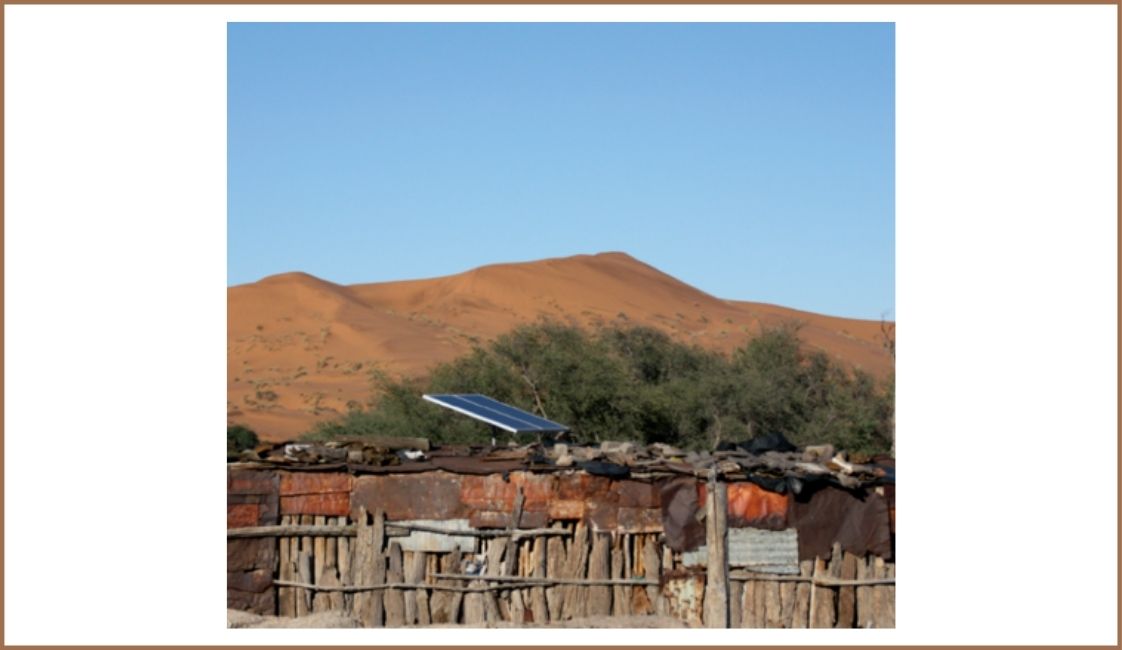
Village in the Topnaar Community in Namibia, with a self-installed PV Module
Dr. Tobias Bader, then PhD student at InES, developed an energy concept for a so-called "EcoEduLodge" together with students at THI. The idea was to analyse how to supply a lodge with Renewable Energies while simultaneously using the installation for educational purposes.
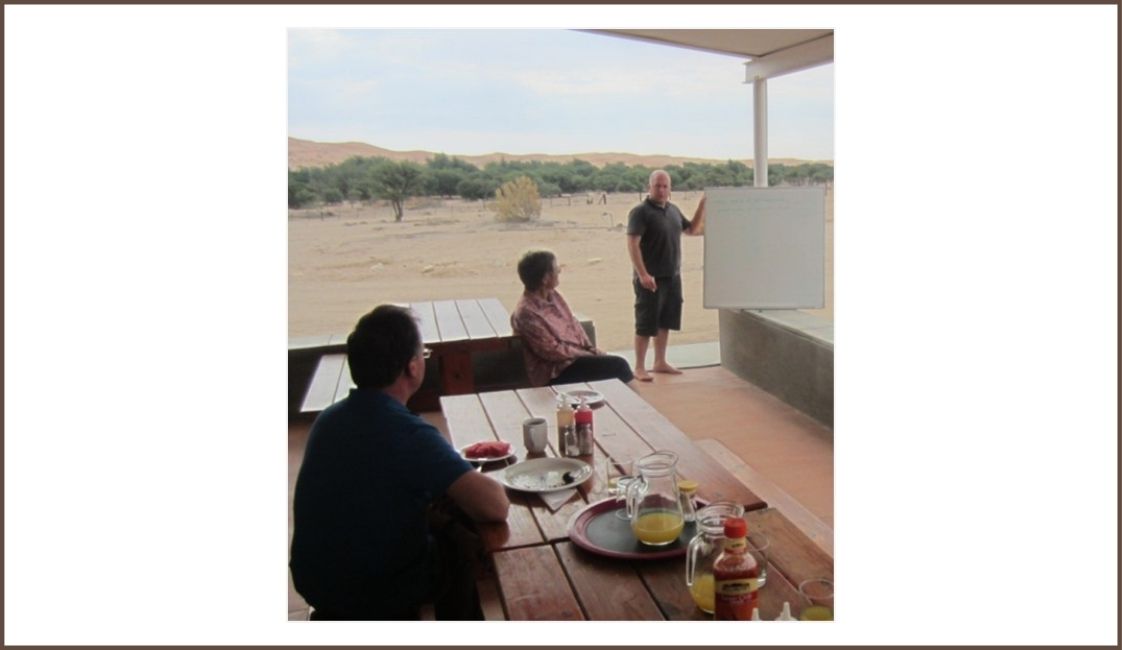
Joint development of project ideas with the then head of the Gobabeb Training and Research Centre in Namibia, Mrs. Gillian Maggs-Koelling
As part of a fact-finding mission, InES scientists visit universities, research institutions and other local stakeholders in the field of Renewable Energy technology in Botswana and Namibia. In the course of this trip, the main pillars of the NEED-project are elaborated together with local partners.
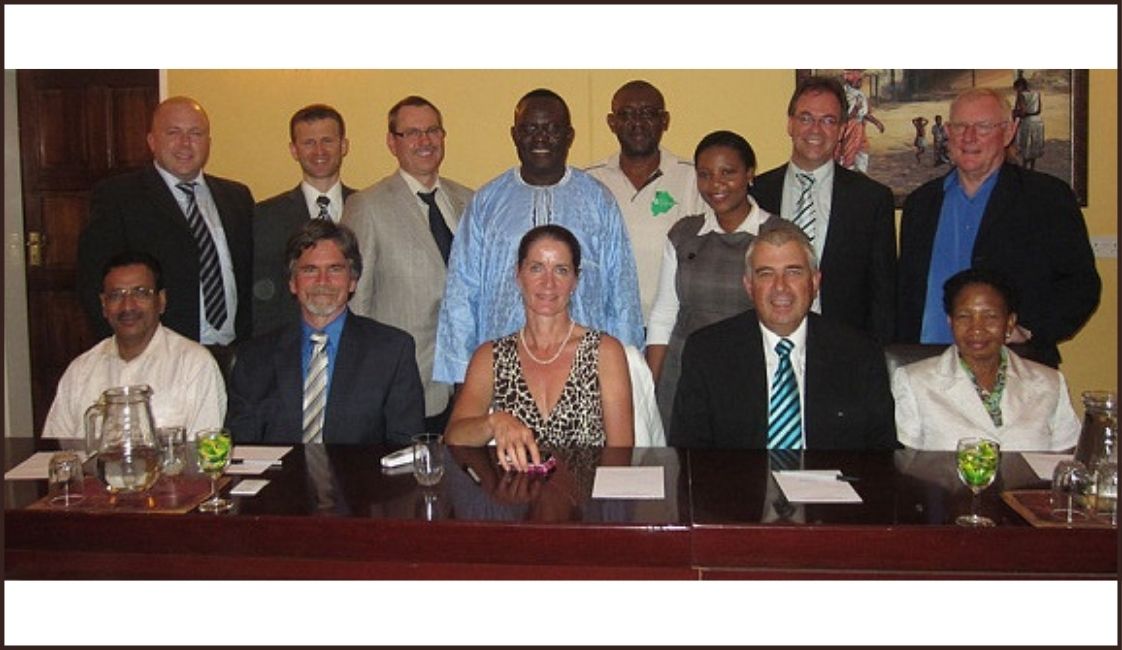
Group photo with participants of the first trip of InES to Botswana
The first visit to establish contacts with universities in Sub-Saharan Africa leads to the Botswana International University of Science and Technology.
Newsartikel "Hochschule Ingolstadt vereinbart Kooperation mit Universität in Botswana zu Erneuerbaren Energien" >>
Logo Amadi Solar
At the request of the Augustinus Missionswerk Würzburg and with the participation of HaWi Energietechnik GmbH, students create an energy concept for a hospital in the Congo.
Group Leader Intern. Cooperation Africa & Central Asia at the Institute of new Energy Systems (InES)
At the beginning of 2022, we launched our new newsletter "InES International", in which we report on the international cooperation projects of the InES. Browse through the newsletters published so far.
In addition, InES researchers cooperate on an international level with the following scientific associations and partners (selection):
Launched in April 2019, the PROCEED project is part of the funding programme CLIENT II and contributes to international climate protection efforts. The video shows how CLIENT II supports international cooperation for the development of innovative and sustainable climate, energy, environmental and resource solutions. Moreover, it explains CLIENT II's pioneering approach to promote joint research and development projects between German research institutions and companies and similar partners in emerging and developing countries.
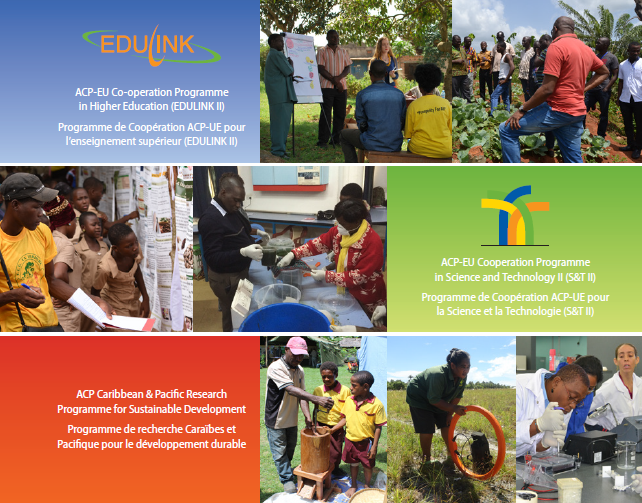
Results of all projects funded under the ACP-EU Co-operation Programme of Higher Education (EDULINK II) and Science and Technology II (S&T II) where our NEED project was also part of, can be found in this general project results and impacts document.