Skip to content
[Translate to English:]

Artificial Intelligence

Artificial Intelligence

Do you want to understand how modern AI works – and help develop it further yourself? Then the Master’s programme in Artificial Intelligence is exactly the right choice for you. Building on a Bachelor’s degree in AI, Data Science or a related subject, you’ll delve deeply into the development of the latest AI methods. You’ll explore deep learning, computer vision, speech and text processing, efficient data management and issues relating to AI security. At the same time, you’ll develop an awareness of the economic, social and ethical implications of intelligent systems.

Through optional modules from other fields of computer science, such as security or cloud applications, you can specialise in specific areas. Practical projects, seminars and close links to AI research at THI provide you with the ideal foundation for a PhD or an international career in AI development. In this way, you’ll grow into an expert who truly understands and shapes AI.

Job perspectives

Graduates can work in any company or industry in which artificial intelligence methods and techniques are developed and used. In addition to working as a developer, consulting tasks are also conceivable. The Master's also qualifies for a possible career in the scientific field with an optional doctorate.

Furthermore, the programme takes place in English in an international environment which helps students build additional competences for an international career. 

Apply now
Degree
Master of Science (M. Sc.)
Duration
3 semesters
Start of studies
Summer & Winter
Main teaching language
English
Admission restricted
Yes
Location
Ingolstadt
Type of degree program
Full-time
ECTS
90
Accreditation
Yes

Application period for the summer semester 2027: Oct. 15, 2026 to Jan. 15, 2027

Curriculum Artificial Intelligence

Presentation of curriculums
Semester
1st Semester
  1. Seminar

    The seminar focuses on current research topics in business information systems. Based on selected literature, students prepare a scientific paper and present their results. Discussions deepen understanding and foster analytical, presentation, and argumentation skills.

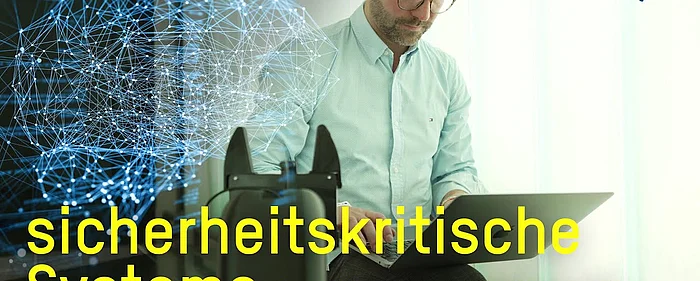
  2. AI in Safety-related systems

    Fundamentals of cyber-physical and safety-critical systems are addressed. Topics include standards, risk assessment, and methods for determining safety levels. This is complemented by architectures, safety cases, and techniques for verification and explainability of complex systems.

  3. Social Implications of Artificial Intelligence

    Ethical, economic, and societal aspects of artificial intelligence are examined from an interdisciplinary perspective. The focus is on normative theories, concepts of justice, and micro- and macroeconomic impacts. Behavioral aspects, empirical methods, and the link between ethics and economics complement the module.

  4. Advanced Speech Technology

    Core concepts of voice assistance systems are covered, including speech recognition, synthesis, text processing, and knowledge representation. Topics such as voice biometrics, emotion detection, and efficient data processing and storage are also addressed.

  5. Project

    Within a practice-oriented project, students work in teams on complex tasks in business information systems. Planning, implementation, and organization are managed independently, using classical or agile methods. Lecturers act as coaches or clients. Results are documented and assessed.

  6. Elective

    Computing and Connectivity Technologies, Multimodal, Interactive Systems, Systems Engineering and Architecting for Edge Computing, Global Business and Economics 1/2, Strategic Foresight and Trend Analysis 

Seminar

<p>The seminar focuses on current research topics in business information systems. Based on selected literature, students prepare a scientific paper and present their results. Discussions deepen understanding and foster analytical, presentation, and argumentation skills.</p>

AI in Safety-related systems

<p>Fundamentals of cyber-physical and safety-critical systems are addressed. Topics include standards, risk assessment, and methods for determining safety levels. This is complemented by architectures, safety cases, and techniques for verification and explainability of complex systems.</p>

Social Implications of Artificial Intelligence

<p>Ethical, economic, and societal aspects of artificial intelligence are examined from an interdisciplinary perspective. The focus is on normative theories, concepts of justice, and micro- and macroeconomic impacts. Behavioral aspects, empirical methods, and the link between ethics and economics complement the module.</p>

Advanced Speech Technology

<p>Core concepts of voice assistance systems are covered, including speech recognition, synthesis, text processing, and knowledge representation. Topics such as voice biometrics, emotion detection, and efficient data processing and storage are also addressed.</p>

Project

<p>Within a practice-oriented project, students work in teams on complex tasks in business information systems. Planning, implementation, and organization are managed independently, using classical or agile methods. Lecturers act as coaches or clients. Results are documented and assessed.</p>

Elective

<p>Computing and Connectivity Technologies, Multimodal, Interactive Systems, Systems Engineering and Architecting for Edge Computing, Global Business and Economics 1/2, Strategic Foresight and Trend Analysis&nbsp;</p>

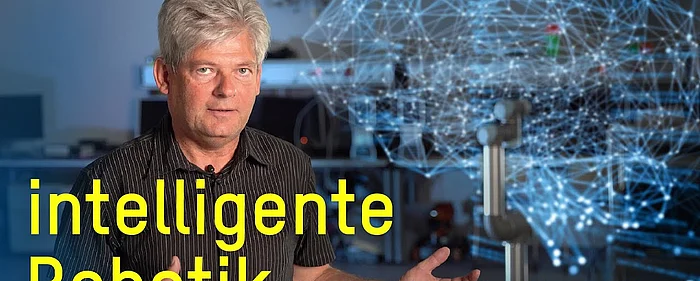
  1. Intelligent Robotics

    The development of intelligent robotic systems is explored through core components and methods. The focus is on sensors, actuators, software architectures, planning, environment modeling, and cooperative behavior of autonomous systems. Practical lab exercises deepen understanding and application.

  2. Deep Learning Applications

    Core machine learning methods are explored across the full model lifecycle. The focus is on data preprocessing, learning approaches, model evaluation, MLOps, and efficient architectures. This is complemented by monitoring, calibration, and independent scientific work.

  3. Advanced Computer Vision

    Core methods of computer vision are covered, including 3D reconstruction and depth estimation as well as multimodal sensor data processing (camera, LiDAR, radar). Topics include data fusion, SLAM, tracking, and modern approaches such as transformer-based and generative models.

  4. Elective

    Avionics and Autonomous Flying, Computing and Connectivity Technologies, Security of Modern Networks, Systems Engineering and Architecting for Edge Computing

  5. Interdisciplinary Elective

    Entrepreneurship Coaching, Global Business and Economics 1/2, Innovation Management Methods

  6. Advanced Big Data Concepts and Technologies

    Technologies and concepts of voice assistance systems are explored. Topics include speech recognition, synthesis, language understanding and generation, and knowledge representation. Additional aspects cover voice biometrics, emotion detection, and efficient computation and storage.

Intelligent Robotics

<p>The development of intelligent robotic systems is explored through core components and methods. The focus is on sensors, actuators, software architectures, planning, environment modeling, and cooperative behavior of autonomous systems. Practical lab exercises deepen understanding and application.</p>

Deep Learning Applications

<p>Core machine learning methods are explored across the full model lifecycle. The focus is on data preprocessing, learning approaches, model evaluation, MLOps, and efficient architectures. This is complemented by monitoring, calibration, and independent scientific work.</p>

Advanced Computer Vision

<p>Core methods of computer vision are covered, including 3D reconstruction and depth estimation as well as multimodal sensor data processing (camera, LiDAR, radar). Topics include data fusion, SLAM, tracking, and modern approaches such as transformer-based and generative models.</p>

Elective

<p>Avionics and Autonomous Flying, Computing and Connectivity Technologies, Security of Modern Networks, Systems Engineering and Architecting for Edge Computing</p>

Interdisciplinary Elective

<p>Entrepreneurship Coaching, Global Business and Economics 1/2, Innovation Management Methods</p>

Advanced Big Data Concepts and Technologies

<p>Technologies and concepts of voice assistance systems are explored. Topics include speech recognition, synthesis, language understanding and generation, and knowledge representation. Additional aspects cover voice biometrics, emotion detection, and efficient computation and storage.</p>

  1. Master Thesis

    After completing the master’s thesis, students are able to independently develop scientifically sound solutions. They critically assess requirements and approaches and present results clearly and convincingly. They also demonstrate the ability to manage complex tasks efficiently within a given timeframe.

Master Thesis

<p>After completing the master’s thesis, students are able to independently develop scientifically sound solutions. They critically assess requirements and approaches and present results clearly and convincingly. They also demonstrate the ability to manage complex tasks efficiently within a given timeframe.</p>

Curriculum Artificial Intelligence — Overview of all semesters and modules
1. Semester
  • Seminar
  • AI in Safety-related systems
  • Social Implications of Artificial Intelligence
  • Advanced Speech Technology
  • Project
  • Elective
2. Semester
  • Intelligent Robotics
  • Deep Learning Applications
  • Advanced Computer Vision
  • Elective
  • Interdisciplinary Elective
  • Advanced Big Data Concepts and Technologies
3. Semester
  • Master Thesis

Interesting Facts

  1. Please note the following for international shipments from outside the EU/EEC

    THI charges tuition fees of 1,200 euros per semester (Master’s programmes). We are committed to providing our students with the best possible conditions to develop their skills and personalities for the working world of the future. At our International Welcome Centre, you will find excellent services and support. Our degree programmes offer the best possible study conditions.

  2. Important information for Master’s applicants from India

    With immediate effect, applicants from India holding bachelor’s degrees in the fields of Engineering, Commerce / Accounting / Finance / Economics, or Business / Management must, in addition to the VDP from uni-assist, provide evidence of having taken the Digital Master Test (dMAT) aps-india.de/dmat/ in order to obtain an APS certificate or a visa. The test costs €150. Please check whether this applies to you based on your Bachelor’s degree. THI does not answer any questions regarding the test procedure or its impact on an offer of admission from our university!

  3. Proof of language proficiency

    Please note that the study course is offered in English and therefore sufficient knowledge of the English language is essential.

    Link: Proof of language skills.

  4. Important notice on application agencies

    THI does not work with agencies. Please apply directly to THI via the uni-assist application portal for international applicants. THI never asks for money via agencies for application purposes and only sends emails from @thi.de. THI will never ask for money before you receive your letter of admission. If you require a VPD from uni-assist, you must pay a processing fee to uni-assist. However, uni-assist only checks certain documents and does not grant admission to THI.

Requirements

A Bachelor's degree in a technical discipline (e.g. Artificial Intelligence, Data Science, Computer Science, Mathematics, Engineering, Computational Linguistics or related fields) with  210 ECTS credit points is required. Please see the statutes of the course for details. 

Please follow the link to master application for detailed information.

The programme is held in English. A level of B2 (official  European reference frame) is required.

Meet our AI-Profs

Laboratories used in the program

FAQ

What prerequisites should I have for this degree program?

The Master's programme in Artificial Intelligence deepens the Bachelor's programme in Artificial Intelligence offered at THI. It thus requires solid knowledge in the field of artificial intelligence and machine learning. These may have been acquired either through relevant study or provable practical experience.

Required prerequisites are:

  • Degree in a Bachelor's programme in Artificial Intelligence, Data Science, Computer Science, Mathematics, Engineering, Computational Linguistics or an equivalent Bachelor's programme.
  • English language skills at a B2 level.
  • Solid prior knowledge in the field of artificial intelligence and machine learning. These will be inquired about via an aptitude test.

What is special about this Master's program?

The Master's programme is closely linked to the AI research institute AImotion (link) here at THI. The compulsory lectures, for example, are held by the THI's AI research professors, who thus also bring current research topics into the courses. There is also the possibility to start directly as a research assistant in an AI research group here at the THI after a successful master's degree.

Another special feature is the proportion of selectable modules. Here, you will be able to take modules from the "neighboring" master's programmes Business Information Systems Engineering and Cloud Applications and Security Engineering. This allows you to combine the contents of the Master's programmes and to integrate competencies in one of the core topics of the other programs into your Master's programme. However, the focus of your studies will naturally remain on the topics of artificial intelligence.

What is the aptitude test?

Sufficient prior knowledge of AI, especially in the field of machine learning and deep learning. These are checked in an aptitude test, which is part of your submitted application, and must be passed for admission to the degree programme. Your application will be reviewed by two professors with regard to the criteria you fulfil and the necessary prior knowledge. Thus, the eligibility process will be based on your application - not on an examination, interview, or other performance. A detailed description of the aptitude test can be found in the statutes on the aptitude test.

I don't have all the preliminary knowledge that is asked for in the suitability procedure. Can I still apply?

Yes. You do not have to demonstrate knowledge in all of the areas asked. If you have little or no knowledge and experience in one or the other area, this is not a problem.

Are some modules offered in German?

Yes, some elective modules may be chosen in German. 

How do I prove a English level of B2?

You have to prove your English language skills. This can be done through various means. Details can be found here.

Questions

Any questions?

Do you have any questions about applications, admission, enrolment, student finance, accommodation or other general topics? If so, please use our contact form and select the relevant topic. This will ensure your enquiry is sent directly to the relevant contact person(s) and can be answered quickly and effectively.

People

Academic Advisor

Artificial Intelligence

Do you want to understand how modern AI works – and help develop it further yourself? Then the Master’s programme in Artificial Intelligence is exactly the right choice for you. Building on a Bachelor’s degree in AI, Data Science or a related subject, you’ll delve deeply into the development of the latest AI methods. You’ll explore deep learning, computer vision, speech and text processing, efficient data management and issues relating to AI security. At the same time, you’ll develop an awareness of the economic, social and ethical implications of intelligent systems.

Through optional modules from other fields of computer science, such as security or cloud applications, you can specialise in specific areas. Practical projects, seminars and close links to AI research at THI provide you with the ideal foundation for a PhD or an international career in AI development. In this way, you’ll grow into an expert who truly understands and shapes AI.

Job perspectives

Graduates can work in any company or industry in which artificial intelligence methods and techniques are developed and used. In addition to working as a developer, consulting tasks are also conceivable. The Master's also qualifies for a possible career in the scientific field with an optional doctorate.

Furthermore, the programme takes place in English in an international environment which helps students build additional competences for an international career. 

Apply now
Degree
Master of Science (M. Sc.)
Duration
3 semesters
Start of studies
Summer & Winter
Main teaching language
English
Admission restricted
Yes
Location
Ingolstadt
Type of degree program
Full-time
ECTS
90
Accreditation
Yes

Application period for the summer semester 2027: Oct. 15, 2026 to Jan. 15, 2027

Curriculum Artificial Intelligence

Presentation of curriculums
Semester
1st Semester
  1. Seminar

    The seminar focuses on current research topics in business information systems. Based on selected literature, students prepare a scientific paper and present their results. Discussions deepen understanding and foster analytical, presentation, and argumentation skills.

  2. AI in Safety-related systems

    Fundamentals of cyber-physical and safety-critical systems are addressed. Topics include standards, risk assessment, and methods for determining safety levels. This is complemented by architectures, safety cases, and techniques for verification and explainability of complex systems.

  3. Social Implications of Artificial Intelligence

    Ethical, economic, and societal aspects of artificial intelligence are examined from an interdisciplinary perspective. The focus is on normative theories, concepts of justice, and micro- and macroeconomic impacts. Behavioral aspects, empirical methods, and the link between ethics and economics complement the module.

  4. Advanced Speech Technology

    Core concepts of voice assistance systems are covered, including speech recognition, synthesis, text processing, and knowledge representation. Topics such as voice biometrics, emotion detection, and efficient data processing and storage are also addressed.

  5. Project

    Within a practice-oriented project, students work in teams on complex tasks in business information systems. Planning, implementation, and organization are managed independently, using classical or agile methods. Lecturers act as coaches or clients. Results are documented and assessed.

  6. Elective

    Computing and Connectivity Technologies, Multimodal, Interactive Systems, Systems Engineering and Architecting for Edge Computing, Global Business and Economics 1/2, Strategic Foresight and Trend Analysis 

Seminar

<p>The seminar focuses on current research topics in business information systems. Based on selected literature, students prepare a scientific paper and present their results. Discussions deepen understanding and foster analytical, presentation, and argumentation skills.</p>

AI in Safety-related systems

<p>Fundamentals of cyber-physical and safety-critical systems are addressed. Topics include standards, risk assessment, and methods for determining safety levels. This is complemented by architectures, safety cases, and techniques for verification and explainability of complex systems.</p>

Social Implications of Artificial Intelligence

<p>Ethical, economic, and societal aspects of artificial intelligence are examined from an interdisciplinary perspective. The focus is on normative theories, concepts of justice, and micro- and macroeconomic impacts. Behavioral aspects, empirical methods, and the link between ethics and economics complement the module.</p>

Advanced Speech Technology

<p>Core concepts of voice assistance systems are covered, including speech recognition, synthesis, text processing, and knowledge representation. Topics such as voice biometrics, emotion detection, and efficient data processing and storage are also addressed.</p>

Project

<p>Within a practice-oriented project, students work in teams on complex tasks in business information systems. Planning, implementation, and organization are managed independently, using classical or agile methods. Lecturers act as coaches or clients. Results are documented and assessed.</p>

Elective

<p>Computing and Connectivity Technologies, Multimodal, Interactive Systems, Systems Engineering and Architecting for Edge Computing, Global Business and Economics 1/2, Strategic Foresight and Trend Analysis&nbsp;</p>

  1. Intelligent Robotics

    The development of intelligent robotic systems is explored through core components and methods. The focus is on sensors, actuators, software architectures, planning, environment modeling, and cooperative behavior of autonomous systems. Practical lab exercises deepen understanding and application.

  2. Deep Learning Applications

    Core machine learning methods are explored across the full model lifecycle. The focus is on data preprocessing, learning approaches, model evaluation, MLOps, and efficient architectures. This is complemented by monitoring, calibration, and independent scientific work.

  3. Advanced Computer Vision

    Core methods of computer vision are covered, including 3D reconstruction and depth estimation as well as multimodal sensor data processing (camera, LiDAR, radar). Topics include data fusion, SLAM, tracking, and modern approaches such as transformer-based and generative models.

  4. Elective

    Avionics and Autonomous Flying, Computing and Connectivity Technologies, Security of Modern Networks, Systems Engineering and Architecting for Edge Computing

  5. Interdisciplinary Elective

    Entrepreneurship Coaching, Global Business and Economics 1/2, Innovation Management Methods

  6. Advanced Big Data Concepts and Technologies

    Technologies and concepts of voice assistance systems are explored. Topics include speech recognition, synthesis, language understanding and generation, and knowledge representation. Additional aspects cover voice biometrics, emotion detection, and efficient computation and storage.

Intelligent Robotics

<p>The development of intelligent robotic systems is explored through core components and methods. The focus is on sensors, actuators, software architectures, planning, environment modeling, and cooperative behavior of autonomous systems. Practical lab exercises deepen understanding and application.</p>

Deep Learning Applications

<p>Core machine learning methods are explored across the full model lifecycle. The focus is on data preprocessing, learning approaches, model evaluation, MLOps, and efficient architectures. This is complemented by monitoring, calibration, and independent scientific work.</p>

Advanced Computer Vision

<p>Core methods of computer vision are covered, including 3D reconstruction and depth estimation as well as multimodal sensor data processing (camera, LiDAR, radar). Topics include data fusion, SLAM, tracking, and modern approaches such as transformer-based and generative models.</p>

Elective

<p>Avionics and Autonomous Flying, Computing and Connectivity Technologies, Security of Modern Networks, Systems Engineering and Architecting for Edge Computing</p>

Interdisciplinary Elective

<p>Entrepreneurship Coaching, Global Business and Economics 1/2, Innovation Management Methods</p>

Advanced Big Data Concepts and Technologies

<p>Technologies and concepts of voice assistance systems are explored. Topics include speech recognition, synthesis, language understanding and generation, and knowledge representation. Additional aspects cover voice biometrics, emotion detection, and efficient computation and storage.</p>

  1. Master Thesis

    After completing the master’s thesis, students are able to independently develop scientifically sound solutions. They critically assess requirements and approaches and present results clearly and convincingly. They also demonstrate the ability to manage complex tasks efficiently within a given timeframe.

Master Thesis

<p>After completing the master’s thesis, students are able to independently develop scientifically sound solutions. They critically assess requirements and approaches and present results clearly and convincingly. They also demonstrate the ability to manage complex tasks efficiently within a given timeframe.</p>

Curriculum Artificial Intelligence — Overview of all semesters and modules
1. Semester
  • Seminar
  • AI in Safety-related systems
  • Social Implications of Artificial Intelligence
  • Advanced Speech Technology
  • Project
  • Elective
2. Semester
  • Intelligent Robotics
  • Deep Learning Applications
  • Advanced Computer Vision
  • Elective
  • Interdisciplinary Elective
  • Advanced Big Data Concepts and Technologies
3. Semester
  • Master Thesis

Interesting Facts

  1. Please note the following for international shipments from outside the EU/EEC

    THI charges tuition fees of 1,200 euros per semester (Master’s programmes). We are committed to providing our students with the best possible conditions to develop their skills and personalities for the working world of the future. At our International Welcome Centre, you will find excellent services and support. Our degree programmes offer the best possible study conditions.

  2. Important information for Master’s applicants from India

    With immediate effect, applicants from India holding bachelor’s degrees in the fields of Engineering, Commerce / Accounting / Finance / Economics, or Business / Management must, in addition to the VDP from uni-assist, provide evidence of having taken the Digital Master Test (dMAT) aps-india.de/dmat/ in order to obtain an APS certificate or a visa. The test costs €150. Please check whether this applies to you based on your Bachelor’s degree. THI does not answer any questions regarding the test procedure or its impact on an offer of admission from our university!

  3. Proof of language proficiency

    Please note that the study course is offered in English and therefore sufficient knowledge of the English language is essential.

    Link: Proof of language skills.

  4. Important notice on application agencies

    THI does not work with agencies. Please apply directly to THI via the uni-assist application portal for international applicants. THI never asks for money via agencies for application purposes and only sends emails from @thi.de. THI will never ask for money before you receive your letter of admission. If you require a VPD from uni-assist, you must pay a processing fee to uni-assist. However, uni-assist only checks certain documents and does not grant admission to THI.

Requirements

A Bachelor's degree in a technical discipline (e.g. Artificial Intelligence, Data Science, Computer Science, Mathematics, Engineering, Computational Linguistics or related fields) with  210 ECTS credit points is required. Please see the statutes of the course for details. 

Please follow the link to master application for detailed information.

The programme is held in English. A level of B2 (official  European reference frame) is required.

Meet our AI-Profs

Laboratories used in the program

FAQ

What prerequisites should I have for this degree program?

The Master's programme in Artificial Intelligence deepens the Bachelor's programme in Artificial Intelligence offered at THI. It thus requires solid knowledge in the field of artificial intelligence and machine learning. These may have been acquired either through relevant study or provable practical experience.

Required prerequisites are:

  • Degree in a Bachelor's programme in Artificial Intelligence, Data Science, Computer Science, Mathematics, Engineering, Computational Linguistics or an equivalent Bachelor's programme.
  • English language skills at a B2 level.
  • Solid prior knowledge in the field of artificial intelligence and machine learning. These will be inquired about via an aptitude test.

What is special about this Master's program?

The Master's programme is closely linked to the AI research institute AImotion (link) here at THI. The compulsory lectures, for example, are held by the THI's AI research professors, who thus also bring current research topics into the courses. There is also the possibility to start directly as a research assistant in an AI research group here at the THI after a successful master's degree.

Another special feature is the proportion of selectable modules. Here, you will be able to take modules from the "neighboring" master's programmes Business Information Systems Engineering and Cloud Applications and Security Engineering. This allows you to combine the contents of the Master's programmes and to integrate competencies in one of the core topics of the other programs into your Master's programme. However, the focus of your studies will naturally remain on the topics of artificial intelligence.

What is the aptitude test?

Sufficient prior knowledge of AI, especially in the field of machine learning and deep learning. These are checked in an aptitude test, which is part of your submitted application, and must be passed for admission to the degree programme. Your application will be reviewed by two professors with regard to the criteria you fulfil and the necessary prior knowledge. Thus, the eligibility process will be based on your application - not on an examination, interview, or other performance. A detailed description of the aptitude test can be found in the statutes on the aptitude test.

I don't have all the preliminary knowledge that is asked for in the suitability procedure. Can I still apply?

Yes. You do not have to demonstrate knowledge in all of the areas asked. If you have little or no knowledge and experience in one or the other area, this is not a problem.

Are some modules offered in German?

Yes, some elective modules may be chosen in German. 

How do I prove a English level of B2?

You have to prove your English language skills. This can be done through various means. Details can be found here.

Questions

Any questions?

Do you have any questions about applications, admission, enrolment, student finance, accommodation or other general topics? If so, please use our contact form and select the relevant topic. This will ensure your enquiry is sent directly to the relevant contact person(s) and can be answered quickly and effectively.

People

Academic Advisor

Jump to the top of the page