Knowledge Transfer
Events / Download event documents from past events:
20 October 2026 – Online: ‘Software for tradespeople and planners to assist with heat pump-based heating systems’
Which digital tools can make life easier for tradespeople and planners, and when is it sensible to use them?
In two short presentations, Hottgenroth Software AG – a long-standing provider of software solutions in the heating, ventilation and air-conditioning sector – and autarc GmbH – an established start-up – will provide insights into their digital tools. They will demonstrate how digital support throughout the entire planning and installation process for heat pump systems can make work easier.
Participants at the event are set to benefit particularly from the combination of Hottgenroth Software AG’s many years of experience and the dynamic approaches of the start-up autarc GmbH. The different approaches taken by these companies will be highlighted.
Agenda
Press release (to follow shortly)
Presentation materials available for download:
autarc GmbH – Friedrich Schlüter: Digital procurement and design of heat pump systems
;Hottgenroth Software AG – Laura Kästner: Software for specialist planning and verification of heat pump-based heating and cooling systems
24 September 2026 – Knowledge-sharing event: Flexible heat pump systems > How can PV integration and dynamic electricity tariffs contribute?
How can heat pump systems respond in future to dynamic electricity prices and self-generated electricity from photovoltaic systems? What implications does this have for installation, planning and product development?
These are among the topics to be addressed at the knowledge-sharing event on ‘Flexible heat pump systems: What contribution can PV integration and dynamic electricity tariffs make?’.
Agendalink (pdf)
Press release link
THI, InES – Tobias Krauter: Welcome and introduction to the Opti-WP project – flexibility options in heat pump operation
RWTH – Tobias Spratte:Load shifting potential of heat pumps
Hoval GmbH – Manfred Gerngroß: Residential, office and industrial buildings as flexible prosumers
24 September 2026 – Symposium: 2nd Wind Forum > Wind & System Integration: Networks, Flexibility and Sector Coupling
Wind energy plays a key role in ensuring a sustainable and resilient energy supply, as well as in the decarbonisation of the energy system. However, as the expansion of renewable energy sources continues, new issues are coming to the fore: in particular, the flexible grid integration of wind turbines and the strengthening of system resilience are becoming increasingly important.
The integration of large, partly decentralised generation units places new demands on grid infrastructure, operational management and system stability. At the same time, innovative concepts – such as hybrid systems, storage solutions or smart grid control – open up new opportunities to increase flexibility and ensure security of supply even under dynamic conditions.
How can the grid integration of wind energy be made more flexible and efficient? Which approaches help to increase the resilience of energy systems? And which technical and regulatory frameworks are crucial for successful implementation in practice?
Agenda (pdf) Link
Press release Link
THI, InES – Prof. Daniel Navarro Gevers: Presentation of the W³ project
Aarhus University, Denmark – Prof. Björn Andresen: The success story of wind energy in Denmark
Recht.Wind.Solar, Solicitor – Micha Klewar: Flexible grid connection agreements in practice
Prof. Stephan Rupp: Power station operation with wind farms – A contribution to stable grid operation
THI, InES– Prof. Uwe Holzhammer: Integration of wind energy into the energy system
TenneT TSO GmbH – Sebastian Heumader: Grid security, redispatch and congestion management
Max Bögl Wind AG – Pia Zwickl: Grid expansion – Plan B for grid connection
Citizens’ Energy Cooperative in the District of Pfaffenhofen a.d.Ilm eG – Andreas Herschmann: Citizens’ energy & regional value creation through wind energy
20 July 2026 – Online: Installing heat pumps – save time and avoid mistakes
Are you interested in heat pump installation and would like to know how to make the process quicker, more productive and more efficient?
Are you wondering where mistakes are most commonly made and which innovative products for heat pump installation could make your day-to-day work easier?
This is precisely where the ‘Efficiency Optimisation of Heat Pump-Based Heating Systems – Opti-WP’ project comes in. In this project, experienced tradespeople, specialist planners and heat pump manufacturers are working together with us – the Institute of New Energy Systems (InES) at Ingolstadt University of Applied Sciences – to facilitate the transfer of knowledge relating to heat pump-based heating and cooling systems.
Against this backdrop, we invited researchers from the Fraunhofer Institute for Solar Energy Systems (ISE) and the Institute for Building Physics (IBP) to present the findings of their WESPE project.
Press release
Presentation materials available for download:
Fraunhofer Institute for Solar Energy Systems ISE – Annette Uhl: WESPE Analysis of Installation
Fraunhofer Institute for Building Physics IBP – Susanne Schwab: WESPE-THI Project Presentation_Fraunhofer IBP
>Project Profile
15 June 2026 – Field trip: District cooling by the municipal utility in Munich
Municipal utility München’s district cooling network comprises its own supply network, approximately 25 kilometres in length, and currently supplies cooling to around 120 large buildings in Munich city centre. As a hybrid district cooling system, cooling is generated partly using natural cooling (the western city moat) in conjunction with underground ice storage tanks (170,000-litre capacity). In addition to conventional chillers, absorption chillers are also used, which utilise waste heat from combined heat and power (CHP) and geothermal energy. Alongside the city centre district cooling network, Stadtwerke München operates eight innovative groundwater cooling/heating networks, which will also be presented during the excursion.
Agenda
,press release
and presentation materials available for download:
Municipal Utility München:
Dr Maik Günther: Municipal heating planning and building-specific transformation
; Peter Zachmeier: District heating at SWM
; Dr Patrick Krystallas and Florian Reichl: SWM’s
centralised cooling supply
10 March 2026 – 3rd Ingolstadt Heat Pump Forum
Heat pumps – regardless of their capacity range – are playing an increasingly central role in the decarbonisation of the energy supply. Grid integration on both the electricity and heating sides presents a challenge for grid operators. At the same time, this versatile combined heat and power unit offers a wide range of interesting technical possibilities – such as intersectoral use, increased energy efficiency, energy storage and load shifting.
Presentation materials available for download:
THI, InES – Prof. Tobias Schrag: Presentation of the W³
projectBBH Lawyers, Tax Advisers, Management Consultants PartGmbB – Stephanie Julia Böswald: Section 14a of the Energy Economy Act (EnWG) in practice: Scope of application, privileges and obligations
Siemens AG – Dr Florian Reißner: Providing flexibility through decentralised heat pumps
Bundesverband Wärmepumpe e.V. – Lisa Appel: Presentation of the study ‘Heat Pumps in the Distribution Grid’
ratioplan GmbH – Martin Hajek: Heat Pumps: The Link Between the Electricity and Heating Networks
ILK Dresden – Dr Mathias Safarik: Practical Applications of Liquid Ice as a Heat Source for Heat Pumps
THI, InES – Lucas Müller: Flexibility through storage in heat pump systems
– Enerpipe GmbH – Markus Euring: Hybrid-powered heating networks as a building block for electricity grid stability
– Bayernwerk Netz GmbH – Wai-Yee Choi: Current status of the implementation of grid-oriented control of heat pumps, wall boxes and storage
systemsFfE e.V. – Veronika Engwerth: How large is the controllable load potential in Bavaria really?
TenneT TSO GmbH – Sebastian Heumader: How do Section 14a controls at distribution network level affect the transmission grid?
13 November 2025 – Field trip: Meitingen low-temperature heating network
The low-temperature district heating network in Meitingen, with a total length of 1,100 metres, utilises industrial waste heat, which is supplied year-round at 30°C from the cooling circuit of the nearby SGL Carbon GmbH. The nearly 300 residential units in the new-build development supplied with heat are equipped with decentralised heat pumps and small buffer tanks. In addition, a central buffer tank with a capacity of 15,000 litres has been installed. An intelligent energy management system for real-time control integrates the PV electricity generated by a 99 kWp system, enabling around one third of the heat pumps’ electricity requirements to be met from renewable sources.
Agenda
Press release
Presentation slides available for download:
THI, InES – Prof. Tobias Schrag: Presentation of the W³
Markt Meitingenproject – Dr Michael Higl, Mayor: From the initial idea to a reliable supply of waste heat – the Meitingen
district heating networkratioplan GmbH – Matthias Fichna: Innovative ‘cold’ district heating using industrial waste heat and two-stage operation – system concept & operational experience
THI, InES – Simon Müller: Flexible heating networks – design & planning of industrially utilised low-temperature networks
14 October 2025 – Information event: Research Master’s programme
Presentation materials available for download:
Research Master’s programme in “Applied Research in Engineering Sciences” (M.Sc.): More than just an academic study!
25 September 2025 – Symposium: Wind & Heat: Synergies for the Energy Transition
Wind energy and heat supply play a crucial role in ensuring a sustainable energy supply and its decarbonisation. The integration of these sectors offers enormous potential, but at the same time presents new challenges: from grid integration and the necessary storage technologies to regional planning and successful public engagement.
How can wind energy be used efficiently for heat supply? What strategies enable stable network and system integration? And what success factors are crucial for practical implementation?
Agenda
Press release
Presentation materials available for download:
THI, InES – Prof. Daniel Navarro Gevers: Presentation of the W³
projectFraunhofer IBP – Dr Matthias Kersken: ‘Wind Heating 2.0’ – Thermal storage of surplus electricity for building heating, taking into account aspects of renewable energy generation, network and market benefits within the electricity system
Aarhus University, Denmark – Prof. Björn Andresen: Status of wind power utilisation for heating in Denmark
Lorica – Xaver Neuhäusler & THI, InES – Niklas Denter: District heating network planning using wind energy: the case of Schleswig-Holstein
Munich University of Applied Sciences – Prof. Georg Kerber: Investigation of grid stability in an off-grid system against the backdrop of a large number of inverters
Government of Middle Franconia – Dr Rainer Fugmann: Regional planning for wind power and electricity grid expansion in Middle Franconia: political and regulatory process steps and success factors
Bayernwerk – Matthias Löhlein: A tailwind for Bavaria, the ‘Land of the Sun’ – Integrating wind energy into the electricity grid from a grid
operator’s perspectiveNeuburg-Schrobenhausen-Aichach-Eichstätt Citizens’ Energy Co-operative eG – Peter Mießl: Current projects & Uhl Windkraft – Dr Matthias Pavel: The marriage of wind, sun and heat: Current projects with successful local and community participation
Retzstadt Local Authority – Mayor Karl Gerhard & Enerlogo – Hans-Gerhard Pfänder: Factors for successfully implemented wind power projects: Retzstadt 2.0 Wind Farm with municipal heating planning / heating network in Retzstadt – supplied with electricity from the local
wind farm – ratioplan – Martin Hajek: Energy-optimised residential neighbourhood ‘SmartQuart’: Green heat supply using wind power, heat pumps and wastewater heat recovery
14 May 2025 – Field trip: Mertingen large-scale heat pump
The air-source heat pump in Mertingen, with a thermal capacity of up to 900 kilowatts, is powered by electricity generated, amongst other sources, at an adjacent ground-mounted solar park. Two buffer tanks, each with a capacity of 84,000 litres, have also been installed. Artificial Intelligence is used to forecast the heating network’s demand and the PV yield, and to generate a corresponding operating schedule for the large-scale heat pump and the heating network.
Agenda
,press release
and presentation materials available for download:
THI, InES – Prof. Daniel Navarro Gevers: Presentation of the W³
project;THI, InES – Prof. Matthias Huber: Opportunities and challenges of large-scale heat pumps in heating networks
; ProTherm Mertingen GmbH – Martin Schweihofer: ProTherm Mertingen
GP JOULE GmbH’s heating network – Dr Christoph Reiter: Experience gained from operating the large-scale heat pump and controlling
the heating network
23 January 2025 – Symposium: 2nd Ingolstadt Heat Pump Forum
Heat pumps – regardless of their capacity range – are playing an increasingly central role in the decarbonisation of the energy supply. Grid integration on both the electricity and heating sides presents a challenge for grid operators. Regardless of whether the approach is centralised or decentralised, there are interesting opportunities to optimise energy efficiency, energy storage and load shifting.
>Press release and highlights
>Agenda
Presentation materials available for download:
THI, InES – Prof. Daniel Navarro-Gevers: Presentation of the W³
project, University of Cologne, Institute for Energy Economics (EWI) – Michael Moritz: The future cost-effectiveness of climate-neutral heating options, taking into account heterogeneity and uncertainty
MVV Umwelt GmbH, Mannheim – Georg Baumgärtner: Large-scale river heat pump in Mannheim – experiences from planning, construction and operation
goodmen energy GmbH, Gräfelfing – Dr Bernd Vogl: Large-scale heat pumps in heating networks vs. district heating
Panel discussion – successfully implemented practical examples:
Hoval GmbH – Tim Hackl: Renovation using a hybrid system comprising PV, a heat pump and a gas boiler for a medium-sized family-run business
Ratiotherm GmbH & Co. KG – Michael Westermaier: Innovative residential district heating supply using PVT and a two-stage heat pump concept
Carrier Klimatechnik GmbH – Christian Henkel: Deep geothermal energy with heat pump technology in district heating
THI, InES – Prof. Daniel Navarro-Gevers: Heat pumps and the electricity grid: An introduction to the challenges of integration
LEW distribution grid – Dr Simon Kreutmayr & Institute for Sustainable Energy Systems (ISES) at Munich University of Applied Sciences – Veronika Barta: Grid-oriented control of heat pumps, wallboxes and similar devices: current status of implementation of Section 14a
of the Energy Economy Act (EnWG)SWM Infrastructure – Dr Christoph Steinhart: Grid integration of electric heat generation and Electromobility in urban environments
Maschinenfabrik Reinhausen GmbH – Christian Mayer: Increased capacity of low-voltage networks through the use of controllable local network transformers
13 November 2024 – Field trip: Solar-thermal-assisted district heating
The share of renewable energy has risen steadily in recent years – a development that is a key building block for the heating transition and a sustainable future. Solar thermal systems offer a way to decarbonise heating networks, thereby replacing fossil fuels.
As part of the ‘Heat Pump & District Heating Network – Shaping the Heat Transition Intelligently’ transfer cluster, we, together with our network partner Naturstrom AG, invite you to join us on an excursion to Marktschorgast and Hallerndorf.
In Marktschorgast, Naturstrom and InES installed the world’s first insulated-glass collector field in 2023 (see the flexLAC research project). This district heating network represents a high-performance combination of biomass, gas boilers and solar thermal energy.
The plant in Hallerndorf supplies the region with 100 per cent renewable energy (around 3 million kWh of heat) through its intelligent combination of biomass and ground-mounted solar thermal energy systems.
Tour of the solar thermal-supported district heating network 1:
combi boiler (fuelled by pellets or wood chips), CHP unit (base load) and gas boiler (redundancy) in conjunction with roof-mounted solar thermal energy systems (270 m²) and ground-mounted solar thermal energy systems (125 m² as a double-glazed collector array) in Marktschorgast.
Presentations and discussion
: Insights into district heating network operations
– U. Weidner, Head of Operations at Naturstrom
; Further development of insulated-glass collectors in agri-solar
thermal systems – F. Feuchter, THI
; Economic viability of solar thermal energy in district heating networks
– M. Seiler, THI
: Tour of a solar thermal-supported district heating network 2:
Four wood chip boilers combined with a 1,304 m² ground-mounted solar thermal system
in Hallerndorf generate around 3 million kWh of heat per year (solar contribution approx. 20 per cent).
Presentation materials available for download:
Naturstrom AG – Ulrich Weidner: Insights into local heating network operations
, THI, InES – Fabian Feuchter: Further development of double-glazed collectors in agri-solar
thermal energy systems, THI, InES – Michael Seiler: The economic viability of solar thermal energy in district heating networks
15 October 2024 – Field trip: Heating and cooling supply by the municipal utility Ingolstadt, using the Audi Sportpark as an example – operational experience with the absorption chiller system
How does the heating and cooling system work at the Audi Sportpark? Participants on the field trip gained interesting insights into this from the municipal utility Ingolstadt (SWI) and Audi Immobilien Solutions GmbH.
On 15 October 24, 45 participants, including specialists and managers from relevant sectors, decision-makers from business and academia, and interested students, had the opportunity to take part in an exciting, practical excursion organised by the Institute of new Energy Systems (InES) at Ingolstadt University of Technology.
9 July 2019 – Field trip: ‘Cold’ district heating network in Friedberg
At the end of 2018, a pioneering energy concept involving ‘cold district heating’ was implemented in the new-build development on Afrastraße in Friedberg. This enables more than 200 residential units to be supplied with heat and hot water in a particularly energy-efficient and climate-friendly manner. The project was presented to participants during a field trip in July 2019.
Agenda
and presentation materials available for download:
Lechwerke AG – Ulrich Haselbeck: Innovative heat supply in new-build areas
;Municipal Utility Friedberg – Holger Grünaug: Initial experiences with the implementation of a ‘cold heat network’ project
18 April 2024 – Field trip: Electrolyser / Haßfurt Municipal Utility’s decarbonisation strategy & Eltmann district heating network
The power-to-gas plant operated by the municipal utility in Haßfurt – a 1.25 MW electrolyser – produces green hydrogen from surplus electricity generated by the nearby wind farm and local solar installations. Some of this hydrogen is fed into the town’s natural gas network, supplies the combined heat and power plants at the neighbouring malting plant, or is converted back into electricity and heat in the hydrogen-fuelled combined heat and power plant.
The district heating network in Eltmann, which has already taken part in a grid repowering project (see the OREWA project), is to be extended via a second feed-in point to supply a large school complex on the opposite edge of the town. We intend to visit the site and discuss with those responsible how this can be achieved in a cost-effective and energy-efficient manner.
Brief information on the field trip:
Decarbonisation strategy/district heating network
: Norbert Zösch, Managing Director of the municipal utility Haßfurt
Tour of the heating plant and the heat transfer station
– Marco Burkard, Head of Heating Technology at the municipal utility Haßfurt
Eltmann district heating network:
Implementation of low-investment optimisation measures on the existing district heating network & planned network expansion
– Hans-Georg Häfner, Deputy Mayor of Eltmann
Presentation materials available for download:
Municipal Utility Haßfurt – Norbert Zösch – Strategy for decarbonisation/district heating network
Municipal Utility Haßfurt – Marco Burkard – Heating plant and district heating
12 March 2024 – Specialist conference: 1st Ingolstadt Heat Pump Forum
Heat pumps – regardless of their capacity range – are playing an increasingly central role in the decarbonisation of the energy supply. Grid integration on both the electricity and heating sides presents a challenge for grid operators. At the same time, this versatile combined heat and power unit offers a wide range of interesting technical possibilities – such as intersectoral use, increased energy efficiency, energy storage and load shifting.
Brief information on the event ‘1st Ingolstadt Heat Pump Forum’:
- Presentation of the W³ project, Prof. Tobias Schrag, Project Manager, Institute of new Energy Systems, THI
- Grid integration and grid flexibility of heat pumps
: Danny Günther, Fraunhofer ISE
; Andreas Ruhland, Lechwerke AG
; Prof. Daniel Navarro, THI-InES, Institute of new Energy Systems, THI - Heat Pumps – Policy Framework and General Developments, Paul Waning, Bundesverband Wärmepumpe e.V.
- 1. ‘HyPer Dachs’: Applications and advantages of a hybrid system comprising a heat pump and a combined heat and power (CHP) unit, Harald Stark, SenerTec-Center Mainburg, Bachner Group
- Heat transfer technology in low-temperature networks with central heat pumps, Andreas Winkler, ENERPIPE GmbH
- Transformation of a heating network into a variable-temperature district heating network at St. Georg Hospital, Leipzig, Michael Westermaier, ratiotherm GmbH & Co. KG
- Options for integrating heat pumps into (energy-plus) neighbourhoods, Associate Professor Fabian Ochs, University of Innsbruck
- Concept for domestic hot water production in multi-family dwellings: the return-flow heat pump, Stefan Radinger, Ovum Heiztechnik, and Markus Blank, Wallner
- The eXergy machine approach: raising, lowering and correctly stratifying temperatures – reference projects, Dr Andreas Wimmer, Varmeco
- River heat pump: both an opportunity and a challenge! Prof. Uwe Holzhammer, Institute of new Energy Systems, THI
Presentation
materials available for download:
Fraunhofer ISE – Danny Günther: Load flexibility of heat pumps
;Lechwerke AG – Andreas Ruhland: Intersectoral use and flexibility trading with heat pumps
; Bundesverband Wärmepumpe e.V. – Paula Waning: Heat Pump Policy Framework and General Development
SenerTec-Center Mainburg, Bachner Group – Harald Stark: Hyper Dachs – Advantages and Applications of a Hybrid System Consisting of a Heat Pump and a CHP
UnitENERPIPE GmbH – Andreas Winkler: Heat transfer technology in low-temperature networks with central heat pumps
ratiotherm GmbH & Co.KG – Michael Westermaier: Transformation of a heating network into a variable-temperature district heating network
University of Innsbruck – Fabian Ochs: Options for integrating heat pumps into (energy-plus) neighbourhoods
Ovum Heiztechnik – Stefan Radinger: Efficient domestic hot water production in multi-family dwellings
Varmeco – Andreas Wimmer: The eXergiemaschine approach – eXm®
THI – W³
THIproject presentation – Grid integration and grid flexibility of theTHIheat pump
– Prof. Uwe Holzhammer: River heat pump: both an opportunity and a challenge!
14 November 2023 – Final workshop: OREWA project
It has been clear for some time, even before the debate surrounding the Heat Planning Act, that district heating is a key component of the future heat supply. However, particularly in the case of existing heating networks – which were established thanks to funding under the EEG – questions arise such as:
When is it worthwhile to retrofit decentralised and/or central buffer storage tanks?
Does it make sense to upgrade the building terminals?
We will address these and other questions at the final workshop for the research project “OREWA – Development of a catalogue of measures for the optimisation and restructuring of heating networks, including an assessment of transferability, environmental impact and economic viability”. We will also be presenting specific planning tools for implementing optimisation measures in existing heating networks – which have been developed and formulated specifically for non-engineers.
The project was carried out in collaboration with Enerpipe and funded by theFederal Ministry for Economic Affairs and Climate Action (BMWK).
As part of our concluding workshop ‘How can existing district heating networks be made fit for the future?’, we at theInstitute of new Energy Systems would like to outline future prospects for you and, in a workshop setting, clarify questions and share knowledge together.
Presentation materials available for download:
THI: Project presentation – OREWA / HAST optimisation / analyses of operating strategy
; Enerpipe GmbH: Catalogue of practical
measures; Bioenergiedorf Effelter: Low-investment measures
29 September 2022 – Field trip: Renewable energy and sector coupling for small and medium-sized enterprises, using the automotive supplier FKT GmbH in Pförring as a practical example
Last Wednesday, the Institute of new Energy Systems (InES) at the Technische Hochschule Ingolstadt (THI) offered interested parties from the worlds of research, business and politics the opportunity to visit FKT GmbH in Pförring and learn about its energy system first-hand. As part of the field trip organised by the ‘LEnZ – Rural Energy Supply of the Future’ project, participants were introduced to the company itself and, in particular, to FKT GmbH’s energy system.
Presentation materials available for download:
Institute for Applied Sustainability – Franziska Hoffstaedter: Presentation of FKT GmbH’s
sustainability concept, covering all areas of the company; FKT GmbH – Josef Karrar: Presentation of the energy concept
27 April 2022 – Symposium: Low-temperature networks with variable temperatures – Innovation Cluster: Rural Energy Supply of the Future
District heating networks are a key driver of the energy transition and of achieving climate targets relating to the heating sector and, in particular, the buildings sector. A variable temperature level is a forward-looking component for the optimal integration of renewable energies and waste heat: This enables heat network losses to be reduced and sustainable local heating systems to be created. How must these technologies evolve to ensure the most efficient and renewable heat supply possible? The innovation cluster “Rural Energy Supply of the Future” (LEnZ) addressed this topic during the workshop.
Press report
Agenda
Presentation materials available for download:
THI, InES – Prof. Tobias Schrag: LEnZ
project presentationTHI, InES – Melanie Werner: Low-temperature networks as providers of balancing power
ENERPIPE GmbH – Andreas Winkler: Efficient low-temperature networks in new and existing
buildingsratiotherm GmbH & Co.KG – Alfons Kruck: Functions & technology of decentralised heat pumps as building transfer stations in district heating networks
belence energy GmbH – Thilo Jungkunz: Combined (cold/hot) district heating network projects in the context of intersectoral
use
16 June 2021 – Symposium: What comes after oil heating? – Innovation Cluster: Rural Energy Supply of the Future
From 2026 onwards, the Building Energy Act (GEG) will strictly regulate the installation of oil-fired heating systems, which will only be permitted in exceptional cases. Wherever possible, individuals, businesses and local authorities are already being asked to opt for a climate-friendly heating solution. As gas and district heating are not available at all in rural areas, the heating transition in the countryside is being driven primarily by local heating schemes and heat pumps, alongside individual solar thermal systems and wood-fired heating options. The key question, therefore, is: what will replace oil heating? How do these technologies need to evolve to ensure a 100 per cent renewable heat supply? The innovation cluster “Rural Energy Supply of the Future” (LEnZ) addressed this topic during the symposium.
Presentation materials available for download:
THI, InES – Prof. Tobias Schrag: Project presentation
by the GermanHeat Pump Association (Bundesverband Wärmepumpe e.V.) – Paul Waning: Heat pumps – potential for the heating market with an outlook for rural regions
THI, InES – Sebastian Muschik: Concepts for increasing the annual performance factor of heat pumps
Grammer Solar GmbH – Name: Solar heating and ventilation: Heat pump systems with air collectors
varmeco gmbH & Co.KG – Dr Andreas Wimmer: eXergy machine – harnessing
unused heatFederal Office for Economic Affairs and Export Control – Andreas Wasem: Federal funding for efficient heating networks (Heating Networks 4.0 & BEW)
C.A.R.M.E.N. e.V. – Niels Alter: Development of low-temperature
heating networksENERPIPE GmbH – Markus Euring: LowEx heating network
supporting the electricity gridratiotherm GmbH & Co. KG – Michael Westermaier: Alternative local heating concepts for new and existing
buildingsbelence energy GmbH – Thilo Jungkunz: Pathways to the energy transition in municipal and regional heat supply using innovative approaches
29 November 2019 – Field trip: District heating storage facility and control centre of municipal utility Ingolstadt
At the start of 2019, two district heating storage tanks came into operation on the premises of the municipal utility Ingolstadt (SWI). The two 25-metre-high storage towers each have a capacity of 1,600 m³ and can store a total energy volume of around 170 MWh. All information relating to the control and monitoring of the distribution networks for district heating – as well as electricity, gas and water – is centralised at SWI’s integrated control centre. This project was presented to participants during a field trip in November 2019.
Presentation materials available for download:
Ingolstadt Municipal Utilities – Wolfgang Schiffner: Security of critical infrastructure
Ingolstadt Municipal Utilities – Klaus Kipp and Stephan Fischer: Presentation of the district heating network and district heating storage facilities
5 November 2019 – Symposium: Electricity, Heating, Transport: Sustainable Energy Concepts for Urban and Rural Areas
The transformation of our energy system presents us with a major challenge. However, sustainable solutions for the energy supply of towns and rural areas already exist today. These include, for example, sustainable neighbourhoods, modern district heating systems and the expansion of Electromobility.
Agenda
: Presentation materials available for download:
THI, InES – Prof. Tobias Schrag: Project presentation
THI, InES – Dr Christoph Trinkl: Mobility in the context of the energy system
THI, InES – Anna Vannahme: Optimisation and restructuring of district heating networks
THI, InES – Tobias Ramm: How district heating networks in existing housing stock can
help stabilise the electricity gridNaturstrom AG – Rebecca Schneider: Electricity, heat and mobility in the sustainable neighbourhood of the future
Elektro Neuber GmbH – Rafael Häuslmeier, Bernhard Spratter: Cost-effectiveness of battery storage systems
EDV- und Elektrotechnik Hardy Barth GmbH – Hardy Barth: Efficient energy management in the context of intersectoral
useENERPIPE GmbH – Markus Euring: Successful implementation of district heating networks in new-build areas
RGS Technischer Service GmbH – Christian Kismann, Andreas Zeilnhofer: Building-side optimisations to increase the efficiency of district heating systems
9 May 2019 – Field trip: Next-generation office buildings
At the end of 2018, a pioneering energy concept involving ‘cold district heating’ was implemented in the new-build development on Afrastraße in Friedberg. This enables more than 200 residential units to be supplied with heat and hot water in a particularly energy-efficient and climate-friendly manner. The project was presented to participants during a field trip in July 2019.
Agenda
and presentation materials available for download:
Eichenseher Ingenieure – Wolfgang Eichseher: Case study: Sustainable energy solutions for innovative office buildings
; THI, InES – Mathias Ehrenwirth: New concepts for the energy supply of buildings
4 December 2018 – Symposium: District heating in new-build properties: It really is worth it!
District heating networks can continue to make a decisive contribution to the successful energy and heating transition in the future, particularly if energy is supplied exclusively from renewable sources. Given the steadily declining heat demand in new-build properties, there are many sceptics regarding the economic viability of district heating in new-build properties.
Agenda
: Presentation materials available for download:
Ingolstadt Non-Profit Housing Association – Peter Karmann, Alexander Bendzko: District heating in new-build properties – decision matrix
Solarbayer GmbH – Alexander Frey: Decentralised buffer storage solutions for district heating networks
Naturstrom AG – Thilo Jungkunz: A new-build property without renewable heat is an old building
22 November 2018 – Field trip: Efficient district heating network in Pfofeld
In November 2018, the fourth field trip to the Pfofeld district heating network took place. Participants were given a theoretical presentation of the heating concept at the ENERPIPE GmbH premises, followed by an on-site tour of the Pfofeld district heating network’s heating plant.
Agenda
and presentation materials available for download:
ENERPIPE GmbH – Markus Euring:
24 July 2018 – Field trip: ‘Effizienzhaus Plus’ housing estate in Hügelshart
In July 2018, the third field trip to the “Effizienzhaus Plus” housing estate in Hügelshart took place. The participants were given a theoretical introduction to the housing estate concept, followed by an on-site tour of the estate.
Agenda
and presentation materials available for download:
asset bauen wohnen GmbH – Bernhard Jakob: Background and development
; BayWa AG Baustoffe – Georg Polz: Concept and technology
5 June 2018 – Symposium: Intersectoral use in buildings: The role of e-mobility and heat pumps
A key issue for the further development of the energy transition is the intelligent integration of the electricity, heating and mobility sectors. Of particular interest here is the question of what specific impacts the advancement of intersectoral use will have on building services engineering, and vice versa.
Agenda
,press release
andpresentation materials available for download:
THI, InES: Presentation of the ‘Wärme&Wohnen’ project:
Bundesverband Wärmepumpe e.V. – Paul Waning: Heat pumps as the key to intersectoral use
5 March 2018 – Field trip: Dollnstein’s smart ‘variable’ district heating network
In March 2018, the second field trip to the ‘cold’ district heating network in Dollnstein took place. Participants were introduced to the local heating concept in theory and then given a practical demonstration on site during a tour of the plant.
Agenda
and presentation materials available for download:
ratiotherm Heizung- und Solartechnik GmbH & Co. KG – Company presentation: Sascha Emig / Technical concept and components: Alfons Kruck: Dollnstein
local heating concept, DU Dollnstein – Thomas Kerner: From project idea to implementation
, THI, InES – Tobias Ramm: Intersectoral
use
14 November 2017 – Field trip: Weilheim ice energy storage plant
The first field trip to the ice energy storage facility at the municipal utility in Weilheim in Upper Bavaria took place back in November 2017. A new and innovative system was presented to give the audience an insight into its functions, technical details and potential applications.
Agenda
and presentation materials available for download:
Viessmann Eis-Energiespeicher GmbH – Rainer Schmalenberg: Ice Energy Storage
Facility atmunicipal utility Weilheim in Upper Bavaria – Karl Neuner: Cost-effectiveness analysis
10 October 2017 – Symposium: District heating networks for urban and rural areas: from planning to implementation
Sustainable district heating networks are a key component in the successful implementation of the heating transition. To highlight the various options available for urban and rural areas, it is equally important to bring together the different stakeholder groups and to promote research in this field.
Brief information on the event “District heating networks for urban and rural areas – from planning to implementation”
- A roadmap for local authorities – implementing energy projects effectively, Matthias Schäfer, Project Engineer, eta Energieberatung GmbH, Peter Haas, Managing Director, ENMA Energie Management GmbH
- Keynote presentations: Presentation of successful examples of district heating networks by representatives of local authorities – Mayor Martin Lackner, Engelsberg; Mayor Thorsten Gunselmann, Hallerndorf; and Mayor Klaus Faatz, Markt Mühlhausen
- Panel discussion: Case studies on the design and implementation of local heating projects
23 May 2017 – Symposium: Heating systems of the future: practical examples and concepts


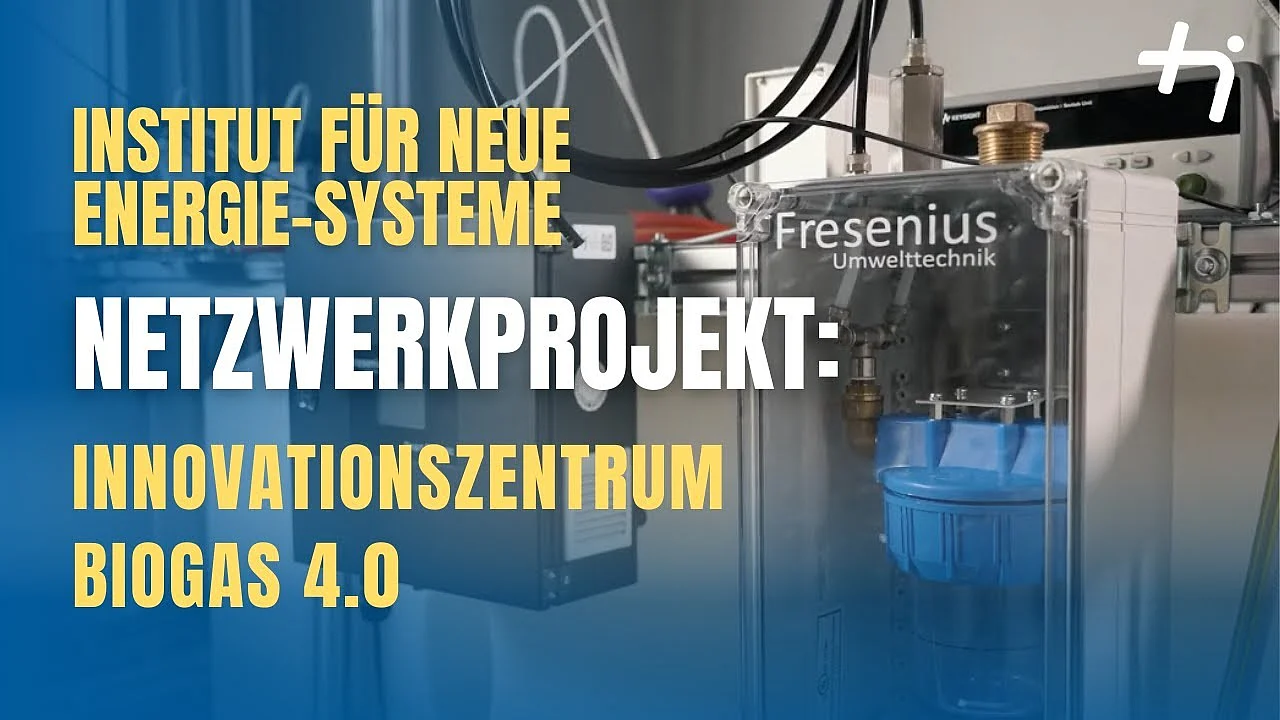
InES Networkproject „Innovationszentrum Biogas 4.0“