
Sustainable Civil Engineering (in German)
Sustainable Civil Engineering (in German)
Sustainable civil engineering means designing the fundamental structural elements of our everyday lives to be fit for the future. During your studies, you will learn to design and plan buildings, bridges, tunnels and transport routes in an environmentally friendly and technically sound manner. Digital tools such as BIM, simulations and modern surveying technologies will help you analyse complex interrelationships and model them with precision. At the same time, you will gain in-depth insights into hydraulic engineering, flood protection, wastewater treatment and the management of challenging construction projects. Sustainability is always taught holistically: ecologically, socially and technologically. Practical projects, field trips and interdisciplinary teaching formats prepare you early on for real-world challenges. You will, of course, also be taught the traditional subjects of civil engineering. In addition to core subjects such as statics and mechanics, these include structural subjects such as timber construction, masonry construction, steel construction, transport infrastructure and civil engineering. This will enable you to design and construct stable structures. You will consistently factor sustainability into all technical decisions.
Please note that the language of instruction is German! For our English language Bachelor, please choose Sustainable Civil Engineering in English!
Job pespectives
With a degree in civil engineering, supplemented by specialisation in sustainable and energy-efficient project and construction management, you’ll find opportunities with regional and international companies in project planning and execution, or as a site manager or engineer in a design consultancy.
→ Application for a start of studies in summer term is available
Curriculum Sustainable Civil Engineering (in German)
1st Semester
Ingenieurmathematik 1
Baumechanik 1
Digitalisierung im Bauwesen
Baukonstruktion 1
Nachhaltigkeit im Bauwesen
Bauphysik / Energieeffizienz
Ingenieurmathematik 2
Baumechanik 2
Geodäsie- und Vermessungswesen
Construction Management / Entrepreneurship (German/English)
CO2-arme Baukonstruktion 2
Nachhaltige Baustoffe
Massivbau 1
Baustatik
Einführung Geotechnik und Verkehrstechnologie
Siedlungshygiene / Abwasser-/ Abfallwirtschaft
Wasserbau / Hydromechanik
Sustainable building design and operation
Massivbau 2
Stahlbau
Bau- und Umweltrecht
Geotechnik 2 & Geoenergie
Nachhaltige Verkehrstechnologie
Holzbau / Holzbautechnologie
18-wöchiges Baupraktikum
Wissenschaftliche Methoden
Digitales Bauprozessmanagement und BIM (dt/eng)
Alternative Bauweisen
Digitale Gebäudetechnik und Erneuerbare Energieversorgung
Fachwissensch. Wahlpflichtmodul
Bauprojekt- und Nachhaltigkeitsmanagement
Praxisprojekt / Anwendungsprojekt
Bachelorarbeit
Nachhaltigkeit von Bauwerken
Fachwiss. Wahlpflichtmodul
Nachhaltige Tragwerksplanung
Life Cycle Engineering & klimaangepasste Bauauslegung
| 1. Semester | |
|---|---|
| 2. Semester | |
| 3. Semester | |
| 4. Semester | |
| 5. Semester | |
| 6. Semester | |
| 7. Semester |
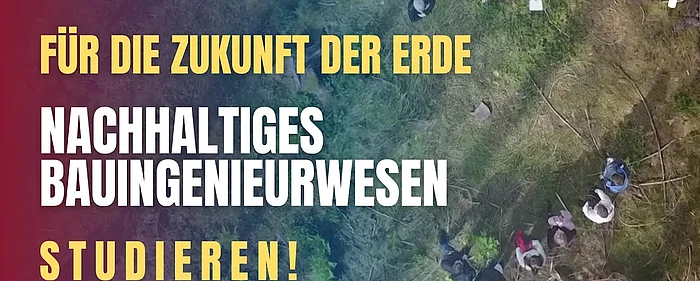
Building for the future
Please switch to automatic translation in Youtube
The programme starts in the winter semester (October) as well as the summer semester (March).
Registration for the programme. This Bachelor's programme is offered at the THI without admission restrictions/NC, so registration with DOSV/hochschulstart is not necessary. This applies to the GERMAN language course only, the Englisch language SCE (Sustainable Cili Engineering) may vary! Documents can be uploaded directly in the Primuss applicant portal of the THI.
What criteria are used to allocate university places?
At present, there are no entry requirements for this degree programme, i.e. there is no numerus clausus. On the one hand, this means there is a good chance of securing a place; on the other hand, you only need to apply via PRIMUSS (no application via hochschulstart is required).
Places are allocated on the basis of your grade point average.
Where can I do the internship that is part of my degree course?
Various SMEs in the region offer work placements, but it is also possible to undertake the practical study semester anywhere else in Germany or abroad!
Any questions?
Do you have any questions about applications, admission, enrolment, student finance, accommodation or other general topics? If so, please use our contact form and select the relevant topic. This will ensure your enquiry is sent directly to the relevant contact person(s) and can be answered quickly and effectively.
Academic Advisor
-
Prof. Dr.-Ing. Thilo Feucht
Academic Director Sustainable Civil Engineering


More contact options
Other programmes you may be interested in
-

Engineering Sciences
Bachelor of Engineering (B. Eng.)
Engineering Sciences - a degree program with numerous options. After the first two semesters, you can choose between Development & Construction, Electromobility, Development of Flight Systems, Energy Technology or Digital Engineering.
About the degree program -
Sustainable Civil Engineering
Bachelor of Engineering (B. Eng.)
Construction works need to become as environmetal-friendly as possible - the course programme at our sustainability campus in Neuburg in the heart of Bavaria/Germany teaches new ways in recycling or using renewable building materials towards a more climate responsible future.
About the degree program -
Sustainability Management and Technologies
Master of Science (M. Sc.)
The Sustainability Management and Technologies degree programme combines sustainability, management and future technologies. Topics such as the circular economy, ESG, sustainable business models and climate protection form the basis for actively helping to shape transformation processes within companies and organisations.
About the degree program -
Architecture (in German)
Bachelor of Engineering (B. Eng.)
Studying Architecture in German: climate and resource-friendly construction, ecological materials and circular building, digital planning, sociology and ethics of building
About the degree program


Sustainable Civil Engineering (in German)
Sustainable civil engineering means designing the fundamental structural elements of our everyday lives to be fit for the future. During your studies, you will learn to design and plan buildings, bridges, tunnels and transport routes in an environmentally friendly and technically sound manner. Digital tools such as BIM, simulations and modern surveying technologies will help you analyse complex interrelationships and model them with precision. At the same time, you will gain in-depth insights into hydraulic engineering, flood protection, wastewater treatment and the management of challenging construction projects. Sustainability is always taught holistically: ecologically, socially and technologically. Practical projects, field trips and interdisciplinary teaching formats prepare you early on for real-world challenges. You will, of course, also be taught the traditional subjects of civil engineering. In addition to core subjects such as statics and mechanics, these include structural subjects such as timber construction, masonry construction, steel construction, transport infrastructure and civil engineering. This will enable you to design and construct stable structures. You will consistently factor sustainability into all technical decisions.
Please note that the language of instruction is German! For our English language Bachelor, please choose Sustainable Civil Engineering in English!
Job pespectives
With a degree in civil engineering, supplemented by specialisation in sustainable and energy-efficient project and construction management, you’ll find opportunities with regional and international companies in project planning and execution, or as a site manager or engineer in a design consultancy.
→ Application for a start of studies in summer term is available
Curriculum Sustainable Civil Engineering (in German)
1st Semester
Ingenieurmathematik 1
Baumechanik 1
Digitalisierung im Bauwesen
Baukonstruktion 1
Nachhaltigkeit im Bauwesen
Bauphysik / Energieeffizienz
Ingenieurmathematik 2
Baumechanik 2
Geodäsie- und Vermessungswesen
Construction Management / Entrepreneurship (German/English)
CO2-arme Baukonstruktion 2
Nachhaltige Baustoffe
Massivbau 1
Baustatik
Einführung Geotechnik und Verkehrstechnologie
Siedlungshygiene / Abwasser-/ Abfallwirtschaft
Wasserbau / Hydromechanik
Sustainable building design and operation
Massivbau 2
Stahlbau
Bau- und Umweltrecht
Geotechnik 2 & Geoenergie
Nachhaltige Verkehrstechnologie
Holzbau / Holzbautechnologie
18-wöchiges Baupraktikum
Wissenschaftliche Methoden
Digitales Bauprozessmanagement und BIM (dt/eng)
Alternative Bauweisen
Digitale Gebäudetechnik und Erneuerbare Energieversorgung
Fachwissensch. Wahlpflichtmodul
Bauprojekt- und Nachhaltigkeitsmanagement
Praxisprojekt / Anwendungsprojekt
Bachelorarbeit
Nachhaltigkeit von Bauwerken
Fachwiss. Wahlpflichtmodul
Nachhaltige Tragwerksplanung
Life Cycle Engineering & klimaangepasste Bauauslegung
| 1. Semester | |
|---|---|
| 2. Semester | |
| 3. Semester | |
| 4. Semester | |
| 5. Semester | |
| 6. Semester | |
| 7. Semester |
Building for the future
Please switch to automatic translation in Youtube
The programme starts in the winter semester (October) as well as the summer semester (March).
Registration for the programme. This Bachelor's programme is offered at the THI without admission restrictions/NC, so registration with DOSV/hochschulstart is not necessary. This applies to the GERMAN language course only, the Englisch language SCE (Sustainable Cili Engineering) may vary! Documents can be uploaded directly in the Primuss applicant portal of the THI.
What criteria are used to allocate university places?
At present, there are no entry requirements for this degree programme, i.e. there is no numerus clausus. On the one hand, this means there is a good chance of securing a place; on the other hand, you only need to apply via PRIMUSS (no application via hochschulstart is required).
Places are allocated on the basis of your grade point average.
Where can I do the internship that is part of my degree course?
Various SMEs in the region offer work placements, but it is also possible to undertake the practical study semester anywhere else in Germany or abroad!
Any questions?
Do you have any questions about applications, admission, enrolment, student finance, accommodation or other general topics? If so, please use our contact form and select the relevant topic. This will ensure your enquiry is sent directly to the relevant contact person(s) and can be answered quickly and effectively.
Academic Advisor
-
Prof. Dr.-Ing. Thilo Feucht
Academic Director Sustainable Civil Engineering
More contact options
Other programmes you may be interested in
-
Engineering Sciences
Bachelor of Engineering (B. Eng.)
Engineering Sciences - a degree program with numerous options. After the first two semesters, you can choose between Development & Construction, Electromobility, Development of Flight Systems, Energy Technology or Digital Engineering.
About the degree program -
Sustainable Civil Engineering
Bachelor of Engineering (B. Eng.)
Construction works need to become as environmetal-friendly as possible - the course programme at our sustainability campus in Neuburg in the heart of Bavaria/Germany teaches new ways in recycling or using renewable building materials towards a more climate responsible future.
About the degree program -
Sustainability Management and Technologies
Master of Science (M. Sc.)
The Sustainability Management and Technologies degree programme combines sustainability, management and future technologies. Topics such as the circular economy, ESG, sustainable business models and climate protection form the basis for actively helping to shape transformation processes within companies and organisations.
About the degree program -
Architecture (in German)
Bachelor of Engineering (B. Eng.)
Studying Architecture in German: climate and resource-friendly construction, ecological materials and circular building, digital planning, sociology and ethics of building
About the degree program