Prof. Dr. techn. Gerhard Elsbacher
Head of TTZ Unmanned Aerial Systems | Cluster Speaker Unmanned Flying | Research Professor

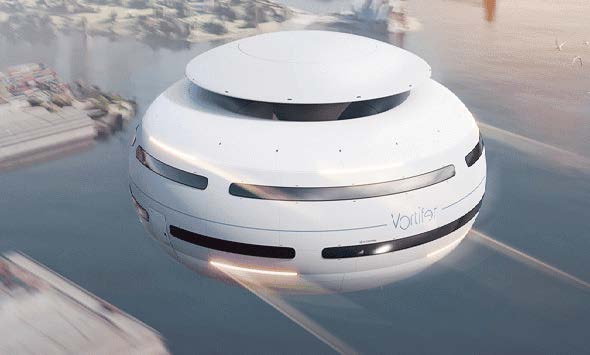
Fig.1: Initial concept
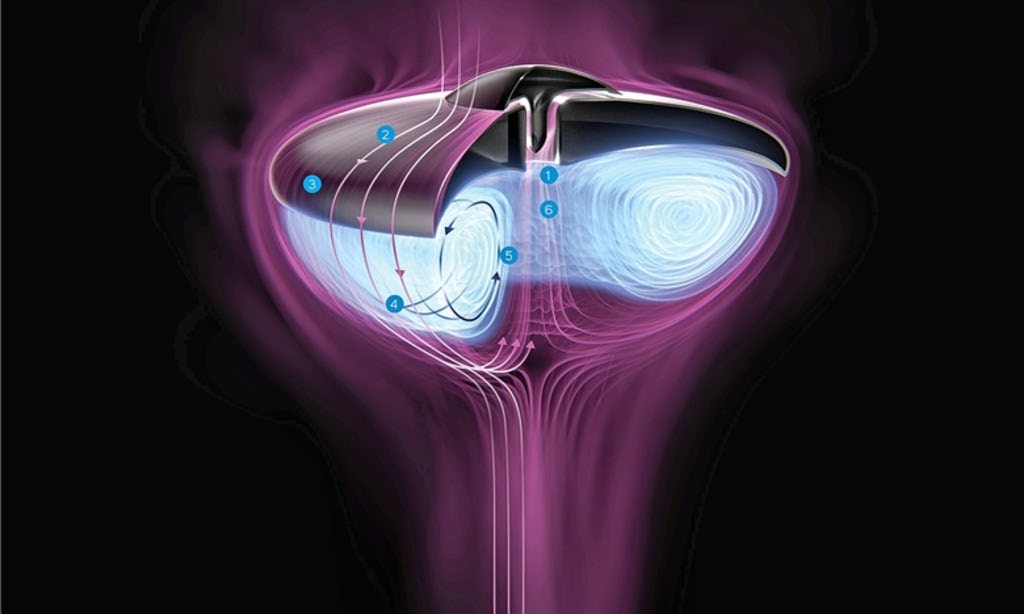
Fig.2: An air vortex makes the Vortifer fly
The Vortifer is an innovative flight concept utilizing a novel propulsion system that generates both lift and thrust using a swirling toroidal vortex - much like a self-contained whirlwind. By integrating multiple flight principles, the Vortifer delivers enhanced efficiency, stability, and agility in flight. This makes it a viable solution for a wide range of environments and potential missions. The novel design requires advanced control methods, including reinforcement learning, to ensure stability and operational effectiveness.

Fig.3: System of particles representation of Vortifer
Mathematical Modeling of the Underactuated System:
Develop a comprehensive nonlinear dynamical model of the drone equipped with a moving mass system. The model will capture the effects of underactuation, aerodynamic forces, and control inputs.
Control System Design for Underactuated Dynamics:
Formulate and implement control strategies for trajectory tracking and stabilization. This includes both classical controllers (e.g., PID) and advanced model-based approaches such as nonlinear control and Reinforcement Learning (RL).
Adaptive Control Mechanisms:
Design an adaptive control framework that dynamically adjusts control parameters in real time to enhance robustness against external disturbances, modeling uncertainties, and varying payload conditions.
Optimal Control Strategies:
What control methodologies are most effective in managing payload variations and external disturbances while maintaining stability?
Role of Reinforcement Learning in Adaptive Control:
How effectively can RL enhance adaptability in real-time flight conditions, and how does it compare to traditional adaptive control techniques?
Trade-off Between Performance and Stability:
To what extent can performance metrics (e.g., agility, energy efficiency) be optimized without compromising system stability in an underactuated setting?
Optimal Control Strategies: Which control methods best manage varying payloads and conditions?
Role of Reinforcement Learning: How well does RL adapt to maintain stability?
Performance vs. Stability: Can we boost performance without sacrificing stability?

The Vortifer's control relies on shifting movable masses, modeled using Lagrange dynamics. The general dynamics are represented by:

Where L (q,q') represents the system's Lagrangian, calculated from kinetic (T) and potential (V) energies.
The full dynamic model is summarized in matrix form as:

Fig.4: Swash Mass Helicopter (SMH)
These equations allow precise control by adjusting the mass distribution, optimizing the Vortifer’s stability and efficiency during flight.
We performed a 2D simulation using a Proportional-Derivative (PD) controller to evaluate the swash masses’ effectiveness in maintaining balance and stability. These results serve as a baseline for comparing more advanced Reinforcement Learning control methods.
Head of TTZ Unmanned Aerial Systems | Cluster Speaker Unmanned Flying | Research Professor
Technology Field Manager Cooperative UAV Systems

Research Assistant

Research Assistant
