
Prof. Dr. Jörg Radtke


Research
Research Profile / Research Interests
My research focuses on the social conditions, conflicts, and governance structures underlying sustainability transformations. In particular, I examine the energy and heating transitions, municipal climate adaptation, and the question of how far-reaching transformation processes can be designed to be democratic, socially robust, and practically feasible.
I place special emphasis on the municipal and regional levels. I examine how government agencies, policymakers, the business sector, civil society, and citizens interact in transformation processes, what institutional and social conflicts arise, and how sustainable forms of cooperation and participation can be developed.
Other key research areas include participation, acceptance, and conflict management; the implementation of political transformation goals; local and regional networks of actors; and the transfer of knowledge between academia, politics, and practice. An increasingly important area of research is the integration of social science research on transformation with digital tools for planning and participation, including urban digital twins, interactive visualization, augmented and virtual reality, and AI-supported applications.
Methodologically, I combine qualitative and quantitative social research with comparative case studies, surveys, document and discourse analyses, and the analysis of participatory and communication processes. My research is characterized by an interdisciplinary and transdisciplinary approach in which scholarly analysis is closely linked to municipal and societal partners in the field.
Research Interests
- Social science aspects of sustainability and societal transformation
- Energy and heating transition
- Climate adaptation and municipal transformation
- Governance and policy implementation
- Participation, democracy, and societal acceptance
- Transformation conflicts and conflict management
- Municipal and regional stakeholder networks
- Social innovations and real-world laboratories
- Digital participation and digital planning tools
- Urban digital twins, visualization, AR/VR, and AI
- Science-policy interfaces and knowledge transfer
Vita
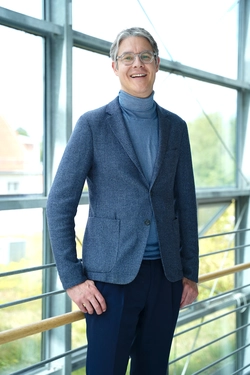
Prof. Dr. Jörg Radtke has been a professor of the sociology of sustainability and transformation at Ingolstadt University of Applied Sciences since September 2026. Prior to that, from 2023 to 2026, he served as a project manager and senior researcher at the Research Institute for Sustainability (RIFS) at the GFZ Helmholtz Center for Geosciences in Potsdam. Other academic positions took him to the University of Siegen and the University of Bremen.
He earned his Ph.D. in political science from the University of Siegen in 2015 with a dissertation on “Citizen-Led Energy in Germany.” In 2026, he completed his habilitation at the University of Osnabrück with the cumulative habilitation thesis “Policy Implementation in Sustainability Transitions” and received the venia legendi in political science.
His research combines social science studies on sustainability and transformation with issues of governance, participation, conflict, and social acceptance. A key focus is on applied and transdisciplinary research in collaboration with municipalities, political institutions, civil society, and other partners in the field.
Current and Upcoming Research Projects
DecisionDistrict – Conflict Mapping and Participatory Solution Development for Municipal Heating Planning
Duration: 12/2026–11/2029
THI Subproject: Conflict Analysis and Participatory Solution Development
Subproject Leader: Prof. Dr. Jörg Radtke
DecisionDistrict examines conflicts regarding objectives, land use, and distribution in the municipal heating transition. The goal is to develop and test a set of tools that can be used to identify conflicts at an early stage, analyze them spatially and socially, visualize them, and address them constructively through participatory processes. This approach integrates legal, planning, technical, and societal perspectives.
THI is responsible for the subproject “Conflict Analysis and Participatory Solution Development.” The focus is on analyzing political and legal frameworks, investigating and categorizing specific conflict situations in model neighborhoods, and evaluating the effects and acceptance of the developed tools. THI is taking the lead on several work packages within the consortium.
Together with the Institute for Technology Assessment and Systems Analysis (ITAS) at KIT, the Leibniz Institute for Ecological Spatial Development (IÖR), and the Karlsruhe Energy and Climate Protection Agency, new forms of data-driven and participatory decision support are being developed and tested in municipal real-world laboratories.
VeloCityAdapt – Urban Digital Twins for Municipal Climate Adaptation
Project Duration: 01/2026–12/2029
THI Subproject: Participatory Governance, Digital Participation, and Municipal Decision-Making Processes
Subproject Leader: Prof. Dr. Jörg Radtke
VeloCityAdapt develops and tests Urban Digital Twins as tools to accelerate municipal climate adaptation processes. Digital twins, spatial data analyses, interactive 3D and XR visualizations, and digital engagement formats are integrated to make complex climate adaptation measures understandable and interactively accessible to administrative bodies, policymakers, and the general public.
The social science component examines how the use of urban digital twins affects communication, coordination, and cooperation in municipal planning processes; how different interests and needs can be integrated into digitally supported planning procedures; and whether this makes planning more transparent, traceable, and efficient.
A particular focus is on the development and testing of low-threshold participation and collaboration formats, as well as on the analysis of their social, organizational, and governance-related embedding. Use cases are being developed and tested in collaboration with the cities of Bad Berleburg and Hagen, among others.
LOTSE – Local Organizational, Transfer, and Secure Data Structures for the Accelerated Implementation of Municipal Heating Plans
Planned Duration: 01/2027–12/2028
Funding Context: “From Plan to Transition,” 8th Energy Research Program
Areas of Application: City of Calau and Pfaffenhofen a. d. Ilm District
LOTSE addresses a central challenge of the municipal heating transition: A heating plan alone does not lead to its implementation. Once municipal heating planning is complete, responsibilities must be clarified, planning and investment processes must be linked, data must be continuously made available, and local stakeholders must be integrated into concrete implementation arrangements.
The project is therefore developing an integrated municipal implementation architecture comprising organizational and governance models, interoperable municipal process chains, legally compliant data and approval procedures, as well as participation and knowledge transfer formats. The goal is to accelerate the transition from strategic heating planning to concrete measures ready for decision-making. The approach is being tested in practice in two different municipal contexts—the city of Calau and the district of Pfaffenhofen a. d. Ilm.
In particular, THI contributes comparative evaluation, participatory design, impact perspectives, and knowledge transfer to the consortium. This includes a comparative evaluation matrix, approaches to socially robust data enrichment, selected participatory modules, and a methodological synthesis of knowledge transfer.
LOTSE is being developed in collaboration with the City of Calau, the District of Pfaffenhofen a. d. Ilm, RWTH Aachen University, and the Technical University of Ingolstadt. The project responds to the “From Plan to Transition” call for proposals issued by the Federal Ministry for Economic Affairs and Energy as part of the 8th Energy Research Program.
![[Translate to English:] Logo Akkreditierungsrat: Systemakkreditiert](/fileadmin/_processed_/2/8/csm_AR-Siegel_Systemakkreditierung_bc4ea3377d.webp)